Prep time: 20 minutes
Cook time: 10 minutes
Total time: 30 minutes
Servings: 4
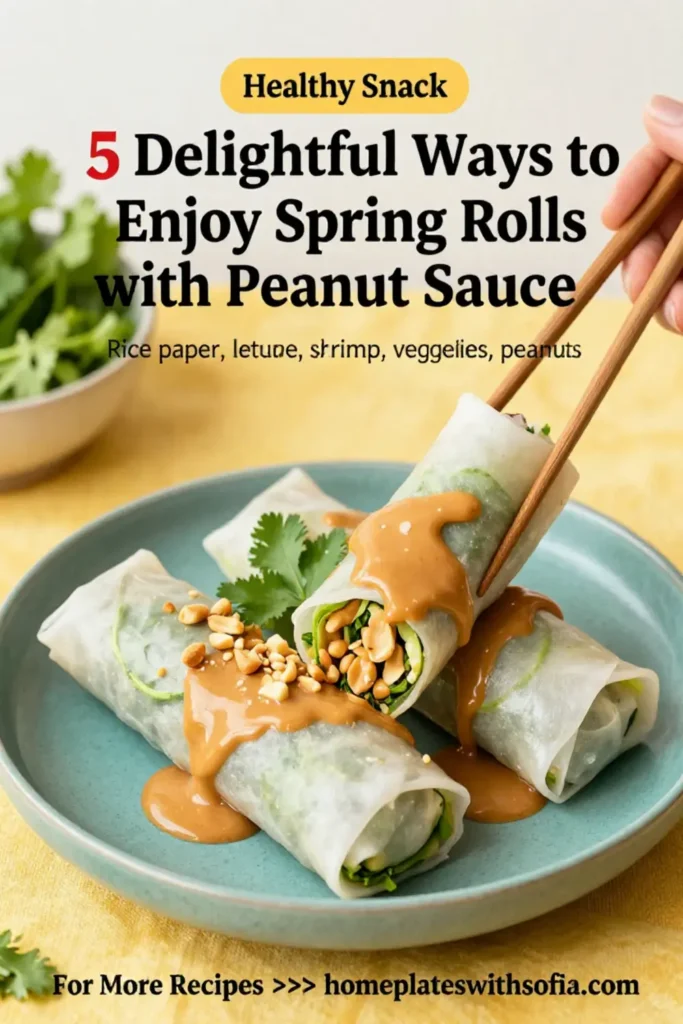
Spring rolls with peanut sauce are a delightful fusion of flavors and textures that can elevate any meal. These light, crisp rolls are packed with various vegetables and proteins, then paired with a creamy, flavorful peanut sauce that adds a punch of flavor. Whether you’re hosting a gathering, preparing a simple weeknight dinner, or looking for a healthy snack, learning how to enjoy spring rolls in multiple ways makes for an exciting culinary adventure.
What Is 5 Delightful Ways to Enjoy Spring Rolls with Peanut Sauce?
Spring rolls are not just a single dish; they can be adapted and transformed in various delightful ways. They consist of thin rice paper wrappers filled with an assortment of fresh ingredients, from crunchy vegetables to savory proteins. When accompanied by a rich peanut sauce, they become a uniquely versatile dish that can be customized according to taste preferences, dietary restrictions, or seasonal ingredients.
The five delightful ways to enjoy spring rolls include features that highlight their innate versatility. You can experiment with different fillings, sauces, and presentation styles that can tantalize your taste buds while also impressing your guests. Additionally, they can be enjoyed as appetizers, snacks, or even main courses while highlighting the freshness of the season’s produce.
Why You’ll Love This
One of the primary reasons you’ll love making spring rolls is their flexibility. You can create them vegan, vegetarian, or include protein-packed options like shrimp or chicken. Another appealing aspect is the vibrant, fresh ingredients that not only nourish your body but also engage your senses. The combination of textural experiences—from the crunchiness of fresh veggies to the delicate chewiness of rice paper—combined with the rich and nutty flavors from the peanut sauce makes each bite enjoyable.
Not to mention, making spring rolls can be a fun and interactive experience, especially for families or gatherings. Getting everyone involved in the rolling process allows people to customize their flavors and combines the joy of cooking with a delectable means of enjoying time together.
Ingredients You’ll Need
- Rice paper wrappers: These delicate wrappers are the base of your spring rolls. They soften once dipped in water, making them pliable for wrapping.
- Julienned carrots: Sweet and crunchy, carrots add a refreshing bite along with vibrant color.
- Cucumber sticks: Crisp and cool, cucumbers provide a delightful texture contrast.
- Bell peppers: Choose red, yellow, or green for their sweet flavor and eye-catching color.
- Fresh herbs (like basil and mint): These herbs not only bring freshness but also aromatic qualities that enhance the rolls.
- Protein (e.g., shrimp, chicken, tofu): The protein can be grilled, sautéed, or fried, adding a hearty component to your spring rolls.
- Peanut butter: A staple for your dipping sauce, creamy or chunky, it delivers a rich nutty flavor.
- Soy sauce: Adds a salty depth to the peanut sauce.
- Garlic: Fresh or minced, it enhances the flavor profile in your sauce.
- Lime juice: This adds a zesty tang, balancing the richness of the peanut sauce.
How to Make
- Begin by preparing all your ingredients: julienne your vegetables and cook your chosen protein. If using shrimp or chicken, ensure they are fully cooked before preparing the rolls. This step is crucial; otherwise, you might end up with unevenly cooked fillings.
- In a bowl, mix your peanut sauce ingredients, including peanut butter, soy sauce, minced garlic, and lime juice. Stir well until creamy and smooth. If the sauce is too thick, you can add a little water or coconut milk to reach your desired consistency.
- Fill a large, shallow dish with warm water. Soak a rice paper wrapper in the water until it softens, which usually takes about 10-20 seconds. It’s important not to over-soak, or it will tear; a little experimentation will help you find the perfect timing.
- Place the soaked wrapper on a clean cutting board. Starting from the bottom, layer in the vegetables, herbs, and protein, being careful not to overfill. This is where the art of wrapping becomes essential—fold the bottom over the filling, then fold in the sides, and roll up tightly, but not so tightly that it tears.
- Repeat this process until all ingredients are rolled up. Keep the finished rolls covered with a damp cloth to prevent them from drying out as you continue to work.
- Finally, serve the spring rolls with the peanut sauce on the side, allowing everyone to dip as they please. The combination offers a stunning visual appeal and an inviting aromatic experience.
Variations & Substitutions
Veggie Delight: One fantastic way to enjoy spring rolls is to load them entirely with vegetables. Think avocado, shredded cabbage, or even mango for a tropical twist. Each bite would explode with different flavors and textures, complemented beautifully by the creamy peanut sauce. Drizzling a touch of sesame oil can also enhance depth in flavor while adhering to a plant-based diet.
Shrimp Spring Rolls: For seafood lovers, incorporating shrimp takes these rolls to another level. Sautéed shrimp with garlic and ginger wrapped together with crisp veggies elevate the dish. Adding a sprinkle of sesame seeds on top before serving offers both visual appeal and an additional layer of nutty flavor.
Protein Packs: You can substitute traditional meats with plant-based protein sources like tempeh or edamame. This approach not only fits vegetarian and vegan diets but also introduces hearty protein options while maintaining low-calorie counts.
Spicy Kick: If you or your guests enjoy spice, consider adding sliced jalapeños or a dash of sriracha in the peanut sauce. This twist provides a flavorful heat that perfectly contrasts the coolness of the veggies.
Fruit Spring Rolls: A refreshing approach involves utilizing fruits like strawberries, mango, or pineapple. Utilize these fruits in your rolls with mint for a fruity, refreshing snack or dessert option, served alongside a yogurt-based dip for a pleasantly sweet experience.
Common Mistakes to Avoid
When making spring rolls, one of the most common mistakes is overfilling. Overfilling can lead to tears in the rice paper, making it difficult to seal your rolls properly. It’s best to experiment with smaller amounts until you find the right balance that works for you.
Another mistake is not keeping the rolls covered. Not covering them will cause the rice paper to dry out, leading to cracks and tough rolls. Reserve a damp cloth and cover your finished rolls immediately.
Lastly, the peanut sauce should be well-balanced; too much peanut butter can make it too thick, while too much liquid makes it runny. Always taste and adjust seasoning before serving to ensure a delightful dipping experience.
Storage, Freezing & Reheating Tips
Spring rolls are best enjoyed fresh, but they can be stored for later consumption. To store, place your completed rolls in an airtight container, layering parchment paper between them to prevent sticking. They will retain their freshness for up to two days in the refrigerator. Do not freeze fresh spring rolls, as the rice paper can become watery and lose its texture upon thawing.
If you have prepared the filling but haven’t assembled the spring rolls, you can store the veggies and proteins separately. For reheating, embrace the oven or air fryer over the microwave. Reheating in the microwave may lead to a chewy texture, while the oven produces a crispy result. Bake at 350°F (175°C) until heated through for optimal results.
Frequently Asked Questions
Can you make spring rolls ahead of time?
Yes, spring rolls can be prepared a few hours in advance. However, it’s advisable to keep them covered with a damp cloth to prevent them from drying out. Make sure to store them in an airtight container in the fridge to keep them fresh. This prepping method allows for convenience if you have guests.
What other dips can I use besides peanut sauce?
While peanut sauce is a classic pairing, various dips can complement spring rolls wonderfully. You might consider hoisin sauce, chili sauce, or even a tangy soy-vinegar mixture. Each sauce brings a distinct flavor that can enhance your experience with the rolls.
Are spring rolls healthy?
Indeed, spring rolls are generally a healthy option. They often feature fresh vegetables and lean proteins wrapped in rice paper, making for a nutrient-rich meal. The creamy peanut sauce does add calories, but you can control the amount for a lighter option.
Can I use whole wheat or gluten-free wrappers?
Absolutely! Whole wheat wrappers provide added fiber and nutrients, while gluten-free options are readily available for those with gluten intolerances. Both alternatives maintain the delightful nature of spring rolls while catering to dietary needs.
What variations are suitable for a vegan diet?
There are numerous ways to customize spring rolls for a vegan-friendly meal. Using an array of vegetables, tofu, and plant-based sauces can create delicious, satisfying rolls. Variants like sweet potato or avocado offer richness while maintaining a fulfilling plant-based experience.
Conclusion: Making spring rolls with peanut sauce provides a creative and enjoyable way to explore different flavors, textures, and dining experiences. With easy-to-follow steps and a variety of options for customization, these delicious rolls can suit any occasion. Whether you’re hosting a get-together or wanting a special treat for yourself, learning the art of spring rolls only enriches your culinary repertoire and satisfies your food cravings.