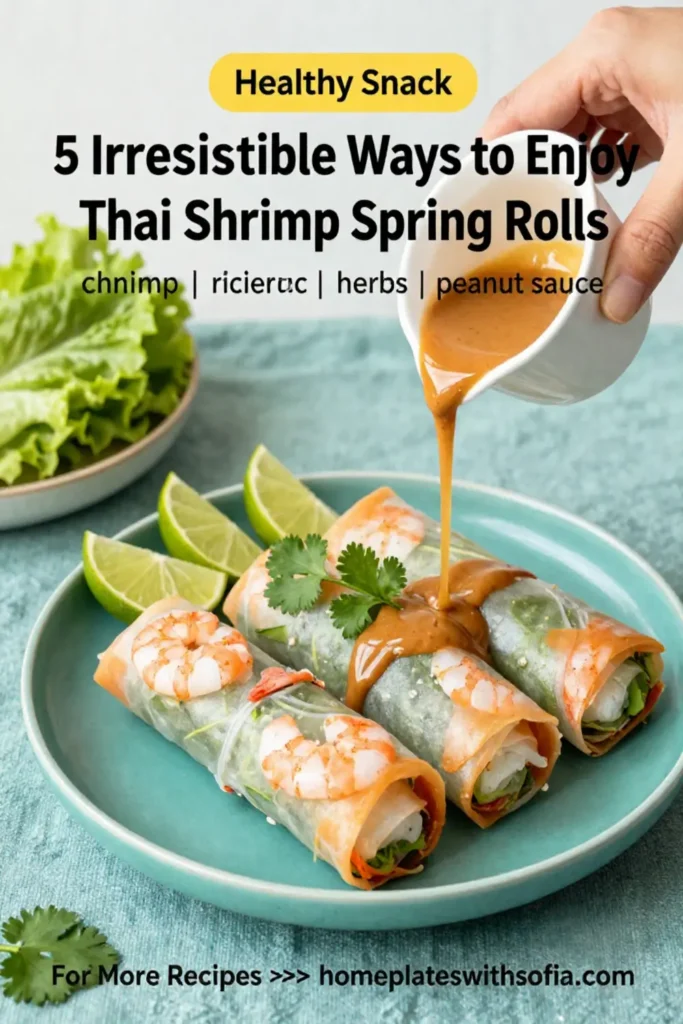
Prep time: 30 minutes
Cook time: 10 minutes
Total time: 40 minutes
Servings: 4 servings
Thai shrimp spring rolls are a delightful culinary treat that not only offer a burst of flavors but also serve as a versatile dish for various occasions. They are becoming increasingly popular for gatherings, meals on the go, or simply a healthy snack option. With fresh ingredients and various ways to enjoy them, you’ll find yourself yearning for these spring rolls time and time again.
What Is 5 Irresistible Ways to Enjoy Thai Shrimp Spring Rolls?
This dish is all about combining fresh, crisp vegetables with succulent shrimp, all wrapped up in delicate rice paper. The beauty lies in the versatility of how you can serve them. Whether you choose to eat them with a zesty dipping sauce or incorporate additional flavors and textures, the possibilities are nearly endless. This recipe guides you on five irresistible variations that cater to different tastes and dietary needs, ensuring there’s something for everyone.
Why You’ll Love This
Thai shrimp spring rolls are not just delicious; they’re also a healthy eating choice packed with protein and nutrients. Each bite combines a crunch from the fresh veggies and a tender chewiness from the shrimp, creating a delightful experience. Additionally, they are low in calories, gluten-free, and can be easily adapted for meal prep. This means busy parents and kitchen beginners can whip them up quickly, making it feasible to enjoy gourmet flavors in the comfort of your home.
Ingredients You’ll Need
- Rice Paper Wrappers (8-10 sheets): The foundation of the spring rolls. These thin wrappers offer a light texture that perfectly complements the fillings.
- Shrimp (1 pound, peeled and deveined): Fresh shrimp adds not only protein but also a subtle sweetness to balance the vegetables.
- Rice Noodles (8 ounces): These provide a chewy base and help to fill the rolls, making them more satisfying.
- Cabbage (1 cup, finely shredded): Adds crunch and fiber, making your rolls even healthier.
- Carrots (1 cup, julienned): Bright orange color and slight sweetness enhance the visual appeal and flavor.
- Cucumber (1 cup, julienned): This ingredient adds refreshing juiciness to the mix.
- Fresh Herbs (2 cups, mixed basil, cilantro, and mint): Provide an aromatic freshness that elevates the dish.
- Dipping Sauce (optional): A mix of hoisin sauce, peanut butter, and lime juice to complement the spring rolls beautifully.

How to Make
- Prepare the Shrimp: In a skillet, heat a bit of oil over medium heat. Add the shrimp and cook for about 3-4 minutes, or until they turn pink and opaque. Season with salt and pepper to taste. Set aside to cool.
- Cook the Rice Noodles: Bring a large pot of water to a boil. Add the rice noodles and cook according to the package instructions, usually about 3-5 minutes. Drain and rinse under cold water to stop cooking.
- Prepare Your Ingredients: While the noodles are cooling, julienne the carrots and cucumber, and slice the cabbage. Chop your fresh herbs finely to release their aromas.
- Soften the Rice Paper Wrappers: Fill a large bowl with warm water. Dip one rice paper sheet into the water for about 10-15 seconds until it softens but is still pliable. Lay it flat on a clean surface.
- Assemble the Rolls: In the center of the softened rice paper, place a small handful of rice noodles, a few shrimp, shredded cabbage, cucumbers, carrots, and a sprinkle of fresh herbs. Be careful not to overfill.
- Wrap It Up: Fold the bottom of the rice paper over the filling, then fold the sides in, and roll tightly from the bottom to the top, ensuring everything is secure. Repeat with the remaining wrappers and fillings.
Variations & Substitutions
Vegetable-Only Spring Rolls: For a vegetarian version, simply omit the shrimp and add more vegetables such as avocados, bell peppers, or bell pepper strips. Adding a protein source like tofu can enhance the dish while keeping it plant-based. This option not only makes it approachable for vegetarians but also packs a myriad of flavors and textures.
Spicy Thai Shrimp Spring Rolls: If you love heat, consider blending some sliced jalapeños or a dash of sriracha sauce into the filling ingredients. You could also use a spicy peanut dipping sauce to bring an extra kick. This variation can satisfy those craving a bit more excitement in their meal.
Fruit-Filled Spring Rolls: For a refreshing summer twist, try incorporating fruits like mango, strawberries, or kiwi alongside the shrimp. The sweetness from the fruits complements the shrimp nicely and adds a juicy element that is unexpected and delightful.
Crunchy Coconut Shrimp Spring Rolls: Coat the shrimp in shredded coconut before cooking for an added crunch and sweetness that will create intriguing flavors. Pair it with a sweet and tangy dipping sauce to tie it all together beautifully.
Thai Shrimp Salad Rolls: Deconstruct the spring rolls and serve the contents in a bowl, accompanied by a zesty lime dressing. This salad version is perfect for those who prefer a lighter, fresher take on traditional rolls while keeping the core flavors intact.
Common Mistakes to Avoid
One common mistake is over-soaking the rice paper wrappers. Ensure they are just pliable enough to handle; otherwise, they’ll tear easily. Be cautious when rolling; a firm but not overly tight roll will yield the best results.
Another issue is undercooking the shrimp. They should be cooked until just done, as overcooking can lead to rubbery textures. Watch carefully during cooking and remove them from heat the moment they turn opaque.
Finally, overfilling the spring rolls can lead to breakage and spillage. It’s important to use a small amount of filling to avoid making the wrapping process complicated.
Storage, Freezing & Reheating Tips
For optimal freshness, it’s best to store the spring rolls in an airtight container in the fridge, preferably on a layer of damp paper towels to maintain moisture. They can be kept for up to two days.
If you want to freeze them, place the assembled rolls on a baking sheet in a single layer to freeze them individually before transferring to a freezer-safe bag. To reheat from frozen, steam the rolls in a bamboo steamer for about 5-6 minutes until heated through.
When it comes to food safety, always ensure that the shrimp are fresh and ideally cooked to an internal temperature of 145°F to prevent foodborne illness.
Frequently Asked Questions
Can I make spring rolls in advance?
Yes! Spring rolls can be made a few hours in advance. However, they are best when fresh. Prepare your ingredients ahead of time, and only roll them when you’re ready to serve. If assembling ahead of schedule, ensure they are covered to prevent drying out.
What type of shrimp is best for spring rolls?
Fresh shrimp is ideal, but frozen shrimp works fine too. Opt for medium to large-sized shrimp that are peeled and deveined, as they will provide the best texture and flavor.
Are spring rolls gluten-free?
Yes, as long as you use rice paper wrappers and ensure that all fillings and sauces are gluten-free. Always double-check the labels of any sauces you use to accommodate dietary restrictions.
Can I use other proteins besides shrimp?
Absolutely! Chicken, tofu, or even tempeh are excellent alternatives. Each protein option will yield a different flavor profile, so feel free to get creative in the kitchen!
What dipping sauces pair well with spring rolls?
A wide variety of sauces like peanut sauce, sweet chili sauce, or a simple soy-based dressing work beautifully. You can even blend your own sauce to perfectly complement your spring rolls—experimenting with flavors is part of the fun!
Conclusion:
5 irresistible ways to enjoy Thai shrimp spring rolls bring together freshness, flavor, and versatility, catering to a range of tastes and preferences. With their numerous variations and the ability to serve them in various ways, these spring rolls are perfect for any occasion, whether you are meal prepping for a busy week or entertaining guests. Enjoy the process of making them, and don’t hesitate to experiment with different ingredients and flavors.