Prep time: 20 minutes
Cook time: 0 minutes
Total time: 20 minutes
Servings: 4
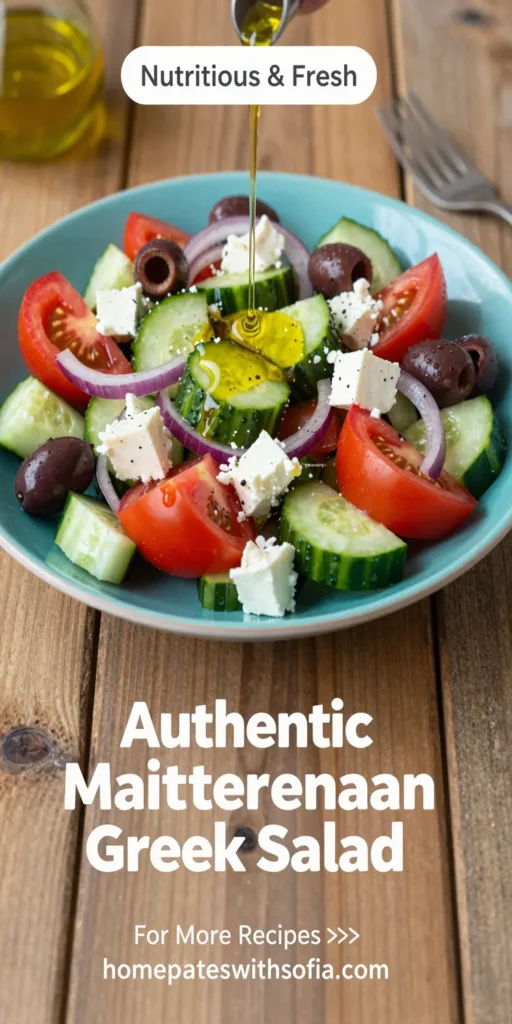
Authentic Mediterranean Greek Salad is not just a dish; it’s a celebration of vibrant ingredients and flavors that transport you straight to the sunlit coasts of Greece. Ideal for those busy weeknights or lazy weekends, this salad offers a delightful way to enjoy fresh produce while staying healthy and satisfied. You’ll find crisp vegetables, tangy olives, and creamy feta cheese creating a delightful balance that captivates any palate. This salad is perfect for meal prep or as a side dish for barbecues, bringing a refreshing touch to your plate.
What Is Authentic Mediterranean Greek Salad?
Mediterranean Greek Salad, traditionally known as “Horiatiki,” is a staple in Greek cuisine, characterized by its simplicity and freshness. Composed mainly of ripe tomatoes, cucumbers, bell peppers, red onions, olives, and feta cheese, it embraces the essence of the Mediterranean diet, which is rich in healthy fats, fiber, and antioxidants. The dressing for this salad typically includes olive oil, red wine vinegar, and oregano, enhancing the natural flavors of the ingredients without overpowering them.
Why You’ll Love This
You will fall in love with this salad for various reasons. First, it is incredibly easy to make, calling for no cooking—only chopping and mixing. Second, the combination of ingredients contributes not only to a feast for the eyes but also a burst of freshness with each bite. Lastly, this refreshing dish is versatile enough to serve as a side or the main event at your table, making it a favored choice among those who appreciate the zest of healthy, homemade meals.
Ingredients You’ll Need
- Ripe tomatoes (2 cups, diced): They provide a juicy base, enhancing overall freshness.
- Cucumbers (1 cup, diced): Crisp and cooling, they add a refreshing crunch.
- Bell pepper (1 medium, diced): Adds sweetness and color for visual appeal.
- Red onion (1 small, thinly sliced): Infuses a sharp flavor that balances the other ingredients.
- Olives (1 cup, pitted and halved): Briny and rich, they deepen the flavor profile.
- Feta cheese (1 cup, crumbled): Creamy and tangy, this key ingredient brings richness.
- Extra virgin olive oil (¼ cup): For dressing, it adds healthy fats and enhances flavors.
- Red wine vinegar (2 tablespoons): Offers a tangy zing that lifts the salad.
- Oregano (1 teaspoon, dried): Brings authentic Mediterranean flavor.
- Salt and pepper to taste: Essential for enhancing all the natural flavors.

How to Make
- Start by washing all your fresh vegetables under cold water. Making sure they are clean enhances the taste and texture. Cut the tomatoes into bite-sized pieces and place them in a large mixing bowl.
- Next, peel the cucumber and cut it into half-moons or small cubes, adding it to the mixing bowl with the tomatoes. The crunchiness of the cucumber adds a refreshing element to the salad.
- Chop the bell pepper into similar-sized pieces as the rest of the vegetables, ensuring a uniform texture. Thinly slice the red onion and add it to the bowl; you can soak the onion in ice water for a few minutes to diminish its pungency if preferred.
- Gently fold in the olives and crumbled feta cheese. Be careful not to crush the feta; you want those lovely creamy chunks to remain intact.
- In a separate small bowl, whisk together the extra virgin olive oil, red wine vinegar, oregano, salt, and pepper. This dressing ties all the elements together, enhancing the vibrant flavors of the salad.
- Pour the dressing over the salad and toss gently to combine everything. Allow it to sit for a few minutes before serving, as this will help the flavors meld and improve the overall taste.
Variations & Substitutions
Avocado Infusion: For a creamier texture and added heart-healthy fats, consider including diced avocado. It complements the flavors beautifully while offering additional nutrition—perfect for a filling meal.
Chickpea Boost: Adding canned or cooked chickpeas can turn your salad into a protein-rich dish. This incorporation makes it ideal for a main course, especially for vegetarian choices, ensuring a satisfying and hearty meal.
Herb Overload: If you’re an herb lover, experiment with fresh parsley, dill, or basil. Fresh herbs brighten up the salad, enhancing its Mediterranean flair while adding their distinct flavors.
Common Mistakes to Avoid
When preparing your Mediterranean Greek Salad, one common mistake is overly dense chopping of the vegetables. Make sure you chop them into bite-sized pieces to ensure good textural balance and easier eating. Moreover, using pre-crumbled feta can often lead to a dry outcome. Opt for a block of high-quality feta and crumble it yourself for added creaminess and flavor. Lastly, people often overlook the importance of letting the salad sit with the dressing. This step is vital, as it allows all flavors to meld beautifully.
Storage, Freezing & Reheating Tips
For best freshness, consume your Mediterranean Greek Salad on the same day it’s prepared. However, if you have leftovers, store them in an airtight container in the refrigerator for up to three days. To prevent sogginess, keep the dressing separate and add it just before serving. Freezing this salad is not advisable due to the texture of the ingredients, especially the cucumbers and tomatoes, which lose their crunch once thawed. When reheating any components, such as chickpeas or grains incorporated, do so gently on the stove or in a microwave, avoiding overheating.
Frequently Asked Questions
Can I make Greek salad ahead of time?
Yes, you can prepare the salad ahead of time; however, for optimal freshness, store the vegetables and dressing separately. Combine them just before serving to maintain the crispness of the vegetables.
What can I use instead of feta cheese?
If you’re looking for a dairy-free or vegan option, consider using avocado or a creamy nut-based cheese as a substitute for feta. Both can provide a similar creaminess without the dairy.
How should I choose fresh vegetables?
When picking vegetables for your Greek salad, look for vibrant colors, firm textures, and avoid any signs of mold or soft spots. In-season produce will often yield the best flavors.
Can I use other types of olives?
Certainly! While Kalamata olives are traditional, feel free to experiment with green olives or even a mix of different varieties to suit your taste preferences.
Is Greek salad healthy?
Yes, Greek salad is considered healthy due to its high amount of vegetables, healthy fats from olive oil, and protein from feta cheese. It’s a nutrient-dense dish that is both satisfying and light.
Conclusion: Mediterranean Greek Salad is a bridge between health and flavor—an entourage of vibrant vegetables, aromatic herbs, and creamy feta that delights. Perfect for any occasion, from a busy weeknight dinner to a joyful summer barbecue, this salad promises satisfaction without the fuss, bringing you a taste of the Mediterranean in a bowl. Enjoy the process of creating this dish, as each step is infused with colors, aromas, and a dash of love!