Prep time: 15 minutes
Cook time: 0 minutes
Total time: 15 minutes
Servings: 4
Authentic Mediterranean Greek Salad is a vibrant, refreshing dish that epitomizes the essence of Mediterranean cuisine. Bursting with flavor, this salad comes together quickly and uses simple ingredients that provide both nourishment and satisfaction. Ideal for busy weeknights or as a stunning side dish at gatherings, this Greek salad combines crisp vegetables, tangy feta cheese, and a zesty dressing that brings everything together beautifully.
What Is Authentic Mediterranean Greek Salad?
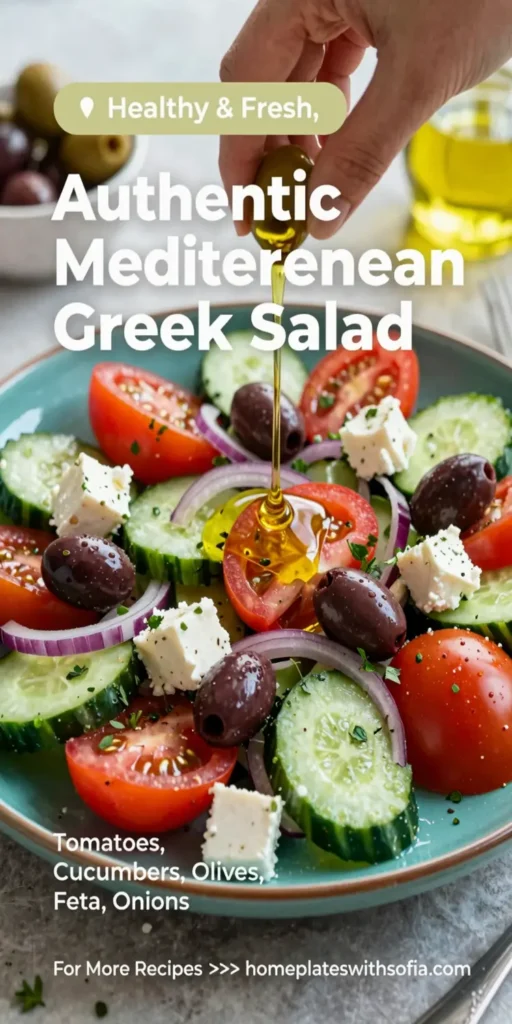
The Authentic Mediterranean Greek Salad, also known as “Horiatiki,” is a traditional dish that originates from Greece. Unlike heavy pasta or grain salads, this straightforward concoction features fresh, raw ingredients, allowing the natural flavors to shine. Key components include ripe tomatoes, crispy cucumbers, red onions, Kalamata olives, and bold feta cheese, often drizzled with good-quality olive oil and sprinkled with oregano. This combination creates a symphony of flavors and textures—from the crunch of fresh veggies to the creaminess of the cheese.
Why You’ll Love This
This salad is a favorite for many reasons. First and foremost, the blend of flavors is astoundingly delicious. The sweetness of the tomatoes pairs perfectly with the saltiness of the feta cheese, while the olives add a briny punch. Additionally, the salad is extremely versatile. Whether you want it as a light lunch, a side for grilled meats, or a celebratory dish at a summer barbecue, it adapts effortlessly. Plus, preparing this salad takes minimal time, making it perfect for busy parents or kitchen beginners looking to impress without spending hours in the kitchen. The ingredients are economical and easy to find, making it a budget-friendly option sure to please.
Ingredients You’ll Need
- 2 large ripe tomatoes: The foundation of your salad; choose tomatoes at peak ripeness for the best flavor.
- 1 large cucumber: Adds a refreshing crunch; English cucumbers work well since they have fewer seeds.
- 1 small red onion: Adds a slightly sweet and pungent flavor, cut thin for optimal bite.
- 1 cup Kalamata olives: Their saltiness enhances the overall taste of the salad.
- 1 cup crumbled feta cheese: This tangy cheese gives that creamy texture and authentic Greek flavor.
- ¼ cup extra virgin olive oil: Use high-quality olive oil as it enriches the salad with healthy fats and flavor.
- 2 tablespoons red wine vinegar: Provides acidity that balances the richness of the cheese.
- 1 teaspoon dried oregano: This herb is a classic in Greek cuisine, adding depth and aroma.
- Salt and pepper to taste: Essential for seasoning your salad perfectly.

How to Make
- Begin by preparing your vegetables. Dice the tomatoes into bite-sized pieces, ensuring you remove excess seeds if they’re particularly juicy. Chop the cucumbers into thick slices or half-moons, ensuring they maintain their crispness.
- Next, slice the red onion into thin rings. This will soften its sharp taste while adding a beautiful pop of color to your salad. If you’re sensitive to raw onion, consider soaking the slices in cold water for 10 minutes before adding them to the salad.
- In a large salad bowl, combine the chopped tomatoes, cucumbers, and red onions. Toss gently to mix the ingredients, trying not to squish the tomatoes to preserve their shape.
- Now, add in the Kalamata olives and crumbled feta cheese. The olives should be pitted for safety and ease of eating. Gently fold these ingredients into the salad, allowing the olives to get mixed in without overpowering the other ingredients.
- In a separate bowl, whisk together the olive oil, red wine vinegar, dried oregano, and a pinch of salt and pepper to create your dressing. Pour this dressing over the salad, tossing gently to ensure every component is coated.
- Let the salad sit for about 10 minutes before serving. This time allows the flavors to meld beautifully. Serve it chilled or at room temperature for the best experience.
Variations & Substitutions
Quinoa Greek Salad: For a protein boost, consider adding cooked quinoa to your Greek salad. This not only makes it more filling but also imparts a delicious, nutty flavor. Combine 1 cup of cooked quinoa with the existing ingredients, mixing well with the veggies and feta. Drizzle with the olive oil and vinegar dressing as usual.
Grilled Vegetable Greek Salad: For a smokier flavor, grill your vegetables before adding them to the salad. Zucchini, bell peppers, and even eggplant can be excellent additions. Grill them until tender and lightly charred, then mix them with the fresh ingredients for a wonderful contrast of flavors.
Spicy Greek Salad: If you love heat, consider adding chopped jalapeños or a sprinkle of red pepper flakes to your salad. This will elevate the flavor profile, introducing a kick that complements the freshness of the vegetables and the creaminess of the cheese.
Vegan Greek Salad: Substituting the feta cheese with vegan feta or omitting it entirely can easily make this a plant-based dish. You might consider adding avocado for creaminess and healthy fats or incorporating chickpeas for protein.
Common Mistakes to Avoid
One major mistake is using low-quality ingredients, especially olive oil. Using a mediocre oil can significantly diminish the flavor of your salad. Always choose fresh, high-quality extra virgin olive oil for the best taste.
Another common misstep is cutting the vegetables too early. Freshness is key, so prepare your salad just before serving. This ensures the vegetables maintain their crunch and don’t become soggy.
Lastly, neglecting the resting period for the salad is a fault. Allowing the salad to sit after mixing gives the flavors time to meld together beautifully. A rushed salad will taste disjointed rather than harmonious.
Storage, Freezing & Reheating Tips
For optimal freshness, store your Greek salad in an airtight container in the refrigerator. It is best enjoyed within 2-3 days. Keep the dressing separate if you plan to store leftovers; this helps maintain the crisp texture of the vegetables. If frozen, the salad will lose its crunchy freshness, so freezing is not recommended.
To revive the salad the next day, simply drizzle a bit more olive oil or vinegar before serving. If you prefer, slap it on some toasted bread for an impromptu bruschetta!
Frequently Asked Questions
Can I make Greek Salad in advance?
Yes, you can prepare the ingredients up to a day in advance, but it’s best to mix them with the dressing only shortly before serving. This way, the vegetables will remain crisp and vibrant.
What types of olives can I use?
While Kalamata olives are traditional, you can also use green olives or black olives, depending on your preference. Just be sure they are pitted for easy eating.
Is Greek salad gluten-free?
Absolutely! Greek salad is naturally gluten-free, making it an excellent choice for anyone following a gluten-free diet.
Can I add protein to my Greek salad?
Sure! Adding grilled chicken, shrimp, or even chickpeas can transform this salad into a more hearty meal while still retaining its flavorful essence.
How can I adjust the seasoning?
Feel free to taste and adjust the seasoning of your dressing to your liking. Adding a zesty squeeze of lemon juice or a pinch of sugar can balance the acidity and enhance the overall flavor.
Conclusion: Greek salad is a delightful, easy-to-make dish that offers a burst of flavor and freshness. Perfect for all occasions, it highlights the simplicity and richness of Mediterranean ingredients. Enjoy this vibrant salad on its own or as a complementary side, and feel free to explore variations that fit your tastes!