Prep time: 20 minutes
Cook time: 30 minutes
Total time: 50 minutes
Servings: 4
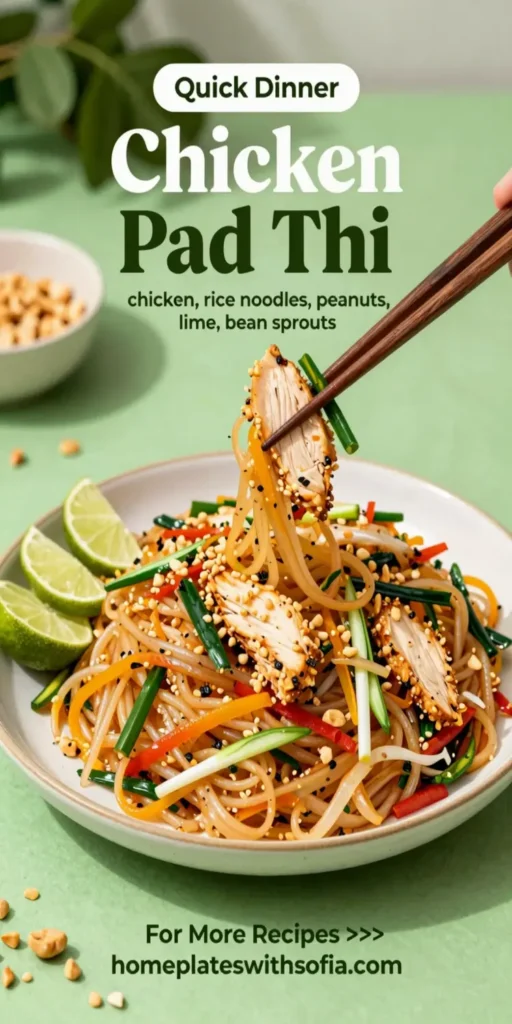
Chicken Pad Thai is a delightful stir-fried noodle dish that captures a harmonious blend of flavors and textures, making it a staple in Thai cuisine. With its combination of tender chicken, crunchy vegetables, and perfectly cooked rice noodles, it’s a meal that appeals to many, from busy parents to kitchen beginners. The dish is not only delicious but also visually appealing, with vibrant colors that promise a flavorful experience.
What Is Chicken Pad Thai?
Chicken Pad Thai is a traditional Thai street food dish that highlights the balance of sweet, sour, salty, and spicy flavors. Typically made with stir-fried rice noodles, this dish is often accompanied by a mix of vegetables, eggs, and proteins—chicken being a popular choice. The signature Pad Thai sauce, usually made from tamarind paste, fish sauce, sugar, and chili, brings a depth of flavor that ties all the ingredients together.
Additionally, garnishes like crushed peanuts, bean sprouts, and fresh lime add texture and brightness, enhancing the overall experience. It’s a beloved dish worldwide, enjoyed for its rich flavor profile and satisfying nature.
Why You’ll Love This
There are countless reasons to love Chicken Pad Thai. First and foremost, it offers an incredible flavor palette with each bite; the **tender chicken** melds beautifully with the **nutty** flavor of the peanuts and the **zingy** touch of lime. Furthermore, it’s an adaptable recipe that allows for a variety of substitutions based on dietary restrictions or preferences, ensuring everyone can partake in this culinary delight.
The quick preparation time makes it perfect for busy weeknights while being impressive enough to serve at gatherings or dinner parties. The dish can also be made in larger batches, making it ideal for meal prep. Overall, Chicken Pad Thai represents a comforting yet exotic meal that can be enjoyed on any occasion.
Ingredients You’ll Need
- 8 oz rice noodles: These thin noodles soak up sauce beautifully and provide a chewy texture.
- 2 tablespoons vegetable oil: Essential for stir-frying, it allows the ingredients to cook evenly.
- 1 pound chicken breast: Sliced into thin strips, it provides protein and a satisfying bite.
- 2 eggs: Beaten and added for richness, they enhance the dish’s texture.
- 1 cup bean sprouts: Fresh and crunchy, they add a delightful crispness.
- 1 red bell pepper: Sliced thin for sweetness and color.
- 3 green onions: Chopped for a fresh and mild onion flavor.
- 1/4 cup crushed peanuts: Added for crunch and a nutty taste.
- 3 tablespoons fish sauce: Provides a savory depth of flavor.
- 2 tablespoons tamarind paste: The star of the sauce, delivering the essential tangy flavor.
- 2 tablespoons sugar: Balances the flavors, enhancing the overall taste.
- 1 tablespoon chili powder: Optional, for those who enjoy a little heat.
- Fresh lime wedges: Served on the side to brighten the dish.
How to Make
- Begin by soaking the rice noodles in warm water for about 20-30 minutes or until they become soft. Drain and set aside, ensuring they’re not overly mushy, as you want a little firmness to them for stir-frying.
- In a large skillet or wok, heat the vegetable oil over medium-high heat. Once hot, add the sliced chicken breast and sauté until golden brown and cooked through, approximately 5-7 minutes. Be sure to stir constantly to avoid burning.
- Push the cooked chicken to one side of the skillet and pour in the beaten eggs on the other side. Scramble the eggs until set, mixing them with the chicken to ensure they’re well-combined.
- Add the bell pepper and green onions to the skillet. Stir-fry for about 2-3 minutes, allowing the vegetables to soften slightly while still maintaining some crunch.
- Next, add the soaked and drained rice noodles to the skillet, tossing everything together. Pour in the fish sauce, tamarind paste, sugar, and chili powder (if using). Mix thoroughly to ensure the noodles are evenly coated with the sauce.
- Finally, remove from heat, stir in the bean sprouts and crushed peanuts, reserving some for garnish. Serve hot, with lime wedges on the side for squeezing over the dish for added brightness.
Variations & Substitutions
Vegetarian Pad Thai: To make a vegetarian version, you can substitute the chicken with tofu and use soy sauce in place of fish sauce. This will still provide a hearty meal while keeping it meat-free. You can also add more vegetables like mushrooms, zucchini, or snap peas to bolster the dish with nutrients and flavors.
Spicy Pad Thai: If you crave a spicier kick, increase the amount of chili powder or add fresh sliced chili peppers during cooking. You could also incorporate a spicy sauce like sriracha at the end for an extra flavor punch.
Peanut Butter Pad Thai: For a unique twist, mix in a tablespoon of creamy peanut butter when cooking the sauce. This adds a rich, creamy texture and enhances the nutty flavor that Pad Thai is known for.
Seafood Pad Thai: For seafood lovers, replace the chicken with shrimp, scallops, or a mix of both. Adjust the cooking time for the seafood, ensuring they’re perfectly cooked without being overdone.
Gluten-Free Pad Thai: To make this dish gluten-free, use gluten-free rice noodles and ensure that the tamarind and fish sauce used have no gluten-containing additives. This way, those with gluten sensitivities can enjoy a delicious meal without worry.
Common Mistakes to Avoid
One common mistake when making Chicken Pad Thai is overcooking the noodles. Ensure they are soaked only until they are just pliable; over-soaking makes them mushy, which can ruin the texture of the whole meal. Pro tip: If the noodles are too soft, they may break apart during stir frying.
Another mistake is not preparing your ingredients ahead of time. This dish cooks quickly, so it’s crucial to have everything ready to go before you start cooking. Spending time to chop vegetables and measure sauce ingredients can save unnecessary stress during the cooking process.
Lastly, controlling the heat while cooking is essential. If your pan isn’t hot enough, the chicken may end up steaming instead of searing. Warning: If the oil isn’t hot enough, your dish can become greasy instead of perfectly sautéed.
Storage, Freezing & Reheating Tips
Chicken Pad Thai can be stored in an airtight container in the refrigerator for up to 3-4 days. If you’re looking to freeze it, portion out servings into freezer-safe containers, storing them for up to 2 months. When reheating, it is best to do so on the stovetop with a splash of water to help soften the noodles and restore some moisture. This method also helps maintain the flavor better than the microwave, which might dry it out.
When reheating from frozen, it’s advisable to let it defrost overnight in the fridge. However, if you’re in a hurry, you can also reheat it straight from frozen, adding extra moisture and stirring frequently to ensure even heat distribution.
Frequently Asked Questions
Can I use other proteins for Chicken Pad Thai? Absolutely! While chicken is a popular choice, you can substitute it with shrimp, tofu, or beef. Each protein provides its unique flavor and texture. Just ensure you adjust the cooking times accordingly.
Is it possible to make Chicken Pad Thai ahead of time? Yes, you can prepare the sauce and chop all ingredients ahead of time, storing them separately in the fridge. However, it’s best to cook the noodles right before serving to maintain their texture.
Can I make Chicken Pad Thai vegan? Yes, to make a vegan version, you can replace chicken with tofu or tempeh and omit the eggs. Use vegan alternatives for fish sauce, such as soy sauce or a mushroom-based sauce.
What is tamarind paste, and can I substitute it? Tamarind paste is a core ingredient in Pad Thai, providing a tangy flavor. If you can’t find it, you can use lime juice combined with a little brown sugar to replicate the sweetness and acidity.
How can I make Chicken Pad Thai less oily? To reduce the oiliness in your dish, utilize a non-stick pan and monitor the amount of oil used during cooking. Keeping ingredients prepared in advance helps ensure a faster cooking time, which also reduces the need for excess oil.
Conclusion: Chicken Pad Thai is a delightful dish that brings together a medley of tastes and textures, adaptable for any dietary preference or occasion. When made with care, it’s sure to impress, whether you’re serving a family dinner or hosting friends. Enjoy experimenting with the variations, and relish every bite!