Prep time: 15 minutes
Cook time: 30 minutes
Total time: 45 minutes
Servings: 4 servings
Chicken Pad Thai is a delicious, savory dish that’s become a beloved staple in Thai cuisine. With its captivating blend of textures and vibrant flavors, it offers a satisfying experience that many find irresistible. Whether you’re in need of a quick dinner during a busy week or wanting to impress guests on the weekend, this recipe is your go-to for authentic taste without the restaurant price.
What Is Chicken Pad Thai?
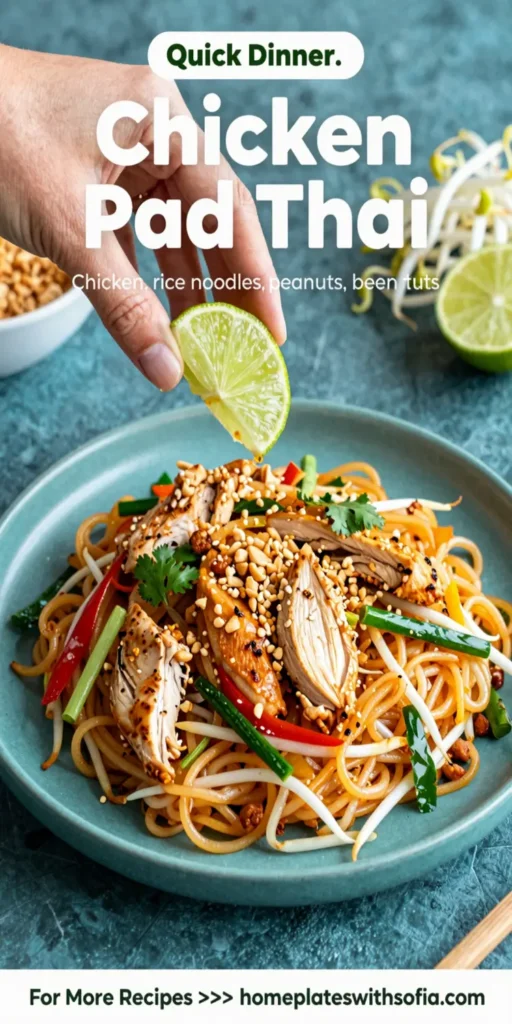
Chicken Pad Thai is a stir-fried noodle dish typically made with rice noodles, chicken, eggs, bean sprouts, and peanuts, all tossed together in a delightful sweet and tangy sauce. Pad Thai originated in Thailand and has gained immense popularity worldwide for its unique flavor profile and satisfying texture. The dish harmonizes various ingredients, mixing the freshness of vegetables with savory protein, resulting in a wonderfully balanced meal.
Why You’ll Love This
There are plenty of reasons to love Chicken Pad Thai. First, it’s **quick and easy to make**, which is ideal if you’re juggling a hectic schedule. The flavors are rich and adaptable, allowing you to tweak the recipe to suit your taste preferences. You’ll also appreciate the **balance of protein and carbohydrates** in this dish, making it a wholesome choice. Finally, it delivers a taste of authentic Thai street food right at home.
Ingredients You’ll Need
- 8 ounces rice noodles: The base of the dish, providing the signature chewy texture.
- 1 pound boneless chicken breast: Lean protein that makes the dish hearty.
- 2 tablespoons vegetable oil: For sautéing the chicken and veggies.
- 2 eggs: Adds richness and texture, binding the ingredients together.
- 1 cup bean sprouts: Provides a refreshing crunch.
- 3 green onions: Adds a mild onion flavor and bright color.
- 1/4 cup roasted peanuts: Offers a crunchy topping and nutty flavor.
- 2 tablespoons fish sauce: Essential for that savory depth.
- 1 tablespoon tamarind paste: Adds the signature tang of Pad Thai.
- 1 tablespoon sugar: Balances the flavors perfectly.
- 1 tablespoon lime juice: Enhances freshness with acidity.
- Red pepper flakes (optional): For those who enjoy a little heat.

How to Make
- Prepare the noodles: Soak the rice noodles in warm water for about 20 minutes or until they are soft. Drain and set aside, ensuring they do not stick together.
- Cook the chicken: Heat the vegetable oil in a large skillet or wok over medium heat. Add the chicken, cooking until it’s no longer pink, about 5 to 7 minutes. Remove from the pan and set aside.
- Sauté the eggs: In the same pan, crack the eggs and scramble until fully cooked. Add the soaked noodles to the pan, tossing them with the eggs.
- Add vegetables: Stir in the bean sprouts and green onions, mixing well to combine. This should take about 3 minutes, allowing the veggies to remain crisp.
- Mix the sauce: In a small bowl, combine the fish sauce, tamarind paste, sugar, and lime juice. Pour this mixture over the noodles and toss everything together, ensuring the sauce is evenly distributed.
- Finish and serve: Once everything is well combined, sprinkle crushed peanuts and additional lime juice on top before serving. Enjoy your Chicken Pad Thai while hot!
Variations & Substitutions
Vegetarian Pad Thai: Swap out the chicken for tofu or additional veggies such as bell peppers and broccoli. Utilize soy sauce instead of fish sauce and add a burst of flavor with extra lime juice. This version maintains the delicious essence of Pad Thai without meat, making it suitable for vegetarian diets.
Shrimp Pad Thai: For a seafood twist, replace the chicken with shrimp. The cooking time will be similar; just ensure your shrimp are fully cooked and pink before adding the remaining ingredients. The sweetness of the shrimp perfectly complements the sauce, bringing a seafood flavor to your dish.
Spicy Pad Thai: If you love heat, consider adding more red pepper flakes or incorporating fresh Thai chilies during the cooking process. This variation amps up the flavor profile and makes your taste buds dance.
Common Mistakes to Avoid
Overcooking the noodles: Avoid leaving the rice noodles in water too long; they should be soft but not mushy. If they overcook, they will become sticky and lose their ideal texture when stir-fried.
Not having all ingredients ready: Pad Thai cooks quickly, so it’s crucial to have all ingredients prepped before starting the cooking process. This ensures a smooth workflow and retains the freshness of the vegetables.
Skipping the sauce: Don’t forget to mix the sauce before adding it to the noodles; this assures even distribution of flavor throughout the dish. A well-balanced sauce is key to achieving that authentic Pad Thai flavor.
Storage, Freezing & Reheating Tips
To store leftover Chicken Pad Thai, keep it in an airtight container in the refrigerator for up to 3 days. For longer storage, you can freeze the dish for up to a month. However, it’s advisable to store the sauce separately if possible, as it may change the texture of the noodles when reheated.
To reheat, place the leftovers in a skillet with a splash of water over medium heat. This prevents the noodles from becoming too dry and helps restore some of the original flavors. Alternatively, using the microwave is convenient; just cover the dish to retain moisture and heat in short bursts, stirring in between.
Frequently Asked Questions
What can I substitute for tamarind paste? If you can’t find tamarind paste, a combination of lime juice and brown sugar can mimic that sweet and tart flavor. Alternatively, you could use Worcestershire sauce, although the taste will differ slightly. Always taste as you go to adjust the balance.
Can I make Chicken Pad Thai gluten-free? Absolutely! Simply substitute the regular rice noodles with gluten-free rice noodles, and ensure that your fish sauce and sugar are gluten-free as well. This adaptation allows you to enjoy a gluten-free version without losing the traditional flavors.
How can I make Pad Thai spicier? To increase the heat level, incorporate more red pepper flakes or add chopped fresh chili peppers. You can also offer chili paste as a condiment on the side, allowing people to tailor the spice level to their preference.
Is Chicken Pad Thai healthy? While Chicken Pad Thai offers a delightful mix of flavors, it’s essential to maintain balance. You can make it healthier by increasing the vegetable content and decreasing the amount of oil and sugar. Using whole grain or higher protein noodles can also enhance the nutrition profile.
Can I use another protein instead of chicken? Yes, you can get creative with proteins! Shrimp, beef, or even tofu are excellent alternatives. Each protein brings a unique texture and flavor to this classic dish, so feel free to experiment with what you have on hand.
Conclusion: Making Chicken Pad Thai is not just about following a recipe; it’s about creating a delicious and enjoyable experience in your kitchen. With this guide, you’ll have all the tools you need to whip up your own version of this classic dish. Balance the flavors, invite friends over, and savor the wonderful dining experience that Chicken Pad Thai brings to your table. Enjoy your cooking journey!