Prep time: 20 minutes
Cook time: 1 hour
Total time: 1 hour 20 minutes
Servings: 12 servings
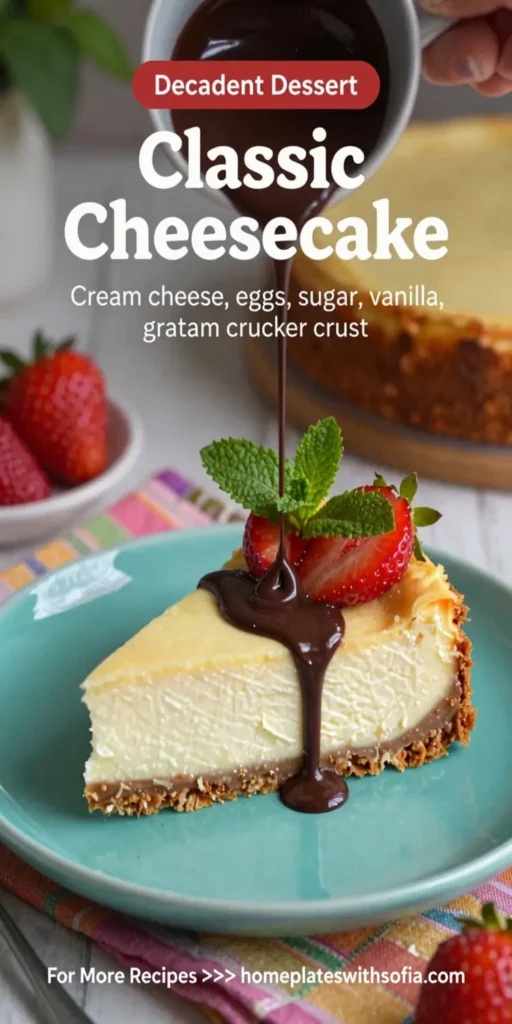
Classic cheesecake is a timeless dessert that never fails to impress. With its smooth, creamy filling and buttery crust, it’s loved by many. This recipe guides you through making a classic cheesecake from scratch, ensuring you enjoy every delicious bite. Perfect for special occasions or just a cozy night in, cheesecake has a unique way of bringing joy.
What Is Classic Cheesecake?
Classic cheesecake is a rich dessert made primarily from cream cheese, sugar, eggs, and a crumbly crust. The texture is velvety and smooth, making it a delightful treat for any dessert lover. Originating from ancient Greece, this dessert has evolved over centuries, with numerous variations developed across cultures. Traditional cheesecake often has a plain flavor but can be enhanced with fruits, chocolate, or other flavors, creating a diverse range of beloved recipes around the globe.
Why You’ll Love This
This classic cheesecake recipe is not only easy to follow but delivers a stunningly delicious dessert every time. The creamy filling paired with a perfectly baked crust yields a texture that melts in your mouth. You can serve it plain or top it with a fruit compote or chocolate ganache for an extra layer of indulgence. Additionally, it’s a fantastic recipe to make ahead, as it tastes even better after resting in the refrigerator for a day, allowing the flavors to meld beautifully.
Ingredients You’ll Need
- 1 ½ cups of graham cracker crumbs: This forms the base of your crust and contributes a sweet, crunchy texture.
- ½ cup of unsalted butter, melted: It binds the crumbs together and gives richness to the crust.
- 2 cups of cream cheese, softened: The star ingredient that creates the creamy filling.
- 1 cup of granulated sugar: Adds sweetness to balance the tartness of the cream cheese.
- 3 large eggs: Binds the filling together and contributes to the cheesecake’s structure.
- 1 teaspoon of vanilla extract: Enhances the flavor of the cheesecake.
- 1 tablespoon of lemon juice: Adds brightness and helps cut through the richness.

How to Make
- Preheat your oven to 325°F (160°C). Ensure your oven is adequately preheated; this is crucial for an even bake.
- In a mixing bowl, combine the graham cracker crumbs and melted butter, ensuring all crumbs are coated. This mixture is the foundation of your crust, providing that beloved crunch.
- Press the mixture firmly into the bottom of a 9-inch springform pan to create an even layer. Use the bottom of a measuring cup for a smooth surface, and remember to slightly raise the crust on the sides.
- In another large mixing bowl, beat the softened cream cheese until creamy and smooth; this should take about 2-3 minutes. Properly softened cream cheese prevents lumps in your filling.
- Add the granulated sugar while mixing at a low speed. This ensures the sugar fully incorporates without causing the cream cheese to become too airy.
- One at a time, add the eggs, mixing just until incorporated after each addition. Overmixing can introduce too much air, leading to cracks in your cheesecake.
- Finally, add the vanilla extract and lemon juice, mixing until well combined. The lemon juice provides a nice tang that complements the richness of the cheesecake.
- Pour the batter over the prepared crust, using a spatula to smooth the top. This step is essential for even cooking.
- Bake the cheesecake for 50-60 minutes, or until the edges are set but the center remains slightly jiggly. It will firm up as it cools.
- Turn off the oven and crack the door, letting the cheesecake cool down slowly for about an hour. This method helps prevent cracking from a sudden temperature change.
- Once cooled, refrigerate the cheesecake for at least 4 hours, or overnight if possible. Chilling enhances the flavor and texture.
Variations & Substitutions
Fruit Topped Cheesecake: Add a layer of your favorite fruit compote on top of the cheesecake after it sets. Strawberries, blueberries, or cherries make excellent choices, enhancing both flavor and visual appeal. You can make the compote by simmering fruit with sugar until it thickens slightly. This adds a refreshing tartness that complements the creamy cheesecake.
Chocolate Swirl Cheesecake: For chocolate lovers, swirl in melted chocolate into your cheesecake batter just before baking. This adds a rich chocolate flavor and creates beautiful marbled swirls throughout. Use high-quality bittersweet chocolate for the best results.
Gluten-Free Cheesecake: Substitute graham cracker crumbs with gluten-free alternatives, such as almond flour or gluten-free cookie crumbs, to accommodate dietary restrictions. The flavor will slightly change, but the cheesecake will still taste delicious.
No-Bake Cheesecake: For a quicker option, skip the baking step and use whipped cream to stabilize the cheesecake mixture instead of eggs. This variation is light and refreshing, perfect for warm weather.
Common Mistakes to Avoid
Avoid overmixing the batter once the eggs are added; this can lead to unwanted air pockets and cracks in your cheesecake. Additionally, ensure your cream cheese is fully softened to guarantee a smooth, lump-free filling. Another common issue is not allowing the cheesecake to cool gradually in the oven, which can also contribute to cracks.
Storage, Freezing & Reheating Tips
For optimal freshness, store leftover cheesecake in the refrigerator, covered tightly or in an airtight container, for up to 5 days. If you plan to keep it longer, consider freezing it. To do so, wrap individual slices in plastic wrap and then place them in a freezer-safe bag. Cheesecake can be frozen for up to 2 months. When ready to enjoy, thaw slices in the refrigerator overnight. Avoid reheating cheesecake in the microwave, as it can alter the texture; simply let it come to room temperature before serving.
Frequently Asked Questions
Can I use light cream cheese for this recipe?
Yes, you can use light cream cheese, but it may result in a slightly different texture and flavor. Full-fat cream cheese provides a creamier and richer taste, which is ideal for cheesecake. However, if you prefer a lower-calorie option, light cream cheese can still work.
How do I know when my cheesecake is done baking?
Your cheesecake is done when the edges are set, and the center is only slightly jiggly. Remember that it will continue to cook as it cools, so avoid overbaking it to prevent a dry texture.
Can I make this cheesecake vegan?
Absolutely! For a vegan version, substitute the cream cheese with a plant-based alternative. You can use silken tofu blended with a bit of coconut cream for creaminess or a store-bought vegan cream cheese. Replace eggs with flax eggs or a similar egg substitute, and ensure any crust components are also vegan-friendly.
Why does my cheesecake have cracks on top?
Cracks often occur from overmixing, too much air incorporated into the batter, or a sudden change in temperature. Allowing your cheesecake to cool gradually in the oven can help minimize this issue.
What toppings pair well with cheesecake?
There are countless toppings to enjoy with cheesecake! Popular choices include fresh fruit, chocolate sauce, caramel drizzle, whipped cream, or a simple sprinkle of powdered sugar. Choose toppings that complement your flavor preferences for the best experience.
Conclusion: Classic cheesecake is a delightful dessert that can be customized in various ways to suit your tastes. With its rich flavor and creamy texture, this timeless recipe is sure to become a family favorite. Whether you’re indulging in a slice after dinner or celebrating a special occasion, this cheesecake will elevate any moment. Enjoy experimenting with variations and toppings to create your perfect cheesecake experience!