Prep time: 20 minutes
Cook time: 3 hours
Total time: 3 hours 20 minutes
Servings: 6 servings
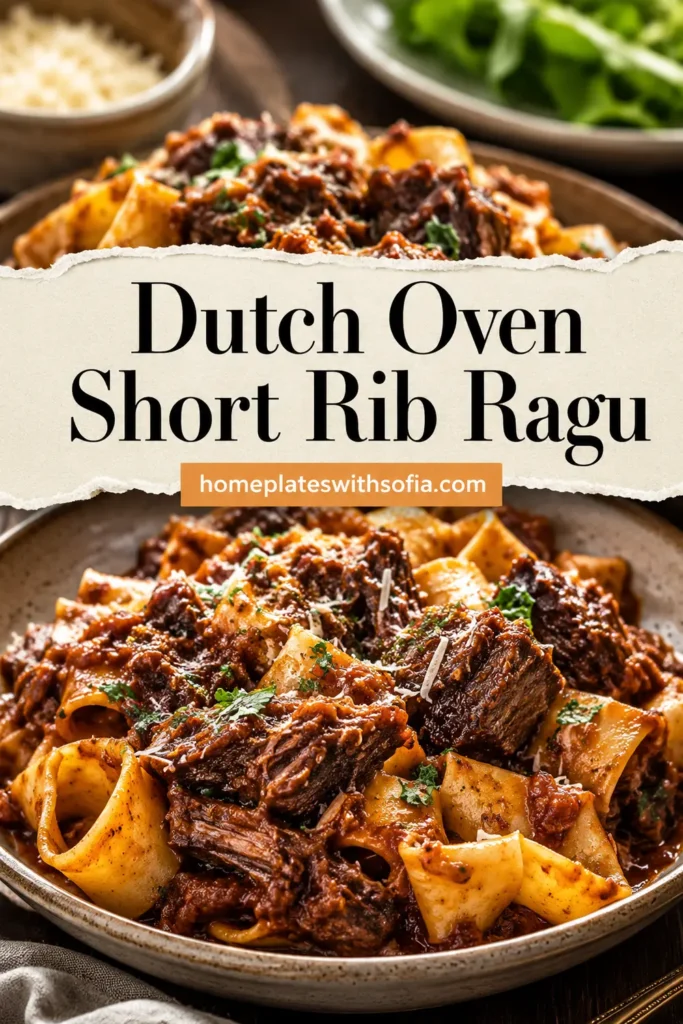
Dutch Oven Short Rib Ragu with Pappardelle is a comforting, rich dish that brings warmth to any table. Imagine slow-cooked, tender short ribs simmered in a savory sauce, served over wide pappardelle noodles. The combination of flavors creates a meal that feels both indulgent and homey, making it the perfect choice for gatherings or a cozy family dinner.
What Is Dutch Oven Short Rib Ragu with Pappardelle?
Dutch Oven Short Rib Ragu with Pappardelle is a delightful Italian-inspired dish that showcases the succulent taste of beef short ribs. The short ribs are braised slowly in a mixture of red wine, tomatoes, onions, and herbs, allowing the flavors to develop while the meat becomes incredibly tender. Pappardelle, a broad, flat noodle, is the ideal vessel to soak up the rich sauce, creating a meal that’s both hearty and satisfying.
Why You’ll Love This
There are countless reasons to love Dutch Oven Short Rib Ragu with Pappardelle. Firstly, the flavor profile is exquisite; the deep, robust taste of braised beef combined with aromatic herbs creates an unforgettable entrée. Secondly, the cooking process is therapeutic, allowing you to unwind as you smell the delicious aromas wafting from the pot. Finally, this dish is easily adaptable for larger gatherings or special occasions, and it gets better as it sits, making it a perfect make-ahead option.
Ingredients You’ll Need
- Short ribs (3 lbs): Rich in flavor, these are the star of the dish. Their marbled texture ensures that they become tender during the long cooking process.
- Olive oil (2 tablespoons): Used for browning the short ribs, it adds depth to the flavor.
- Onion (1 large, chopped): Provides sweetness and body to the ragu.
- Carrot (1 large, chopped): Adds natural sweetness and color.
- Celery (2 stalks, chopped): A key component of the mirepoix, it enhances the overall flavor.
- Garlic (4 cloves, minced): Infuses the dish with its aromatic, savory notes.
- Tomato paste (2 tablespoons): Helps thicken the sauce and intensifies the tomato flavor.
- Canned tomatoes (28 oz, crushed): The base of the ragu, providing acidity and texture.
- Red wine (1 cup): Adds complexity and depth to the flavors while helping to tenderize the meat.
- Beef broth (2 cups): Keeps the ragu moist and enriching.
- Bay leaves (2): Impart a subtle aromatic flavor.
- Thyme (3 sprigs or 1 teaspoon dried): Adds an herbal note that complements the beef.
- Pappardelle (12 oz): The perfect pasta to soak up all the rich sauce.
- Parmesan cheese (for serving): A finishing touch that adds creaminess and saltiness.

How to Make
- Start by preheating your oven to 325°F (165°C). This low temperature is essential for braising the short ribs properly.
- In a large Dutch oven, heat olive oil over medium-high heat. When hot, add the short ribs to sear them on all sides until they develop a nice brown crust, about 3-4 minutes for each side. This step is crucial as it enhances the dish’s flavor.
- Once browned, remove the short ribs from the pot and set them aside. In the same pot, add the chopped onion, carrot, and celery, cooking for about 5-7 minutes until they begin to soften. Stir in the minced garlic and cook for an additional minute until fragrant.
- Add the tomato paste to the pot, stirring well to incorporate it with the vegetables, cooking for about 2-3 minutes until it darkens slightly to release its natural sugars.
- Return the short ribs to the pot alongside the canned tomatoes and pour in the red wine. Make sure to scrape the bottom of the pot to release any flavorful browned bits stuck there. This step is known as deglazing, and it adds depth to your ragu.
- Add the beef broth, bay leaves, and thyme. Bring the mixture to a simmer, then cover the pot with a lid and transfer it to the oven.
- Braise the short ribs for about 2.5 to 3 hours, or until the meat is tender and falling off the bone. Check occasionally to ensure the liquid level is adequate, adding more broth if necessary.
- Once cooked, remove the pot from the oven and allow it to cool slightly. Carefully take out the short ribs, shredding the meat from the bones and discarding any large pieces of fat.
- Stir the shredded beef back into the sauce, tasting and adjusting seasoning if needed. Simmer on the stovetop for an additional 10-15 minutes to thicken.
- While the ragu simmers, cook the pappardelle according to package instructions in a large pot of salted boiling water. Drain and reserve a cup of pasta water.
- Toss the cooked pappardelle with the ragu, adding reserved pasta water as needed for desired consistency. Serve hot with freshly grated Parmesan cheese.
Variations & Substitutions
Vegetable Ragu Variation: For a lighter option, you can replace the short ribs with a mix of vegetables like mushrooms, zucchini, and bell peppers. Sauté the vegetables in the same way as the original recipe, and add more vegetable broth instead of beef broth. This creates a delightful, hearty vegetarian alternative that still holds the essence of the original dish.
Red Wine Substitute: If you prefer not to cook with red wine, consider using an alcohol-free alternative like grape juice or a mixture of beef broth and vinegar to replicate the acidity. This modification maintains the flavor profile without including alcohol.
Pasta Options: While pappardelle is traditional, you can also use tagliatelle, fettuccine, or even gluten-free pasta to fit your dietary restrictions. The most important aspect is ensuring the pasta you choose can hold the rich sauce.
Common Mistakes to Avoid
Not Browning the Meat Properly: Skipping the browning step for the short ribs will result in a less flavorful ragu. Always ensure a good sear to develop a deep flavor base.
Using Low-Quality Ingredients: The flavor of your ragu heavily relies on the quality of the beef and wine used. Opt for good-quality ingredients to truly elevate this dish.
Overcooking the Pappardelle: It’s vital to cook the pasta just until al dente, as it will continue to cook slightly when combined with the hot ragu. This prevents mushiness and maintains texture.
Storage, Freezing & Reheating Tips
To store leftover Dutch Oven Short Rib Ragu, let it cool completely before transferring it to an airtight container. It will keep well in the refrigerator for up to 3 days. For longer storage, you can freeze the ragu for up to 3 months. When ready to eat, thaw it overnight in the refrigerator and reheat gently on the stovetop.
When reheating, add a splash of beef broth or water to maintain the sauce’s consistency, stirring until heated through. Be cautious not to cook it on high heat, as that can dry out the meat.
Frequently Asked Questions
Can I use other cuts of beef?
Absolutely! While short ribs are perfect for this dish, you can also use chuck roast or brisket. Just ensure you adjust cooking times according to the cut you choose. The key is to go for well-marbled cuts that will remain tender during the long cooking process.
What can I serve with this dish?
In addition to the pappardelle, you can serve a fresh green salad or roasted vegetables on the side to balance the richness of the ragu. Crusty bread is another wonderful option for dipping into the sauce.
How can I reduce fat in the ragu?
To reduce the fat content, you can skim the fat off the surface after cooking or choose leaner cuts of meat. Additionally, using a less fatty beef broth can help keep the dish lighter.
Can I make this dish ahead of time?
Yes! In fact, making this ragu a day in advance can enhance the flavors significantly. Simply store it in the refrigerator overnight, allowing the ingredients to meld together. Reheat before serving for optimal taste.
Is there a vegetarian version of ragu?
Certainly! A vegetarian ragu can be created using a mix of hearty vegetables, beans, and lentils, replacing the beef and maintaining the delicious sauce. It’s a flavorful and satisfying alternative for non-meat eaters.
Conclusion:
In summary, Dutch Oven Short Rib Ragu with Pappardelle is an extraordinary dish that embodies the warmth and comfort of home-cooked meals. With tender meat enveloped in a rich sauce and paired with wide pasta, this recipe is bound to impress not just your family but also any guests. Its adaptability allows you to modify ingredients and cooking methods according to your needs, making it as versatile as it is delicious. So gather your ingredients and enjoy the process – from preparation to savoring every last bite!