Prep time: 15 minutes
Cook time: 10 minutes
Total time: 25 minutes
Servings: 12
Easter is just around the corner, a time synonymous with cheerful gatherings, family bonding, and of course, delicious food. One dish that never fails to make an appearance is the classic deviled egg. There’s something incredibly satisfying about popping a bite of these creamy, tangy delights into your mouth. Whether you are celebrating Easter with friends, hosting a springtime brunch, or just looking for an easy appetizer, Easter Deviled Eggs Classic Style are the perfect choice. This recipe is not only **simple** to follow but will also impress your guests with its mouthwatering flavors and beautiful presentation.
In this article, you’ll learn how to make deviled eggs that are flavorful, creamy, and entirely customizable. I’ll share the tips and tricks that make my version stand out, so you can avoid common pitfalls and create the perfect appetizer every time.
What Is Easter Deviled Eggs Classic Style?
Deviled eggs, also known as stuffed eggs, are a classic appetizer that has been enjoyed for centuries. Originating from ancient Rome, these delicious morsels have evolved over time, particularly in the United States where they have become a staple at various festivities, including Easter. The essence of deviled eggs lies in their creamy filling, made from the yolk of the hard-boiled egg, usually mixed with ingredients like mayonnaise, mustard, and spices. The flavor profile is rich and tangy, creating a perfect balance that is oh-so-satisfying.
The traditional texture of deviled eggs consists of a smooth and creamy yolk filling that pairs beautifully with the slightly firm, yet tender bite of the egg white. The combination of flavors, especially when enhanced with a sprinkle of paprika or fresh herbs, gives your taste buds a delightful experience. Deviled eggs not only elevate your dining table but also serve as a fantastic vehicle for various flavors and ingredients, allowing you to customize them to your heart’s desire.
Why You’ll Love This
The beauty of Easter Deviled Eggs Classic Style lies in their balance of taste and simplicity. First and foremost, the **flavors** are unbeatable; the creaminess of the filling combined with the slight tang from mustard and acidity from vinegar creates a delightful bite that works for everyone—kids and adults alike.
Moreover, these eggs are incredibly **versatile**. You can dress them up or down depending on your occasion, making them just right for picnics, potlucks, or an intimate family dinner. Financially speaking, this dish is **cost-effective**, as eggs are relatively inexpensive. A dozen eggs can serve a large group, making them a wise choice for any gathering.
It’s also worth mentioning that many believe deviled eggs are time-consuming or difficult to make, but that’s simply not true. With a little practice, you will find that the whole process is quite straightforward. Simply cooking and peeling the eggs takes a little time, but the resulting dish is a celebration of textures and tastes that will leave your guests raving.
Ingredients You’ll Need
- Eggs: The star of the dish. Large, fresh eggs work best for deviled eggs. If you prefer organic or free-range, go for those options for better taste.
- Mayonnaise: This adds creaminess to the yolk mixture. If you’re looking for a healthier option, low-fat mayonnaise can be used or even Greek yogurt as a substitute.
- Mustard: Yellow mustard is classic, but you can experiment with dijon or spicy mustard for a different flavor profile.
- White vinegar: This adds a touch of acidity that complements the richness of the filling. A splash of lemon juice can also do the trick.
- Salt and Pepper: These basic seasonings enhance all the flavors in your egg filling.
- Paprika: Traditionally used as a garnish, paprika adds a mild flavor and splash of color. Smoked paprika can add depth.
- Fresh herbs: Chopped chives or dill can brighten up the flavor and add freshness to your deviled eggs. They’re optional but recommended.
How to Make
- Hard boil the eggs: Start by placing your eggs in a single layer in a saucepan. Add enough water to cover the eggs by about an inch. Bring the water to a boil over medium-high heat. Once boiling, cover the pan, remove it from the heat, and let the eggs sit for about 10-12 minutes. Timing is crucial here; overcooking will result in a greenish-gray ring around the yolk.
- Cool the eggs: After the resting period, transfer the eggs to a bowl of ice water. This halts the cooking process and helps make peeling easier. Allow them to cool for at least 5 minutes.
- Peel the eggs: Once cool, gently tap the eggs on a hard surface to crack the shell. Start peeling from the wider end, where there’s usually an air pocket. This often makes the shell come off much easier.
- Prepare the filling: Slice the eggs in half lengthwise and carefully remove the yolks. Place these yolks in a mixing bowl and set the egg whites aside. Mash the yolks with a fork. Next, mix in mayonnaise, mustard, and vinegar until you reach a creamy consistency. Season with salt and pepper to taste. Don’t forget to taste your filling as you go—this is your opportunity to adjust flavors!
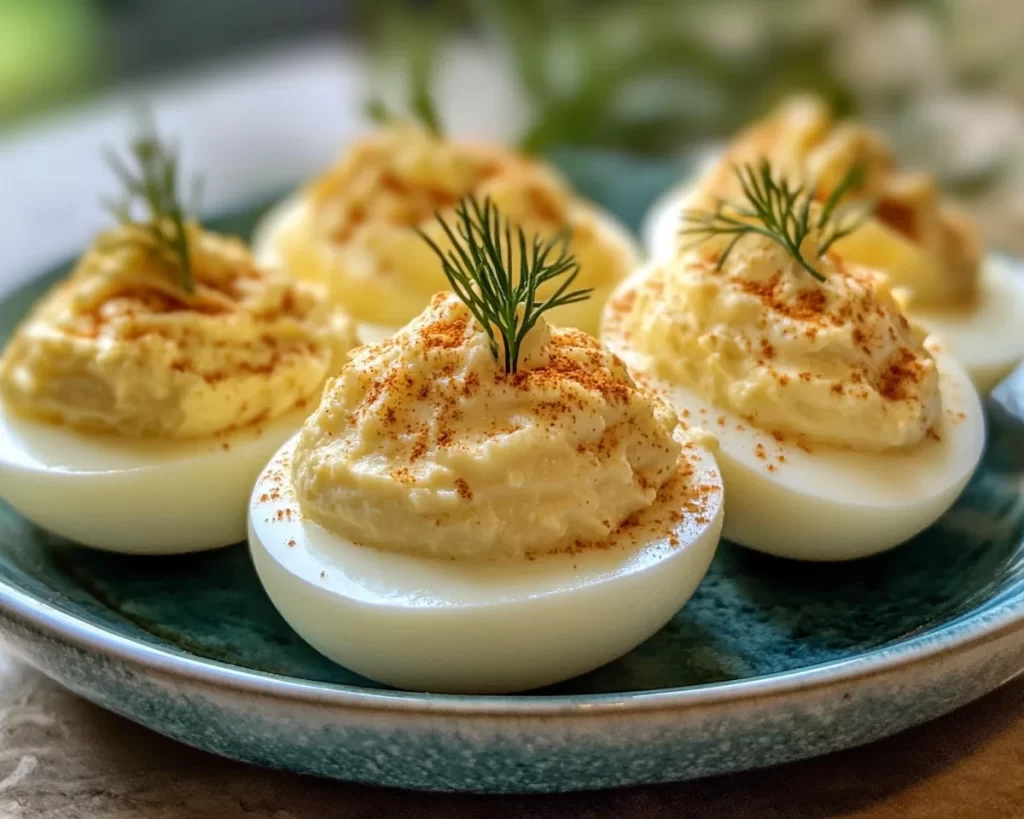
- Fill the egg whites: Use a spoon or a piping bag to fill each egg white half with the yolk mixture. For a polished presentation, consider using a piping bag fitted with a star tip to create beautiful swirls.
- Garnish and serve: Finally, sprinkle some paprika on top for color and an extra hint of flavor. If you’re feeling fancy, top with fresh herbs. Arrange your beautiful deviled eggs on a platter and serve immediately, or refrigerate for up to a few hours before serving.
Variations & Substitutions
Spicy Deviled Eggs: If you’re a fan of heat, adding diced jalapeños or a dash of hot sauce into your yolk mixture can elevate your deviled eggs. This spicy version is perfect for those who enjoy a bit of a kick in their appetizers. Just remember to taste the filling before you fill the egg whites, allowing you to adjust to your desired spice level.
Bacon and Chive Deviled Eggs: Integrating crispy bacon bits and chopped chives into the filling creates a smoky undertone that pairs wonderfully with the creaminess. This variation is a crowd-pleaser and adds a hearty touch to the classic recipe. Use nice, cooked bacon and feel free to top the filled eggs with extra bacon for presentation.
Herbed Greek Yogurt Deviled Eggs: Substitute mayonnaise with Greek yogurt for a healthier spin on the classic recipe. It will give your deviled eggs a slightly tangy taste while maintaining a creamy texture. You can also mix in fresh herbs like dill or basil for added flavor. This variation is excellent for those on a lighter diet, and the protein from Greek yogurt provides a filling snack.
Avocado Deviled Eggs: Want a creamy and healthy twist? You can blend ripe avocado into your yolk mixture instead of mayonnaise. This will not only provide a beautiful green color but also add a unique, buttery flavor. This version is perfect for anyone looking for a vegan alternative; just make sure to keep them from browning by serving shortly after preparation.
Common Mistakes to Avoid
One of the most frequent mistakes when making deviled eggs is overcooking the eggs. This tends to make the yolks dry out and can create a greenish hue around the yolk. To fix this, always stick to accurate cooking times and have an ice bath ready to cool the eggs quickly.
Another common mistake is under-seasoning the yolk mixture. Seasoning is key to bringing out the flavor, so make sure to taste and adjust as you mix in mayonnaise, mustard, and vinegar. You can always add more, but it’s difficult to take it out once it’s mixed in.
Lastly, peeling the eggs can become a challenge if you’re not careful. Older eggs tend to peel more easily than fresh ones. If you find yourself struggling, tapping the egg gently to crack the shell all over can help in getting the shell off without tearing the white.
Storage, Freezing & Reheating Tips
Deviled eggs are best served fresh, but you can store them in the refrigerator for up to 24 hours. To avoid discoloration, cover them with plastic wrap to keep them sealed and fresh. If you’re planning to make your deviled eggs ahead of time, consider preparing the egg whites and yolk filling separately and combining them just before serving.
Freezing is not recommended for deviled eggs as both the egg whites and the yolk filling can change texture upon thawing, resulting in an unappetizing dish. If you have leftover filling, you can store it in an airtight container in the refrigerator for a day or two, but be aware that it may become thicker over time.
Reheating is not necessary for deviled eggs since they are typically served cold, but if for some reason you do need to serve them warm (such as in a stuffed casserole), consider adapting the recipe accordingly and baking for a short time.
Frequently Asked Questions
How long can deviled eggs sit out?
Deviled eggs should not sit out for more than two hours at room temperature. This is to ensure food safety, as they contain mayonnaise and eggs. If you plan to serve them at a party, consider keeping them chilled until it’s time to eat.
Can I make deviled eggs a day in advance?
Absolutely! You can hard-boil the eggs and prepare the filling a day in advance. Just keep them stored in the refrigerator separately until just before serving to ensure they remain fresh and don’t lose their appealing texture.
What can I use instead of eggs for a vegan deviled egg alternative?
If you’re looking for a vegan alternative, try using chickpeas as the base. Mashed chickpeas combined with the same flavors—such as mayonnaise or tahini, mustard, and spices—can create a delicious egg-free filling that replicates the texture of deviled eggs.
How do I get the perfect yolk color?
To achieve that perfect yellow yolk without any grayish tint, be cautious about cooking times. Remember to cool them rapidly in an ice bath and peel them as soon as they are cool enough. The greenish ring can happen due to overcooking, which is why timing is key.
Can I add cheese to my deviled egg filling?
Yes! Adding cream cheese can contribute an even richer creaminess, while cheddar cheese adds a wonderful sharp flavor. Just be mindful of the balance between the cheese and other ingredients, so it doesn’t overpower the dish.
Conclusion:
Easter Deviled Eggs Classic Style not only celebrate the flavors of spring but offer a canvas for creativity and customization that everyone can enjoy. With a few simple techniques and ingredients, you can craft a dish that’s both pleasing to the palate and the eye. Whether you choose to stick to the classic recipe or explore some delightful variations, these deviled eggs are bound to create lasting memories at your gatherings. So gather your ingredients, roll up your sleeves, and dive into the world of deviled eggs. You might find yourself making these delightful morsels a regular feature on your table. Share your creations with family and friends or keep it all to yourself—either way, you won’t regret trying this recipe!