Prep time: 30 minutes
Cook time: 15 minutes
Total time: 1 hour
Servings: 8 servings
Have you ever bitten into a dessert that transported you to a sunny afternoon in spring? The combination of tangy lemon curd and fluffy meringue in these *Easter Lemon Meringue Dessert Cups* does just that. With their light texture and vibrant flavor, these dessert cups become an instant hit, perfect for a family gathering or a holiday celebration. Not only do they look impressive, but they are surprisingly easy to make, allowing you to impress your loved ones without spending hours in the kitchen. In this recipe, you will uncover the secrets to mastering the art of lemon meringue, explore delightful variations, and learn tips for creating this show-stopping dessert.
What Is Easter Lemon Meringue Dessert Cups?
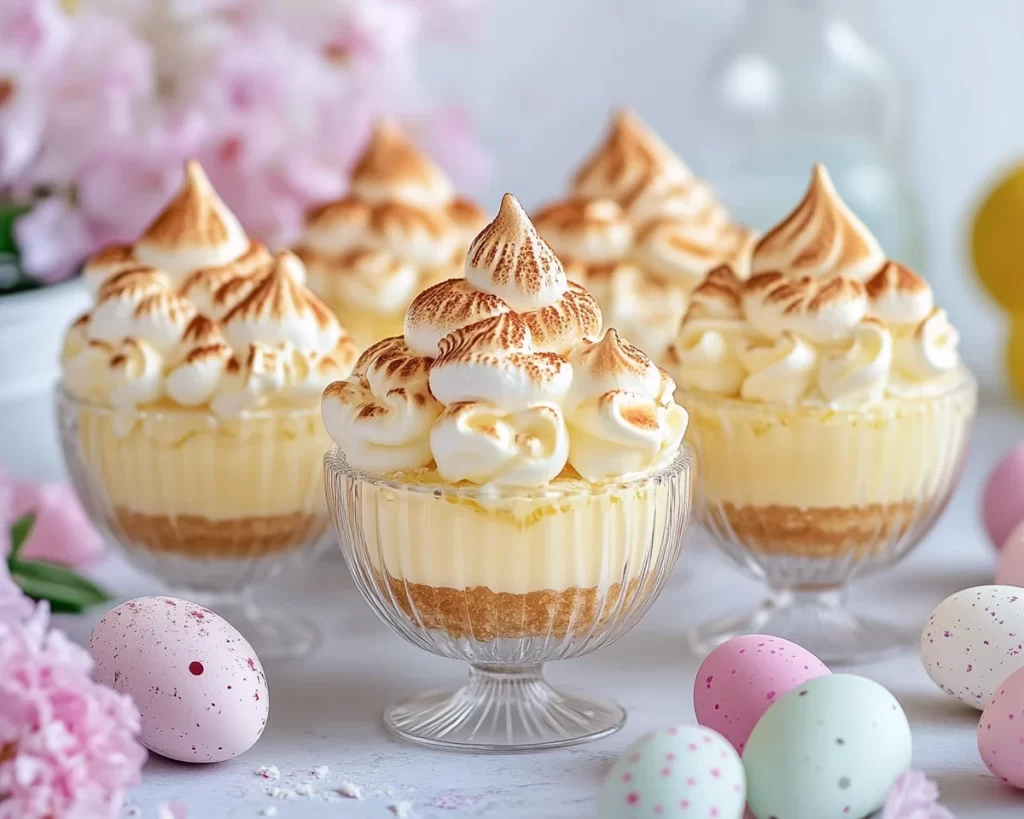
Easter Lemon Meringue Dessert Cups are delightful individual servings of lemon curd topped with a light and airy meringue. These cups offer a refreshing balance of sweetness and tartness characteristic of a traditional lemon meringue pie but are presented in a beautiful, modern format. The origin of lemon meringue desserts is often traced back to European countries, where this flavor combination gained popularity in the 19th century.
The key components of this dessert are the **lemon curd**, which provides a vibrant and zesty flavor, and the **meringue**, which adds a soft, cloud-like texture that melts in your mouth. When crafted perfectly, the meringue is crisp on the outside while maintaining a soft and chewy consistency inside. This wonderful contrast creates a harmonious blend of creamy, sweet, and tangy flavors that will leave your guests begging for more.
These dessert cups shine not only for their flavor but also for their aesthetic appeal. Served in individual cups, they make a stunning centerpiece at any gathering, inviting guests to indulge in a bite-sized taste of spring.
Why You’ll Love This
One of the most compelling reasons to embrace this recipe is the **explosion of flavor** it offers. The sweetness of the meringue beautifully balances the tartness of the lemon curd, creating a palatable duet that dances on your taste buds. Additionally, this recipe is relatively simple, making it suitable for both seasoned cooks and beginners alike. You won’t need advanced techniques to create a show-stopping dessert; just follow along with the instructions, and you’ll achieve impressive results.
Cost efficiency is another advantage. Given that the main ingredients—eggs, lemons, and sugar—are often items already found in home kitchens, this dish can be made on a budget. You don’t need to splurge on exotic ingredients, making these dessert cups a practical yet impressive choice for gatherings.
Don’t overlook the health aspects either! While this dessert does include sugar, lemon is rich in vitamin C and has numerous health benefits. Additionally, you can make adjustments to make the dessert lighter or more indulgent based on your dietary needs and preferences. Finally, it’s a versatile dessert that can be served year-round, but its bright flavors and cheerful appearance make it especially perfect for Easter celebrations.
Ingredients You’ll Need
- 3 large eggs – These are vital for both the lemon curd and the meringue. They provide structure and richness. If you need a substitute, consider using flaxseed meal for egg-free versions.
- 1 cup granulated sugar – Sugar sweetens the lemon curd and stabilizes the meringue. You can use coconut sugar for a lower glycemic index alternative.
- 1/2 cup freshly squeezed lemon juice – The star ingredient providing that signature tartness. Always use fresh, as bottled lemon juice lacks the same vibrant flavor.
- 1 tablespoon lemon zest – This adds a punch of lemon flavor. Don’t skip it; zesty flavor enhances the overall experience. Preferably use organic lemons to avoid pesticides.
- 1/4 teaspoon salt – A necessary ingredient to balance sweetness and enhance flavors.
- 1/4 teaspoon cream of tartar – This stabilizes the meringue, helping it maintain its fluffy structure. You can skip it, but it’s recommended for a perfect meringue.
- 1/2 teaspoon vanilla extract – Adds depth and richness to the flavor profile.
Understanding the role of each ingredient helps you in the preparation process. Each component plays a critical role in ensuring that the flavor and texture are just right.
How to Make
To craft these irresistible Easter Lemon Meringue Dessert Cups, follow these step-by-step instructions to ensure your success.
- Prepare the lemon curd: Start by separating the egg yolks from the egg whites. In a medium saucepan, whisk together the egg yolks, granulated sugar, lemon juice, lemon zest, and salt. Place the saucepan over medium heat and stir consistently until the mixture thickens, about 8-10 minutes. You want it to reach a custard-like consistency. Be careful not to let it boil, or you may end up with scrambled eggs.
- Chill the lemon curd: Once thickened, strain the mixture through a fine sieve into a bowl to remove any lumps or cooked egg bits. This will result in a smooth lemon curd. Cover the bowl with plastic wrap, pressing it directly onto the surface to prevent a film from forming. Allow it to cool to room temperature and then refrigerate to set for at least 30 minutes.
- Make the meringue: Preheat your oven to 350°F (175°C). In a clean, dry bowl, begin whisking the egg whites with an electric mixer on medium speed. Once they start to become frothy, add the cream of tartar. Gradually increase the speed and add the granulated sugar in small increments until stiff peaks form. This usually takes about 5-7 minutes. The meringue should be glossy and hold its shape when you lift the whisk.
- Assemble the dessert cups: In individual serving cups, spoon or pipe a layer of your chilled lemon curd, filling each cup about halfway. Then gently spoon or pipe the meringue on top of the lemon curd, covering it completely. You can create peaks with the meringue for a more attractive presentation.
- Bake the meringue: Place the filled dessert cups on a baking sheet and bake in the preheated oven for about 10-12 minutes, or until the meringue is lightly browned. Keep an eye on it, as you do not want it to burn. If your oven has a broil option, you could quickly broil them for a minute or so to achieve that beautiful golden color, but watch carefully to prevent burning.
- Cool and serve: After baking, remove the dessert cups from the oven and let them cool slightly. You can serve them warm or let them cool to room temperature. For the best experience, serve your dessert cups with fresh berries or a dollop of whipped cream on the side.
With these steps, you will have beautiful and delicious Easter Lemon Meringue Dessert Cups ready for your gathering!
Variations & Substitutions
Berry Lemon Meringue Variation: If you want to add more color and flavor, consider incorporating fresh berries into the lemon curd before layering it in the dessert cups. Raspberries, blueberries, or strawberries can elevate the taste while adding beautiful hues. In this variation, you could also create a berry compote to drizzle on top of the meringue for added flair. This version is particularly great for those who enjoy the sweet-tart flavor profile of berries and want a refreshing twist.
Dairy-Free Lemon Meringue: For a dairy-free twist, swap the traditional **butter** often found in lemon curd recipes with **coconut oil** or a vegan butter substitute. You can also use **almond milk** in the recipe to maintain the desired consistency. This variation caters to lactose-intolerant individuals while still delivering the classic taste that everyone loves.
Chocolate Lemon Meringue Variation: If you have a love for chocolate, a layer of chocolate ganache beneath the lemon curd can be a heavenly addition. The rich chocolate flavor pairs unexpectedly well with the bright lemon. Simply make a ganache by heating heavy cream and mixing it with your favorite dark chocolate until melted. Allow it to set slightly before layering it below the lemon curd.
Vegan Lemon Meringue Cups: To create a completely vegan version, you can utilize aquafaba, the liquid from canned chickpeas, instead of egg whites for the meringue. Whip aquafaba with sugar and cream of tartar until soft peaks form. For the lemon curd, substitute eggs with silken tofu and blend it with sugar, lemon juice, and zest until smooth. This variation allows those following a vegan diet to enjoy a classic dessert without compromising on taste.
Common Mistakes to Avoid
When creating your Easter Lemon Meringue Dessert Cups, there are some common pitfalls to be aware of. One frequent issue novice bakers encounter is making **scrambled eggs** in their lemon curd, often due to cooking the mixture at too high a temperature. Always use **medium heat** and remove it from the heat as soon as it thickens to prevent this mishap.
Another common mistake is not letting the **meringue whip to the right consistency**. The meringue should be glossy and hold stiff peaks. If it looks runny or doesn’t maintain its shape, it won’t bake well. Make sure all equipment used is completely clean and dry, as any fat residue can hinder the formation of stable meringue.
Lastly, some cooks skip the **chilling step** for the lemon curd, thinking it’s not necessary. Allowing the curd to properly chill enhances the flavor and allows it to set, making it easier to layer and assemble in the cups.
Storage, Freezing & Reheating Tips
These delightful dessert cups can be made ahead of time, making them perfect for party planning. For storage, keep them covered in the refrigerator for up to 2 days. Ensure they are properly sealed to prevent the meringue from becoming too soft.
If you want to prepare them further ahead, you can store the lemon curd in an airtight container in the fridge for up to a week. Just remember, always assemble the dessert cups closer to serving time to maintain the texture of the meringue.
As for freezing, while you can freeze the lemon curd for up to 3 months, it is not recommended to freeze the meringue. Meringue does not fare well in the freezer; it will change in texture and become mushy once thawed. For the best experience, prepare and bake the dessert cups fresh.
Frequently Asked Questions
Can I use bottled lemon juice instead of fresh lemon juice? While bottled lemon juice is convenient, it does not have the same vibrant flavor as fresh lemon juice. For the best taste, always choose fresh lemons. The zest from fresh lemons also contributes essential oils and flavors that are lost in bottled versions.
How can I prevent my meringue from weeping? Weeping, or the liquid that sometimes forms under meringue, can be caused by several factors such as humidity or undercooked meringue. To help prevent it, ensure that you properly whip the meringue to stiff peaks and incorporate enough sugar. Additionally, avoid covering the dessert too tightly while it cools.
Can I make this dessert ahead of time? Yes, you can make the lemon curd ahead of time and store it in the refrigerator for up to a week. However, for the best texture and to keep the meringue fluffy, assemble the dessert cups closer to serving time.
What other toppings can I add to my lemon meringue dessert cups? You can get creative with toppings! Consider adding fresh berries, a dusting of powdered sugar, or a sprig of mint for garnish. Whipped cream or a fruit coulis can also elevate your presentation and flavor profile.
Is there a gluten-free version of this recipe? Absolutely! This recipe is naturally gluten-free as it does not require any flour. You can enjoy it without concern if you follow a gluten-free diet. Just ensure that any substitutes or added ingredients are also gluten-free.
Conclusion:
In summary, the Easter Lemon Meringue Dessert Cups are a remarkable addition to your dessert repertoire. Their vibrant flavors and captivating presentation make them a delightful option for any spring gathering, especially Easter. The process of creating these cups may seem daunting, but with careful attention to each step, you’ll find success and satisfaction. Don’t hesitate to customize the recipe to your taste, or share it with your loved ones to spread the joy of homemade desserts. Take the plunge, experiment with flavors, and enjoy the rewarding experience of creating a dessert that will be cherished and celebrated. Happy baking!