Prep time: 20 minutes
Cook time: 40 minutes
Total time: 1 hour
Servings: 8
When spring rolls around, vibrant colors and fresh flavors come to life, making it the perfect time to indulge in a delicious Easter Spring Vegetable Quiche. This delightful dish not only captures the essence of the season but also brings together wholesome ingredients that appeal to both the critical palate and health-conscious eaters. Imagine biting into a flaky crust that gives way to a rich filling bursting with fresh vegetables and creamy cheese, pleasing both the eye and the taste buds. The beauty of this recipe is in its versatility; whether you’re hosting a brunch for the family or preparing meals for a busy week ahead, this quiche proves itself to be both practical and indulgent. You’ll learn the essential steps of crafting a perfect quiche, the nutritional benefits of these spring vegetables, and various ways to customize the dish to suit your preferences.
What Is Easter Spring Vegetable Quiche?
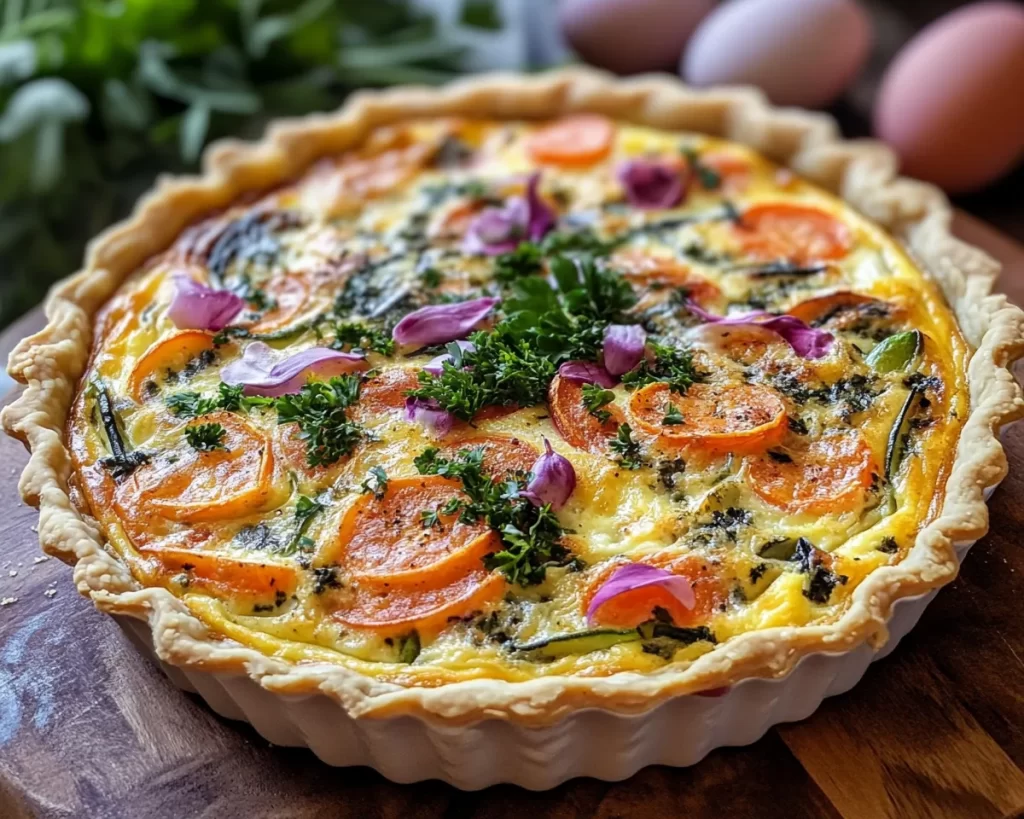
The Easter Spring Vegetable Quiche is a savory custard pie, traditionally made with eggs and cream, nestled in a flaky, buttery crust. Its origins can be traced back to the French cuisine, where the term “quiche” comes from the German word “kuchen,” which means “cake.” This beloved dish exemplifies the art of cooking by allowing cooks to use what is fresh and seasonal. The creamy filling is typically mixed with sautéed vegetables, cheese, and aromatic herbs, creating a delicate balance of flavors that can be both rich and light at the same time. When biting into a slice of this quiche, one experiences a satisfying crunch from the crust, complemented by the creamy filling that features an array of fresh vegetables, such as asparagus, spinach, and bell peppers.
In terms of texture, the quiche offers a creamy, slightly wobbly custard, enveloped snugly in the crisp crust. The flavors combine harmoniously—earthy vegetables, creamy cheese, and the distinct richness of eggs all complement each other beautifully. As a dish that serves well warm, at room temperature, or even cold from the refrigerator, it stands as a versatile option for breakfast, lunch, or dinner.
Why You’ll Love This
There are many reasons to love the Easter Spring Vegetable Quiche. First and foremost, it tantalizes your taste buds. The combination of delicious, seasonal vegetables mixed with rich cheese and creamy custard creates an explosion of flavors in every bite. Additionally, its ease of preparation makes it ideal for busy parents and home cooks alike. With a little prep work, you can make a meal that not only satisfies your hunger but also brings joy to your dining table.
Another primary benefit of this quiche is the cost-saving aspect. Utilizing fresh produce from local farms or your own garden not only promotes sustainability but also keeps your grocery bill down. Each ingredient can be easily substituted based on what you have at hand, allowing for minimal waste. Furthermore, this dish is a nutritional powerhouse! By incorporating vegetables rich in vitamins and minerals, you’re providing a healthy option for your family.
Many people also have misconceptions about making quiche, thinking it too complicated or time-consuming. However, this recipe proves that quiche can be an effortless dish suitable for any occasion. With tips and step-by-step instructions in the article, even beginners can wow their guests with this fantastic dish!
Ingredients You’ll Need
- Pie crust: Pre-made or homemade, the pie crust forms the foundation. It should be flaky and buttery to complement the filling.
- Eggs: The building block of the quiche that provides richness and binds all ingredients together.
- Cream or milk: Adds a creamy texture to the filling. You can use whole milk, half-and-half, or heavy cream based on your preference.
- Fresh seasonal vegetables: Asparagus, spinach, peas, and bell peppers offer vibrant flavors and nutrients. Feel free to customize based on your tastes.
- Cheese: Cheddar, mozzarella, or feta cheese work beautifully to enhance the quiche’s richness and flavor.
- Herbs: Fresh herbs like dill, parsley, or chives add an aromatic touch to the dish.
- Salt and pepper: Essential for seasoning, these enhance the flavors of the other ingredients.
Each ingredient plays a significant role in the overall flavor of the dish. For example, using fresh herbs elevates the quiche’s taste profile, adding depth and freshness. Substituting cheese types not only changes the flavor but also shifts the texture and creaminess, allowing you to experiment with various combinations. This flexibility makes it entirely your dish, based on what you have on hand!
How to Make
To prepare the Easter Spring Vegetable Quiche, follow these detailed instructions to ensure success in every bite.
- Preheat your oven: Begin by preheating your oven to 375°F (190°C). This step is crucial for ensuring the crust bakes evenly and achieves that perfect golden brown color. While the oven is heating, you can start preparing the other components.
- Prepare the pie crust: If using a pre-made crust, place it in a pie dish and gently fit it into the dish corners. If you’re making homemade crust, roll out the dough until it’s about 1/8 inch thick. Transfer it to the pie dish, trimming any excess dough. Prick the bottom with a fork to prevent it from puffing up during baking.
- Pre-bake the crust: Place the unfilled pie crust in the oven for about 10 minutes, or until it’s lightly golden. This step helps prevent a soggy bottom when the filling is added later. Keep a close eye—overbaking can lead to a tough crust.
- Sauté the vegetables: In a skillet over medium heat, add a tablespoon of olive oil or butter. Once hot, toss in your chosen vegetables—such as diced bell peppers, asparagus, and spinach. Sauté for about 5-7 minutes until the vegetables have softened but still retain some crunch. This step not only enhances the flavor but also releases excess moisture, keeping your quiche from being watery.
- Prepare the egg mixture: In a large bowl, whisk together 4-5 eggs with 1 cup of cream or milk. Add salt, pepper, and any chopped fresh herbs you desire. Whisk until everything is well-mixed and slightly frothy—this aerates the mixture, resulting in a fluffier quiche.
- Combine the mixture: Once the vegetables have cooled slightly, add them to the egg mixture, along with a cup of shredded cheese. Stir gently to combine, ensuring the vegetables and cheese are evenly distributed throughout.
- Fill the pie crust: Carefully pour the vegetable and egg mixture into the pre-baked crust. Use a spatula to help distribute any vegetables that might get stuck together. The filling will rise slightly during baking, so don’t be afraid to fill it almost to the top.
- Bake the quiche: Place the quiche back into the oven and bake for 30-35 minutes, or until the top is set and lightly browned. To check for doneness, gently shake the pie dish; if the center jiggles slightly but is mostly firm, it’s ready. Overcooking can lead to a dry quiche, so keep an eye on it.
- Cool before serving: Allow the quiche to cool for about 10 minutes after removing it from the oven. This resting time helps set the filling, making it easier to slice. You can serve it warm or at room temperature, making it a versatile option for brunch or lunch.
As you follow these steps, enjoy the comforting aromas wafting through your kitchen, setting the stage for a delightful meal ahead. A homemade spring vegetable quiche is not just food; it’s an experience filled with shared laughter, warmth, and the joy of the season.
Variations & Substitutions
Vegetarian Delight: If you’re seeking a purely vegetarian quiche, substitute the usual fillings with a mix of mushrooms, tomatoes, and spinach. The earthiness of mushrooms adds texture, while tomatoes bring acidity and sweetness. This variation can appeal to vegetarians and is loaded with nutrients! Ensure to sauté the mushrooms thoroughly to reduce their moisture—this prevents the final dish from becoming soggy.
Gluten-Free Crust: For those following a gluten-free diet, you can opt for a gluten-free pie crust. Many brands offer ready-made crusts that save time, or if you prefer to create your own, consider using almond flour or oat flour as the base. This variation can change the texture slightly, providing a nutty flavor and slightly denser texture that can hold the custard beautifully.
Protein Boost: For meat lovers, consider adding cooked bacon or ham to enrich the protein content of the quiche. Ensure any meat you add is already cooked and chopped into small pieces so it distributes evenly through the custard. This variation adds a nice salty kick to the dish. You might want to reduce the amount of cheese you include to avoid overwhelming richness.
Herbed Quiche: For herb enthusiasts, elevate your quiche with an array of fresh herbs like basil, tarragon, or cilantro. Not only does this infuse your dish with fresh flavors, but it gives it an aromatic appeal that makes every bite enjoyable. You may consider decreasing the overall cheese content to avoid clashing flavors with the herbs while still achieving a beautiful, flavorful result.
Cheese Variations: While cheddar and mozzarella are classic choices, don’t hesitate to experiment with different types of cheese. Feta adds tanginess, while goat cheese provides creaminess and a unique flavor profile. Each cheese contributes differently to the texture and taste, so feel free to mix and match until you find your ideal combination.
Common Mistakes to Avoid
When making an Easter Spring Vegetable Quiche, you might encounter several pitfalls. One common mistake is overbaking the quiche. Keep an eye on the baking time, as each oven is unique. Quiches can go from perfectly set to dry in a matter of minutes. Remember, it’s better to err on the side of slightly undercooked than overcooked—the quiche will continue to cook as it rests.
Another mistake is adding watery vegetables, such as zucchini, without cooking them first. If you’re using vegetables like zucchini, it’s essential to sauté or remove excess moisture before adding them to the filling. This prevents a soggy crust, ensuring the final product maintains its delightful texture.
Additionally, not allowing the quiche to rest after baking is a mistake that can lead to sloppy slices. Give it at least 10 minutes to cool to allow the custard to set properly. When serving, using a sharp knife will yield the most beautiful slices without tearing the crust or filling apart.
Lastly, be mindful of seasoning. Given that eggs and cream can be bland, it’s crucial that you season your filling adequately with salt and pepper. Taste as you go! Remember, seasoning can easily be adjusted to suit your preference.
Storage, Freezing & Reheating Tips
To properly store any leftovers of your Easter Spring Vegetable Quiche, wait until it’s completely cooled. Once cooled, cover the quiche with plastic wrap or aluminum foil and refrigerate it. It should stay fresh for about 3-4 days. If you are a meal prep enthusiast, consider making a larger batch and slicing it into individual portions. These portions can readily be stored in airtight containers for easy grab-and-go lunches throughout the week.
If you’re looking to preserve your quiche for a longer duration, freezing is a great option. To freeze, wrap slices individually in plastic wrap, then place them into a freezer-safe container. This method allows you to enjoy your quiche for up to 2 months without sacrificing taste or texture. When you’re ready to enjoy it again, simply thaw overnight in the refrigerator before reheating.
To reheat fully, preheat your oven to 350°F (175°C) and place the quiche on a baking sheet. Cover it with foil to prevent excessive browning. Heat for about 20-25 minutes or until warmed through. For singles slices, using the microwave can be a quick solution. Just be aware that microwave reheating could result in a chewy crust and slightly altered texture.
Frequently Asked Questions
Can I make the quiche ahead of time?
Absolutely! You can prepare the quiche the night before and refrigerate it unbaked. Simply pour the filling into the prepared crust, cover it tightly, and bake the next day. Just add a few extra minutes to the baking time if you take it directly from the fridge to the oven.
Can I use frozen vegetables in the quiche?
Yes, frozen vegetables can be an excellent option, especially if you’re short on time or seasonal fresh vegetables are not available. Just be sure to thaw and drain any excess moisture from the vegetables before adding them to the filling. This will help maintain a good texture and prevent a soggy quiche.
What can I serve with quiche?
Quiche pairs beautifully with a variety of sides. A simple green salad with a light vinaigrette can provide balance to the richness of the quiche. Additionally, serving it alongside fresh fruit can add a refreshing contrast.
Is this quiche suitable for vegetarian or gluten-free diets?
Yes, this quiche can easily be adapted for both vegetarian and gluten-free diets. For vegetarians, simply focus on a mix of colorful veggies and herbs. For gluten-free, either purchase a pre-made gluten-free crust or make your own using gluten-free flour alternatives.
How do I know when the quiche is done?
The best way to check for doneness is to look for a slight puff in the center and a golden-brown crust. If you gently shake the pie dish, the filling should wobble slightly but not be overly jiggly. When a knife inserted in the center comes out clean, it’s ready!
Conclusion:
The Easter Spring Vegetable Quiche is a delightful dish that showcases the season’s freshest flavors while delivering on taste and nutrition. This recipe allows for creativity, encourages experimentation, and brings together friends and family in a shared meal. Whether you customize it to your liking or follow along with the traditional version, it’s bound to impress at any table. Give this quiche a try, and watch it become a new springtime favorite in your household. Don’t forget to share this recipe or your variations with friends; after all, food is best enjoyed together!
[Read also: Easy Dessert Recipes for Beginners]