Prep time: 30 minutes
Cook time: 15 minutes
Total time: 45 minutes
Servings: 4
Fresh Spring Rolls Shrimp: 5 Ways to Delight Your Tastebuds are a vibrant and healthy dish that encapsulates the essence of spring. These rolls are not only versatile and packed with flavor but also visually appealing, making them a favorite for gatherings and family meals alike. With fresh vegetables, protein-rich shrimp, and a choice of dipping sauces, these rolls are sure to satisfy your cravings and impress your guests.
What Is Fresh Spring Rolls Shrimp: 5 Ways to Delight Your Tastebuds?
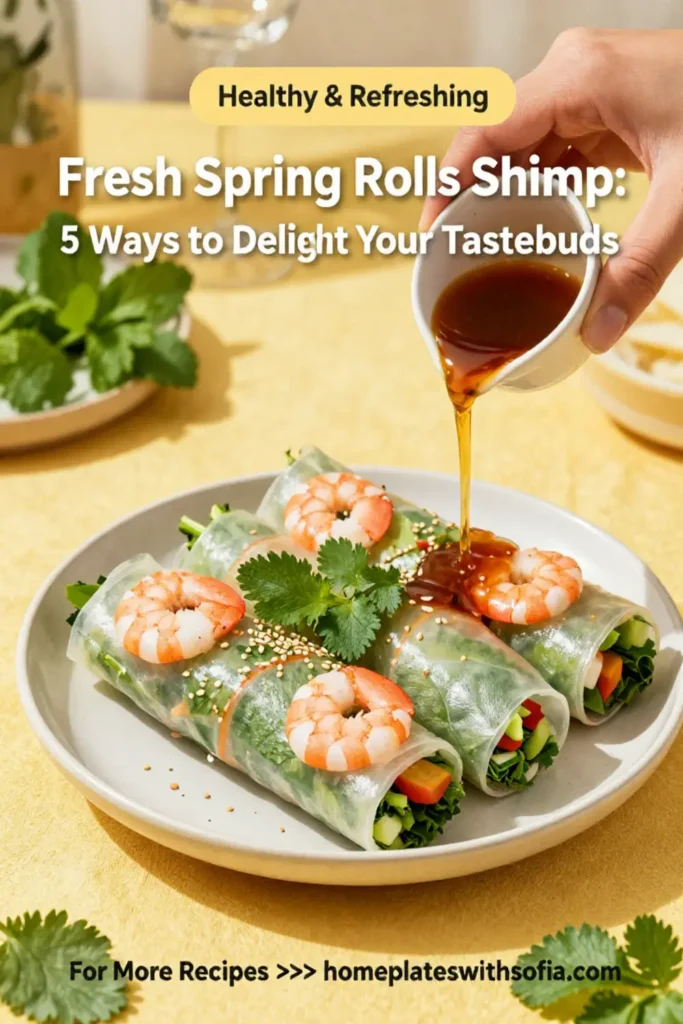
Fresh spring rolls, known as “gỏi cuốn” in Vietnamese, are translucent rice paper wraps filled with a delightful combination of shrimp, vermicelli noodles, crisp vegetables, and aromatic herbs. These rolls are typically served cold and accompanied by a flavorful dipping sauce, such as hoisin or peanut sauce. The beauty of fresh spring rolls lies in their adaptability; you can customize them to suit your taste preferences or dietary needs. Using shrimp adds a protein-rich element that makes these rolls not only delicious but also satisfying.
Why You’ll Love This
There are several reasons why Fresh Spring Rolls Shrimp will become a staple in your kitchen:
1. Healthy Ingredients: Packed with fresh vegetables, lean protein, and rice paper, these rolls are a wholesome meal option that doesn’t compromise on flavor.
2. Customizable: You can easily modify the fillings based on what’s in your pantry or seasonal vegetables available.
3. Perfect for Any Occasion: Whether it’s a light lunch, a starter for a dinner party, or a healthy snack, these rolls fit a variety of occasions.
4. Quick Preparation: Once you have your ingredients prepped, assembling the rolls is quick and easy, making them an excellent choice for busy weeknights or meal prep.
5. Visually Stunning: With their bright colors and inviting appearance, these rolls are sure to impress anyone at your table.
Ingredients You’ll Need
To create your delicious Fresh Spring Rolls Shrimp, gather the following ingredients:
- Rice paper wrappers: These are essential for holding all your fresh ingredients together. They are available at most grocery stores or Asian markets.
- Shrimp: About 1 pound, peeled and deveined; shrimp provide a succulent protein base.
- Vermicelli noodles: Use 4 ounces to add a chewy texture. These noodles are often made from rice flour.
- Fresh vegetables: Include 1 cup of shredded lettuce, ½ cup of sliced carrots, and ½ cup of cucumber; these provide crunch and hydration.
- Aromatic herbs: Fresh mint and cilantro work wonderfully to infuse flavor.
- Dipping sauce: Prepare a simple peanut sauce or hoisin for serving.
How to Make
Creating Fresh Spring Rolls Shrimp is straightforward. Follow these steps for a flawless result:
- Start by cooking the shrimp. Bring a pot of water to a boil, add the shrimp, and cook for 2-3 minutes until they turn pink and opaque. Remove them from the water and cool under cold running water to stop the cooking process.
- In the same pot, add the vermicelli noodles and cook according to the package instructions until al dente. Drain and rinse the noodles with cold water to prevent sticking.
- Prepare your vegetables by washing and slicing the lettuce, carrots, and cucumber. Remember to cut them into thin strips for easier rolling.
- Fill a shallow dish with warm water and dip one rice paper wrapper for about 15-20 seconds until it softens. Lay it flat on a clean surface.
- In the center of the wrapper, begin layering the ingredients: a few shrimp, a small handful of vermicelli noodles, and a mix of the fresh vegetables and herbs. Make sure to not overfill, or the rolls may burst.
- Carefully fold the sides of the wrapper inward and then roll from the bottom up to encapsulate the filling tightly. Place the finished roll seam-side down on a plate and repeat until all ingredients are used.
Variations & Substitutions
Vegetable-Only Spring Rolls: For a vegetarian version, you can replace shrimp with tofu or simply load your spring rolls with more vegetables. Consider including bell peppers, radishes, or spiralized carrots. This is a fantastic way to enjoy the freshness without the seafood.
Spicy Shrimp Rolls: For those who enjoy heat, add sliced jalapeños or a drizzle of sriracha into the rolls or the dipping sauce. You can also marinate the shrimp in chili sauce before cooking to infuse some spice directly.
Fruit-Infused Rolls: You can experiment by adding fruits such as mango, avocado, or strawberries. These provide a sweet contrast to the savory elements and create a delightful surprise in every bite.
Protein Alternatives: If shrimp isn’t your preference, try shredded chicken, crab meat, or even grilled beef. Each protein will give an intriguing twist to the traditional roll.
Gluten-Free Options: Make sure that your dipping sauce and any noodles used are certified gluten-free to accommodate dietary restrictions.
Common Mistakes to Avoid
Creating Fresh Spring Rolls Shrimp is easy, but here are some common pitfalls to watch out for:
Overfilling the Rolls: One of the most common mistakes is adding too much filling. If your rolls are overstuffed, they may not seal properly. Keep it simple with just enough for flavor without overwhelming the wrapper.
Not Soaking the Rice Paper Correctly: Be cautious when soaking the rice paper wrapper. If you soak it too long, it could become too fragile. For best results, dip it just until pliable.
Skipping the Cooling Process: After cooking shrimp, it’s crucial to cool them quickly. Skipping this step may result in overcooked, rubbery shrimp. Always cool them under running cold water!
Storage, Freezing & Reheating Tips
To maintain the freshness of your spring rolls, it’s important to store them correctly. If you have leftover rolls, place them in an airtight container in the refrigerator. They are best eaten within 1-2 days for optimal freshness.
If you are preparing spring rolls for a future meal, it’s best to store the ingredients separately rather than the assembled rolls, as the rice paper can become soggy. You can freeze cooked shrimp and other fillings, but it’s advisable to assemble them fresh just before serving.
When reheating, avoid microwaving them as that can lead to a chewy texture. Instead, serve them cool or at room temperature with the dipping sauce.
Frequently Asked Questions
Can I use frozen shrimp for this recipe? Yes, you can absolutely use frozen shrimp. Just ensure they are thawed and properly deveined before cooking. The same procedure applies as you would with fresh shrimp.
What dipping sauces can I use for my spring rolls? Popular options include peanut sauce, hoisin sauce, or a spicy sriracha sauce. You can also create a simple soy sauce and sesame oil mix for another delicious option.
How do I prevent the rolls from sticking together? To minimize sticking, arrange your spring rolls in a single layer in the container without packing them too tightly. You can also place parchment paper between the layers to avoid them sticking.
Can spring rolls be made in advance? While fresh spring rolls are best enjoyed on the day they are made, you can prep the fillings ahead of time. Just assemble them shortly before serving to ensure they maintain their texture.
What can I substitute for rice paper wrappers? If you cannot find rice paper, you can use lettuce leaves as a low-carb alternative. Alternatively, look for other types of thin wraps, but be aware that the texture and flavor will differ.
Conclusion: Fresh Spring Rolls Shrimp are a delightful and flexible dish that will brighten up any meal. With a variety of fillings and serving possibilities, this recipe not only caters to diverse tastes but is also fun to make. Enjoy the experience of rolling these vibrant ingredients and serve them with your favorite dipping sauce for a meal that’s sure to please.