Prep time: 15 minutes
Cook time: 25 minutes
Total time: 40 minutes
Servings: 6
There’s something truly special about gathering around the table with family and friends, sharing a meal that warms the heart and satisfies the soul. Imagine that moment: the aroma of freshly cooked eggs wafts through the air, mingling with the savory scent of sautéed vegetables and the richness of cheese. This is what you can expect with our amazing Frittata Recipe for Brunch, a crowd-favorite dish that effortlessly marries simplicity and flavor.
What sets this frittata apart is not just its easy preparation but also its incredible versatility. You’ll learn how to whip up a dish that can showcase your favorite ingredients or whatever you have on hand. It’s perfect for brunch gatherings, busy weekdays, or even as a light dinner option. As you dive into this article, expect to discover essential tips, flavorful variations, and common pitfalls to avoid. Get ready to impress your loved ones with a dish that’s as delicious as it is easy to make!
What Is Frittata Recipe for Brunch (Crowd Favorite)?
A frittata is an Italian-style egg dish, similar to an omelet but richer and denser due to its unique cooking method. Originating from Italy, the word “frittata” comes from the Italian verb “friggere,” which means “to fry.” Unlike a traditional omelet that is folded, a frittata is often cooked slowly with its ingredients mixed in, which creates a delightful interplay of flavors and textures. Think of it as a savory custard that envelops colorful vegetables, meats, and, of course, cheese.
The beauty of a frittata lies not only in its taste but also in its adaptability. Each bite can deliver a complex flavor profile, thanks to the various ingredients you can incorporate. Whether you prefer a simple preparation with just eggs and cheese, or a robust combination of seasonal vegetables and herbs, a frittata can accommodate your taste. With a golden-brown exterior and a soft, creamy interior, every slice becomes a rewarding experience, almost like a hug on a plate.
One of the best aspects of this dish is the convenience it provides. You can pre-cook some ingredients or even bake it ahead of time, ensuring a stress-free brunch experience. Refrigerate leftovers, and you’ll have a delicious portable meal for busy weekdays, adding further to its allure.
Why You’ll Love This
There’s an abundance of reasons to fall in love with this frittata recipe. First and foremost, the taste is simply stellar. The combination of fluffy eggs, wholesome vegetables, and melted cheese creates a harmonious balance that will tantalize your taste buds. The slight crispness on the outside gives way to a velvety interior that is bound to keep you coming back for seconds.
Ease of preparation is another significant factor. If you’re just starting out in the kitchen or are a busy parent trying to get a meal on the table, this recipe doesn’t require specialized skills. You can easily customize it based on what you have available, ensuring minimal waste in your kitchen. Plus, the frittata is a one-pan dish, which means cleanup is a breeze.
From a health perspective, a frittata can fit into various dietary plans. Packed with protein from eggs, it can easily be tailored to include your favorite vegetables, thereby boosting nutrient intake. You won’t just satisfy hunger; you’ll do so in a way that contributes positively to your diet. Moreover, making a frittata can save you money compared to dining out.
There’s a common misconception that making a frittata is complicated; however, this recipe will dispel those myths. With clear steps and helpful tips, even novice cooks can master this delicious dish. By comparing it to traditional quiches, you’ll see that frittatas are less fussy and less time-consuming to prepare, yet just as delicious!
Ingredients You’ll Need
To create a spectacular frittata, ensure you have the following ingredients on hand:
- 6 large eggs: The base of your frittata, providing richness and protein. You can use egg whites for a lighter version.
- 1 cup of diced vegetables: Such as bell peppers, onions, and zucchini that bring flavor and texture. Feel free to substitute with whatever is in season.
- 1 cup of cooked protein (optional): This could be cooked bacon, sausage, or shredded chicken, adding heartiness.
- 1 cup of cheese: Cheddar, feta, or mozzarella work well here, adding creaminess and depth of flavor.
- 1 tablespoon of olive oil: For sautéing, making sure your vegetables are tender and aromatic.
- Salt and pepper: To taste, bringing all the flavors together.
- Fresh herbs (optional): Such as parsley, chives, or basil, which will enhance the overall flavor profile.
Each ingredient plays a crucial role in elevating the dish. Fresh vegetables not only add color but also contribute vital nutrients. The inclusion of protein makes it more satisfying. The cheese not only brings a delicious creaminess to the dish but also aids in binding everything together, ensuring that you have a cohesive slice of frittata with every cut.
How to Make
Creating a delightful frittata might seem overwhelming, but it’s straightforward when broken down into simple steps. Follow these detailed instructions to whip up your own crowd-pleasing frittata:
- Preheat your oven: Aim for 375°F (190°C). This is an essential step to ensure your frittata can set properly in the oven.
- Sauté vegetables: In a large oven-safe skillet, heat the olive oil over medium heat. Once hot, add your diced vegetables and season with salt and pepper. Stir occasionally for about 5-7 minutes until vegetables are soft and fragrant. This step is crucial; not only does it bring out their flavors, but it also reduces moisture content, which can lead to a watery frittata.
- Mix eggs: In a large mixing bowl, crack the eggs and whisk them until well combined and slightly frothy. This process adds air into the eggs, making your frittata fluffy once cooked.
- Add protein and cheese: If you opted to include protein, stir it in alongside the cheese into the egg mixture. This ensures an even distribution throughout your frittata.
- Combine everything: Once the vegetables are tender, pour the egg mixture over the sautéed veggies in the skillet. Use a spatula to gently stir everything to distribute the ingredients evenly. You want to keep the texture nice and fluffy, so be gentle!
- Cook on the stovetop: Allow the frittata to cook on medium heat for 3-4 minutes. This will allow the bottom to set before finishing it in the oven. Keep an eye on it; you want to see the edges starting to firm up while the center remains a bit runny.
- Bake in the oven: Transfer the skillet to your preheated oven. Bake for 15-20 minutes or until the frittata is puffed up and a toothpick inserted into the center comes out clean. Baking it will give you that beautiful golden top, and the aroma wafting through your kitchen will be nothing short of intoxicating!
- Cool and serve: Once done, remove from the oven and let it cool for a few minutes. This resting time will allow the flavors to meld and make it easier for you to slice. You can serve it warm or at room temperature; it’s delicious either way!
Feel free to experiment with the resting time to find your ideal texture; some prefer it fluffier, while others enjoy a denser bite. Pair it with a fresh green salad or crusty bread for a lovely brunch.
Variations & Substitutions
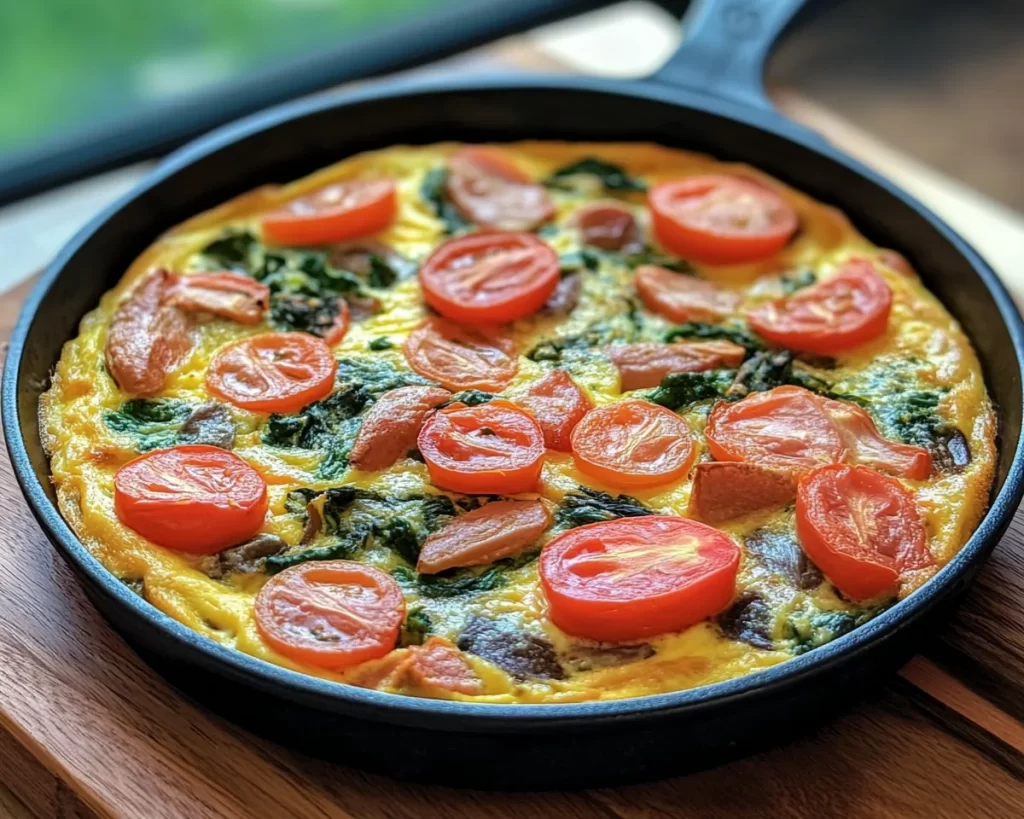
Vegetarian Delight: If you’re looking to skip the meat, you can create a mouthwatering vegetarian frittata loaded with seasonal vegetables. Using ingredients like spinach, mushrooms, and cherry tomatoes can bring freshness to your dish. These ingredients provide a wonderful contrast in texture and color and allow you to enjoy a healthy, veggie-packed meal. To elevate the flavor, consider adding in a teaspoon of smoked paprika or a handful of arugula.
Italian Herb Fusion: For an Italian twist, consider incorporating fresh herbs like basil, thyme, and oregano along with sun-dried tomatoes and goat cheese. This not only enhances the flavors but will give a Mediterranean flair to your frittata. Fresh herbs are aromatic and can transform your dish with minimal effort, bringing a vibrant freshness that’s simply irresistible.
Southwestern Style: To introduce a zestier twist, try adding black beans, corn, and jalapeños for a Southwestern-style frittata. Top it with avocado after baking for a creamy contrast that balances the spices beautifully. This option is perfect for those who enjoy a bit of heat and want a heartier meal that feels more substantial. Pair it with salsa for a complete experience.
Breakfast-for-Dinner Frittata: Need to satisfy that breakfast craving at dinner? Use crispy bacon, breakfast sausage, and a blend of cheeses—cheddar and mozzarella work particularly well. This frittata feels indulgent and comforting; paired with a light salad, it gives a sense of balance without losing the richness that breakfast brings.
Common Mistakes to Avoid
When making a frittata, a few common mistakes can hinder the perfect outcome. One primary issue is overcooking the frittata. Overcooking can lead to a rubbery texture that no one wants to experience. Keep a close eye on the baking time, and remove it from the oven once it’s set but still slightly jiggly in the center. It will continue to cook from residual heat as it cools.
Another common mistake is not properly seasoning your egg mixture. Insufficient flavoring can turn a fantastic dish bland. Make sure to taste your vegetable sauté before mixing it with the eggs, as the flavor of the veggies can enhance the overall dish. A little salt and pepper go a long way, but consider adding your favorite spices to elevate the flavor profile further.
Lastly, using the wrong type of pan can lead to uneven cooking. It’s best to use a non-stick, oven-safe skillet for even heat distribution and easy serving. If you happen to use a pan that’s too small, it can create a deep frittata that might not cook through evenly. Choosing the right size ensures that each slice will hold its shape when served.
Storage, Freezing & Reheating Tips
Storing your frittata properly will help maintain its freshness. Allow it to cool completely before transferring it to an airtight container. It can be stored in the refrigerator for up to 4 days. To reheat, place individual slices in a skillet over low heat for about 5 minutes or use your microwave for quick reheating; just be cautious not to overcook it.
If you prefer to prepare ahead of time, you can freeze frittata slices. Cut them into portions, wrap each slice tightly in plastic wrap, and place them in a freezer-safe container. They will keep for up to 2 months. To reheat frozen frittata slices, simply defrost them in the refrigerator overnight and follow the reheating guidelines mentioned above.
Always adhere to food safety best practices. If you notice any signs of spoilage like odd smells or colors, discard the leftovers to avoid any health risks.
Frequently Asked Questions
Can I make a frittata in advance?
Absolutely! Frittatas can be made ahead of time and stored in the fridge or even frozen for later. This makes them a convenient choice for meal prep, as they reheat well and can be enjoyed for breakfast, lunch, or dinner throughout the week.
What’s the best pan to use for frittatas?
Using a non-stick, oven-safe skillet is ideal for frittatas, as it ensures even cooking and easy release. A cast-iron skillet is another excellent option and can add a lovely flavor to your frittata with its natural seasoning.
Can I substitute eggs for something healthier?
If you’re looking for lower cholesterol options, you can use egg whites or egg substitutes. This will reduce the fat content while still allowing you to enjoy a delicious frittata. Keep in mind that the texture may differ slightly, so moisture and balance may need adjusting.
How can I make my frittata fluffier?
To achieve a fluffier texture, whisk the eggs well before adding them to the vegetables, incorporating as much air as possible. Baking the frittata at a moderate temperature also contributes to a light and airy result, so avoid cooking it at too high of heat.
Is a frittata the same as a quiche?
While frittatas and quiches share similar ingredients, they differ significantly in preparation. Quiches typically have a crust, while frittatas are crustless. This makes frittatas quicker to prepare and often lower in calories, as the crust can add unnecessary carbs.
Conclusion:
In summary, this Frittata Recipe for Brunch not only caters to your taste buds but also allows for infinite customization. With its ease of preparation and versatility, it perfectly adapts to your needs. So go ahead—gather your friends and family, whip up this delightful dish, and create lasting memories over good food. Don’t hesitate to share your experience or customize the frittata to fit your flavor profile. Happy cooking!