Prep time: 15 minutes
Cook time: 25 minutes
Total time: 40 minutes
Servings: 4
Frittata recipes are the perfect solution for any meal of the day, but when combined with goat cheese and vibrant spring herbs, you elevate a simple dish into something truly spectacular. Imagine the aromas of fresh herbs wafting through your kitchen, mingling with the creamy tang of goat cheese, inviting both family and friends to gather around the table. This frittata is more than just a meal; it’s an experience that pleases the palate and nourishes the soul. In this article, you will learn not just how to make a classic Frittata Recipe with Goat Cheese + Herbs, but also tips to customize it according to your tastes and dietary needs.
Frittatas are an Italian classic, often described as a cross between an omelet and a quiche, without the crust. They possess a fluffy, custard-like texture that melts in your mouth, making them incredibly satisfying. This particular frittata shines with the addition of goat cheese, which provides a rich, tangy flavor that harmonizes beautifully with freshly chopped herbs. The use of spring herbs adds a burst of freshness, making this dish perfect for brunches, quick dinners, or even meal prep for busy weeknights.
The versatility of frittatas allows you to mix and match ingredients based on what you have on hand, as well as tailoring it to suit dietary preferences, whether you’re vegan, vegetarian, or gluten-free. You’ll also find tips sprinkled throughout this article that will help you master the cooking technique and achieve that ideal, golden-brown crust while maintaining a tender center.
What Is Frittata Recipe with Goat Cheese + Herbs (Spring)?
A frittata is a type of Italian egg-based dish enriched with vegetables, meats, and various cheeses, creating a filling meal that can be served hot or cold. The Frittata Recipe with Goat Cheese + Herbs takes this traditional dish and adds a springtime flare with the inclusion of bright, aromatic herbs like parsley, chives, and dill. The texture is light yet hearty, offering a satisfying bite without feeling overly heavy.
In this recipe, goat cheese is the star, providing a creamy texture that complements the fluffy eggs perfectly. Goat cheese is known for its unique tanginess, which pairs beautifully with the freshness of herbs. As the frittata bakes, the eggs puff up, forming a delicate outer layer that encases a tender, flavorful filling. The contrasting textures of the creamy cheese and the softly cooked vegetables make each bite a joyous experience.
Traditionally, frittatas originate from Italy and were once considered a peasant dish. They were made to utilize leftovers or whatever ingredients were on hand, demonstrating the resourcefulness of home cooks. The beauty of this dish is that it can be enjoyed in any season, but the addition of seasonal ingredients—like fresh spring herbs—amplifies its appeal, making it a beloved choice for gatherings, picnics, or simple family dinners.
Why You’ll Love This
You are going to fall in love with this frittata for several reasons. First and foremost is the taste; the combination of creamy goat cheese and fresh herbs creates a delightful explosion of flavors. Each bite is balanced and soothing, satisfying the taste buds while feeling light enough to enjoy any time of day. The ease of preparation is another huge selling point. You simply whisk the eggs, fold in the ingredients, and bake—a method that makes this dish beginner-friendly while still being impressive enough to serve to guests.
Cost-effectiveness is another reason to appreciate this recipe. Most of the ingredients are affordable, especially if you grow your own herbs or visit a local farmers’ market during the spring months. You can often find goat cheese at a comparable price to other cheeses, especially if you opt for a store-brand version.
Despite its simplicity, frittatas are infinitely versatile; you can easily adapt the recipe to incorporate seasonal vegetables or leftovers from your fridge. This aspect not only helps you minimize food waste but also allows you to get creative and make each frittata unique. For those conscious about health, substituting whole eggs with egg whites or using low-fat cheeses are just a couple of options available to lower calories without sacrificing flavor.
Most importantly, don’t be intimidated by the idea of making a frittata. Many home cooks shy away from eggs if they haven’t had much practice, but this recipe will boost your confidence. There are common misconceptions that frittatas must be overly complicated or require culinary expertise. In reality, they are forgiving. If you happen to overcook it slightly or it puffs up too much, trust that it will still taste delightful.
Ingredients You’ll Need
- 6 large eggs
- 1/2 cup milk (whole or 2% works best)
- 1 cup goat cheese, crumbled
- 1 cup fresh spinach, chopped
- 1/2 cup cherry tomatoes, halved
- 1/4 cup fresh herbs (parsley, chives, dill), finely chopped
- 1 small onion, finely chopped
- 2 tablespoons olive oil
- Salt and pepper to taste
Let’s break down these ingredients and their roles in the recipe for clarity.
– **Eggs**: The foundation of the frittata, providing structure and protein. If you’re looking for a lighter option, using egg whites or a combination of eggs and egg substitute can work.
– **Milk**: Aids in creating a softer texture. You can also substitute almond milk or skim milk if desired.
– **Goat Cheese**: Adds a creamy richness and tang. If you’re not a fan, feel free to substitute with feta or cream cheese for similar texture.
– **Spinach**: Brings in essential vitamins while adding a subtle earthiness. Swiss chard or kale are excellent substitutes.
– **Cherry Tomatoes**: Introduce a juicy sweetness and burst of color. Any other seasonal vegetable, such as bell peppers or zucchini, would work beautifully as well.
– **Fresh Herbs**: The star of this dish for flavor. Consider using basil, thyme, or even chervil, depending on what you have at hand.
– **Onion**: Provides a savory depth. Shallots can be used for a milder flavor.
– **Olive Oil**: Used for sautéing the onions and vegetables, adding healthy fats. Coconut oil or butter can be used as alternatives.
– **Salt and Pepper**: Basic seasonings to elevate flavors. Feel free to experiment with garlic powder, paprika, or your preferred spices.
How to Make
The process of making this flavorful frittata is straightforward. Follow these step-by-step instructions for a perfect result:
- Preheat your oven to 375°F (190°C). Make sure your oven is sufficiently heated before placing the frittata inside; this helps in achieving a golden crust.
- In a large mixing bowl, whisk together the eggs, milk, salt, and pepper until the mixture is smooth and uniform. A well-mixed egg batter will ensure that the frittata has a consistent texture throughout.
- Heat olive oil in an oven-safe skillet over medium heat. Once the oil is shimmering, add the chopped onion. Sauté for about 4-5 minutes until the onion becomes translucent and fragrant, stirring occasionally to prevent burning.
- Add the chopped spinach and tomatoes to the skillet, and sauté for an additional 2-3 minutes. You want to cook the spinach just until wilted to retain its vibrant green color and nutrients.
- Pour the egg mixture over the sautéed vegetables in the skillet. Use a spatula to gently stir and distribute the vegetables evenly throughout the mixture.
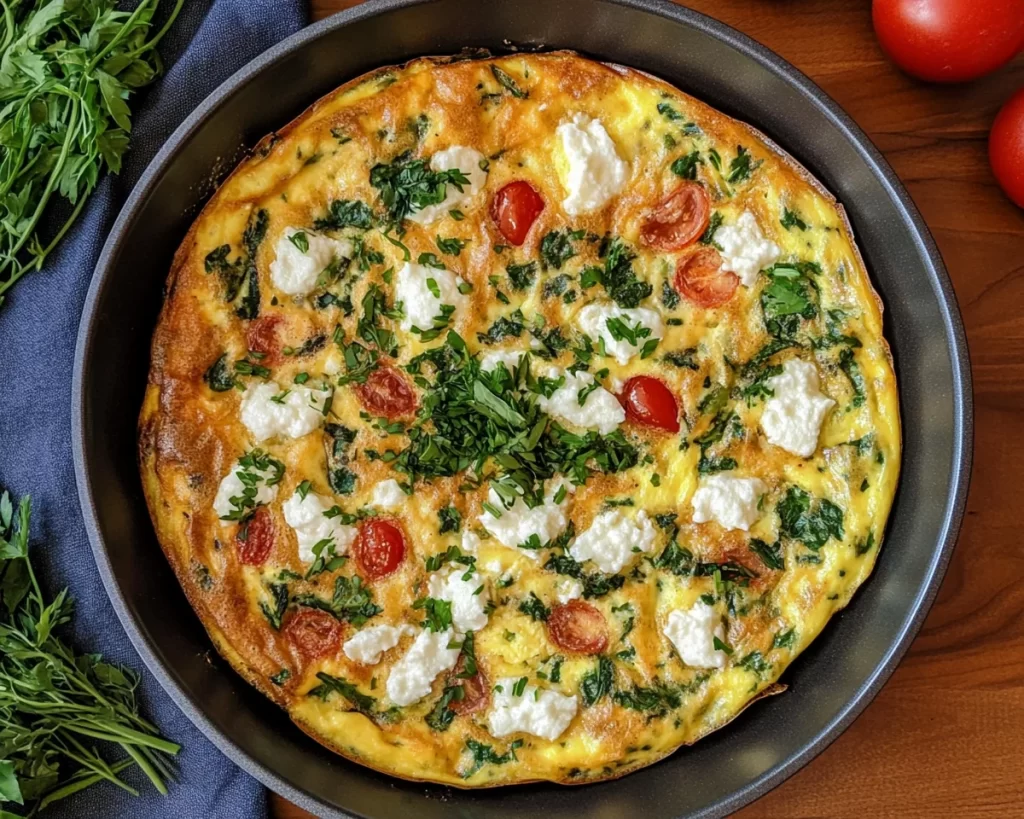
- Sprinkle the crumbled goat cheese and fresh herbs on top of the egg mixture. These additions provide flavor and richness; do not mix them in, as you want to see them beautifully on top while it cooks.
- Transfer the skillet to the preheated oven and bake for about 20-25 minutes until the frittata is set and the top is golden brown. Keep an eye on it during the last few minutes to avoid overcooking.
- Once cooked, remove the frittata from the oven and let it sit for about 5-10 minutes before slicing. This resting period allows the frittata to firm up slightly, making it easier to cut into wedges.
After following these steps, you should have a beautifully golden, fluffy frittata ready to be served. Garnish with fresh herbs or an extra sprinkle of goat cheese if desired for that visually appealing touch.
Variations & Substitutions
Vegetarian Delight: For a vegetarian variation, feel free to throw in diced bell peppers and mushrooms, which add both color and flavor. You can replace the spinach with kale or arugula for different textures. Both options will provide a satisfying meal that caters to non-meat eaters.
Meat Lover’s Frittata: If you wish to indulge your carnivorous side, consider adding cooked bacon or sausage. Simply sauté these meats along with the onions before proceeding with the recipe. The rich flavors of the meats will bring an extra layer of heartiness and satisfaction to the dish.
Southwest Frittata: Add spices like cumin and chili powder to the egg mixture for a spicy kick and toss in corn and black beans. Top it with avocado slices and cilantro for a fresher twist; this makes it perfect for a brunch gathering with a southwestern flair.
Low-Carb Option: Substitute half of the eggs with egg whites and skip the milk to reduce calories. Incorporate zucchini noodles in place of the starchier veggies for a lighter frittata that still packs a flavorful punch.
Dairy-Free Version: For those avoiding dairy altogether, replace goat cheese with a dairy-free cheese alternative or skip the cheese entirely. The frittata will still be delicious with just the herbs and vegetables.
Each of these variations allows you to experiment and personalize the dish according to your tastes, making this frittata truly versatile. Don’t hesitate to get creative with your ingredient choices!
Common Mistakes to Avoid
When making a frittata, there are several common pitfalls you need to be aware of to ensure a perfect outcome. The first is overcooking. If you leave the frittata in the oven for too long, it can become dry and rubbery. Always keep an eye on it as it approaches the end of the cooking time, and remember that it will continue to cook slightly even after you pull it out of the oven.
Another issue is underseasoning. While it’s easy to think that eggs will provide enough flavor on their own, the truth is that they can be quite bland unless seasoned properly. Make sure to generously season with salt and pepper, and consider tasting the vegetable mixture before adding the eggs, adjusting the seasonings if necessary.
Also, it’s crucial to use an oven-safe skillet when preparing a frittata. Frittatas cook evenly when baked in the same pan they’re sautéed in, as this allows for a seamless transfer to the oven. If you use a non-oven-safe pan, you may end up with sticking issues or a frittata that doesn’t cook evenly.
Finally, don’t forget to let the frittata rest before slicing. This resting period allows the frittata to firm up, making it easier to cut and serve. If you dive right in after removing it from the oven, you may find it disintegrates instead of holding its shape.
Storage, Freezing & Reheating Tips
Proper storage of your frittata is key to maintaining its delicious flavors and textures. If you have leftovers, allow the frittata to cool completely before transferring it to an airtight container. It will keep well in the refrigerator for up to 3 days. If you’re planning to eat it later in the week, consider cutting it into individual slices for easier access.
Frittatas also freeze beautifully, making them a great option for meal prep. Wrap slices tightly in plastic wrap and then place them in a freezer-safe bag or container. They can be stored in the freezer for up to 2 months. When you’re ready to enjoy, simply thaw in the refrigerator overnight, then reheat in the oven at 350°F (175°C) for about 15 minutes, or until heated through. The oven helps to restore some of the frittata’s original texture, as opposed to using a microwave.
For food safety, it’s important to note that reheating should only be done once. Never refreeze a thawed frittata without cooking it first, as this can compromise both taste and texture as well as potential food safety concerns.
Frequently Asked Questions
Can I make the frittata ahead of time?
Absolutely! Frittatas can be made a day ahead and stored in the fridge. Just reheat it in the oven before serving for the best texture. It’s a fantastic option for busy mornings or brunch gatherings, allowing you to enjoy quality time with your guests instead of being stuck in the kitchen.
Can I substitute the eggs?
Yes, you can use egg substitutes or egg whites if you want to reduce calories or cholesterol. Keep in mind that the texture might differ slightly, but it will still result in a delicious dish. Adjustments in cooking time may be necessary, as some substitutes might cook faster or slower than whole eggs.
What herbs can I use in a frittata?
Almost any fresh herb can enhance the flavor of a frittata. Consider experimenting with basil, thyme, or rosemary. Dried herbs can also work, but you may need to adjust the quantities since they are more concentrated than fresh.
Can frittata be eaten cold?
Yes, frittatas are delightful both warm and cold! They make great finger food for picnics or packed lunches. If you plan to serve them cold, allow them to cool completely before slicing and storing.
What type of pan is best for making a frittata?
An oven-safe skillet or cast iron skillet is ideal for making a frittata. This allows for both sautéing the ingredients and baking in the same pan. Nonstick options are great for easy release, but ensure they are labeled as oven-safe.
Conclusion:
The Frittata Recipe with Goat Cheese + Herbs is not only a wholesome dish but also a delightful way to showcase the flavors of spring. Its rich texture, vibrant colors, and dynamic taste make it a hit at any meal. This recipe encourages you to get creative, experiment with flavors, and customize it so that it perfectly aligns with your dietary preferences or what you have on hand. So what are you waiting for? Gather your ingredients, preheat your oven, and let the magic begin! You may just find this becomes a staple in your kitchen that you’ll want to share with friends and family. Happy cooking!