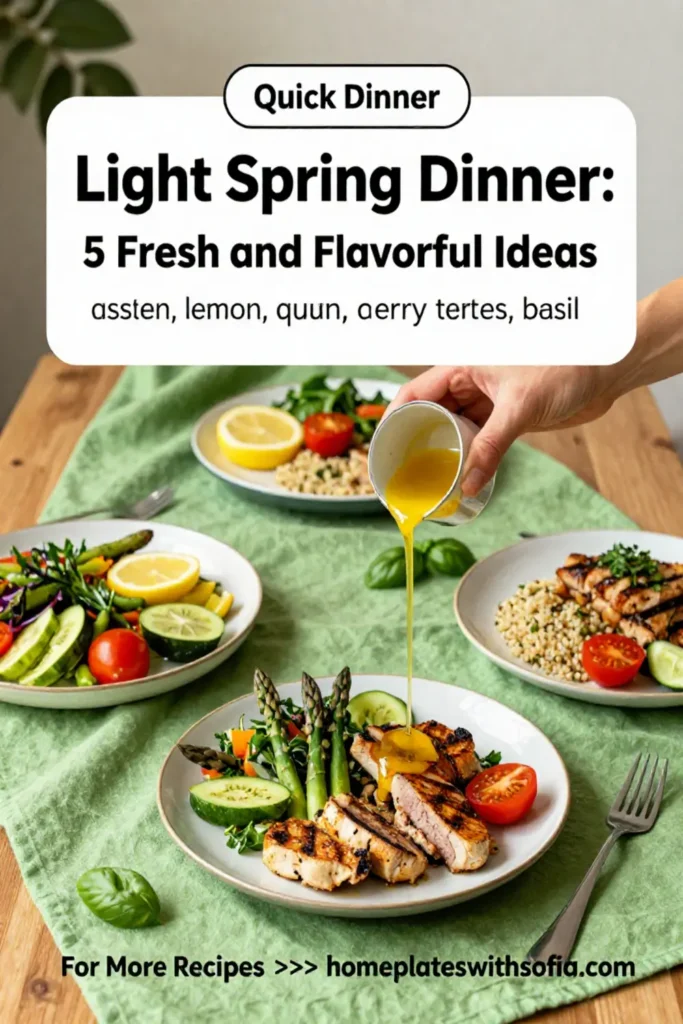
Prep time: 20 minutes
Cook time: 30 minutes
Total time: 50 minutes
Servings: 4
Spring is a time of renewal and freshness, and what better way to celebrate the season than with a light and flavorful dinner? In this article, you’ll discover five delightful recipes that will brighten your dining table while keeping your meals nutritious and satisfying. Perfect for busy parents or those who are just starting to embrace healthy cooking, these dishes are easy to prepare and can be made on a budget. Let’s dive into the vibrant world of spring cooking and elevate your dinner game!
What Is Light Spring Dinner Recipes: 5 Fresh and Flavorful Ideas?
Light spring dinner recipes embrace the essence of the season: fresh ingredients, bright flavors, and a lighter approach to comfort food. These recipes highlight seasonal produce like asparagus, peas, and herbs, ensuring that each meal is not only delicious but also packed with vitamins and minerals. They are designed to be quick and simple, making them ideal for anyone looking to enjoy home-cooked meals without spending hours in the kitchen.
Why You’ll Love This
You’ll appreciate these fresh ideas for several reasons. Firstly, they focus on using seasonal ingredients, guaranteeing maximum flavor and nutrition. Secondly, they are designed for both convenience and taste, making them perfect for busy weeknights when the last thing you want to do is spend hours cooking. Lastly, many of these recipes cater to different dietary preferences, accommodating both meat lovers and vegetarians alike. The balanced nature of these dishes ensures that you can enjoy a satisfying meal without the heaviness often associated with traditional dinners.
Ingredients You’ll Need
- 1 lb fresh asparagus: Tender and vibrant asparagus adds crunch and nutrition, rich in vitamins A, C, and K.
- 2 cups cherry tomatoes: Sweet and juicy, these tomatoes enhance the natural flavors of the dish.
- 1 cup quinoa: A nutritious grain, quinoa is gluten-free and packed with protein and fiber.
- 1 lemon: Freshly squeezed lemon juice brightens the flavors and provides a zesty aroma.
- 2 tbsp olive oil: This healthy fat helps to enhance flavors while keeping the meal light.
- 1 garlic clove: Adds depth of flavor, perfect for spring dishes.
- Salt and pepper: Essential for seasoning, adjusting both to taste will bring out the best in your dish.
- 1/4 cup fresh basil: Bright and aromatic, it complements the dish beautifully.
How to Make
- Begin by rinsing the quinoa under cold water to remove its natural bitterness. In a saucepan, combine the quinoa with two cups of water or broth, bringing it to a boil over medium heat. Once boiling, reduce to a simmer, cover, and let it cook for about 15 minutes, until the grains are fluffy and water has absorbed.
- While the quinoa is cooking, prepare the asparagus. Trim the hard ends and cut into bite-sized pieces. In a large skillet, heat one tablespoon of olive oil over medium heat. Add the garlic, sautéing until fragrant, about 30 seconds. Then, add asparagus, cooking for 5-7 minutes until tender yet crisp, stirring occasionally to avoid burning.
- Add the cherry tomatoes to the skillet, cooking for an additional 2-3 minutes until they begin to soften. The vibrant colors and aroma should fill your kitchen with an enticing scent. Then, add the cooked quinoa into the skillet, stirring well to combine all ingredients.
- Next, squeeze the juice of half a lemon over the mixture. Stir in fresh basil and season with salt and pepper to taste. This final touch will enhance the dish, providing a refreshing burst of flavor that’s characteristic of spring.
- Once everything is combined, remove from heat and serve warm. This dish can be a main course or serve as a stunning side at your next gathering.
Variations & Substitutions
Chickpea and Spinach Variation: For an extra protein boost, consider adding a can of drained chickpeas to the mixture during step three. Also, you can stir in fresh spinach for added nutrients. Spinach wilts beautifully and amplifies the dish with its rich, leafy greens.
Grilled Chicken Variation: If you’re looking to include more protein, grilled chicken breast can be sliced and added on top of the finished dish. The smokiness of grilled meat complements the brightness of the vegetables.
Pasta Swap: Instead of quinoa, whole wheat or gluten-free pasta can be used. Cook the pasta according to package instructions and mix it in with the sautéed vegetables in the skillet. A sprinkle of parmesan cheese can add a nice finishing touch.
Herb Variations: Feel free to experiment with herbs such as dill or parsley for a different flavor profile. Fresh herbs can dramatically change the taste, so choose what you love best!
Common Mistakes to Avoid
One common mistake when preparing vegetable dishes is overcooking the asparagus and tomatoes. Often, this can lead to a mushy texture that diminishes their fresh taste. To avoid this, ensure you maintain a close eye on cooking times and aim for a tender yet crisp finish.
Another pitfall is neglecting to season adequately. Under-seasoned dishes can taste very bland as the default for most vegetables is quite subtle. Always taste as you go and adjust the seasoning with salt, pepper, and lemon juice as necessary.
Using old or less vibrant vegetables can also lessen the dish’s impact. Opt for fresh and firm produce; this will not only affect the taste but also the visual appeal of your meal.
Storage, Freezing & Reheating Tips
If you find yourself with leftovers, it’s important to store them properly. Allow the dish to cool completely before transferring it to an airtight container. Store in the refrigerator for up to 3 days. When reheating, it’s best to use the microwave in short bursts to avoid overcooking the vegetables again.
For longer storage, this dish can also be frozen. Place cooled servings in freezer-safe containers, and use within three months for the best quality. To reheat, thaw overnight in the refrigerator before warming it up in the microwave or on the stove. Add a splash of olive oil to refresh the flavors.
Frequently Asked Questions
Can I make these dishes ahead of time?
Yes! Many of these recipes are great for meal prep. Prepare the quinoa and cook the vegetables the day before. Just reheat and combine when you’re ready to serve.
What other vegetables can I add?
You can use a variety of seasonal vegetables. Think bell peppers, zucchini, or even frozen peas. The versatility of this dish allows for flexibility according to your pantry.
Is this recipe gluten-free?
Certainly! As long as you use quinoa or gluten-free pasta, this dish is naturally gluten-free. Be sure to check product labels if you are particularly sensitive to gluten.
Can I substitute lemon juice?
Yes, lime juice can be a delightful alternative if you prefer a different citrus flavor. Other options include vinegar or even flavored oils for a unique twist.
How do I know when my quinoa is done?
Quinoa is ready when you see the grains have become fluffy and a little tail (the germ) has separated from the seed. If the liquid has absorbed and the texture is pleasant, you’re good to go!
Conclusion:
These light spring dinner recipes provide an excellent way to incorporate fresh, seasonal ingredients into your meals. With their simplicity and vibrant flavors, they’re perfect for anyone looking to embrace healthier eating without sacrificing taste. Enjoy the cooking process and unleash your creativity in the kitchen!