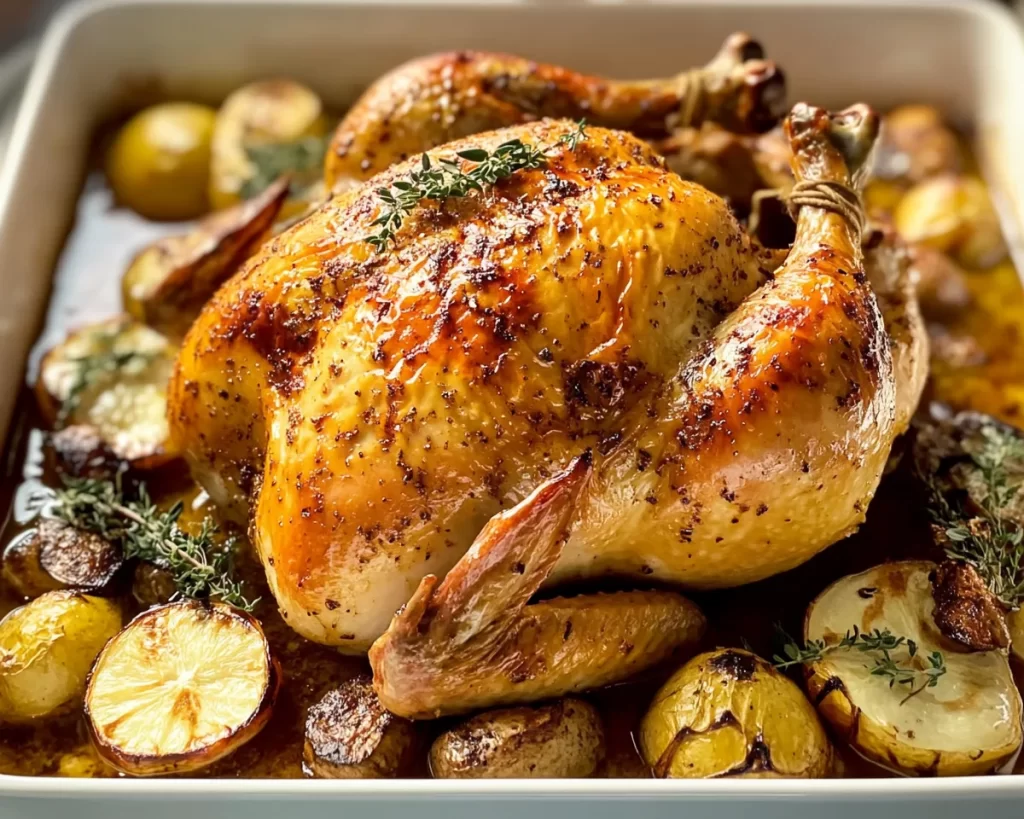
Prep time: 20 minutes
Cook time: 1 hour 20 minutes
Total time: 1 hour 40 minutes
Servings: 4
When it comes to cooking, few things can evoke feelings of comfort and delight quite like a perfectly roasted chicken. The sight and aroma of golden, crispy skin and tender, juicy meat are enough to make anyone’s mouth water. This recipe for Perfect Roast Chicken offers not only a delicious meal but also an experience that brings warmth to the dining table. With every bite, you will find the rich flavors enveloping your palate, making it a delightful centerpiece for family meals or dinner parties.
This recipe is special for several reasons. First, it emphasizes simplicity, making it an ideal choice for both busy parents scrambling for weeknight dinners and novice cooks venturing into the kitchen. What you’ll learn here is how to master the art of roasting chicken. You’ll discover incredible tips, explore variations, and navigate common pitfalls—all while weaving your own style into this classic dish.
What Is Perfect Roast Chicken?
Perfect Roast Chicken is a timeless dish enjoyed across cultures. Its roots trace back to various traditional roasting methods, making it a universal comfort food. The beauty of a roast chicken lies in its crispy exterior and succulent interior, creating a delightful contrast that satisfies the senses. When you carve into the chicken, you’ll find the juices flowing, revealing tender meat that is both flavorful and inviting.
The fundamental key to achieving a perfect roast chicken is the careful balance of heat and seasoning. Its savory flavor often comes from the aromatic herbs and spices used during preparation, promoting a multisensory experience for the eater. Whether it is served with roasted vegetables or perched atop a bed of rice, roast chicken offers versatility, allowing it to adapt to various cuisines and sides.
In essence, the perfect roast chicken is not just a meal; it is a celebration of flavors that brings families together. When roasted correctly, the meat is juicy, and the skin is beautifully browned and crispy. This dish is sure to become a staple in your kitchen, evoking both nostalgia and satisfaction with every slice.
Why You’ll Love This
There are many reasons you’ll fall head over heels for this recipe. First, let’s talk about taste. The infusion of herbs and spices not only complements the chicken but also elevates the overall flavor profile. A perfectly roasted chicken is juicy and tender, with a crispy skin that adds an element of texture. This combination makes it an irresistible dish that everyone, from kids to adults, will enjoy.
Ease is another fantastic reason to embrace this recipe. The step-by-step process is straightforward and forgiving, even for those just starting their cooking journey. You don’t need an elaborate set of kitchen skills; simply follow the instructions, and you’ll achieve a roast chicken that looks as good as it tastes.
Additionally, this roast chicken is budget-friendly, making it an excellent option for families and individuals looking to prepare nutritious meals without breaking the bank. As for health considerations, it’s a lean protein that can be included in various dietary plans, providing essential nutrients without excessive calories.
Misconceptions often arise about roasting chicken being a challenging endeavor, yet, with the right techniques—and the ones outlined here—you can transform your perspective. Many people worry about undercooking the chicken or having it turn out dry. However, this recipe guides you to avoid those pitfalls, ensuring a delicious and reliable outcome every time.
Ingredients You’ll Need
- 1 whole chicken (about 4-5 pounds) – The star of this dish, the chicken should be fresh and preferably organic to achieve the best flavor. You can substitute with smaller or larger birds depending on your serving needs.
- 4 tablespoons unsalted butter – This adds richness and flavor. If you prefer, you can use olive oil as a healthier alternative.
- Salt – Essential for enhancing flavor. Consider using kosher or sea salt for more texture. Too little salt might result in bland meat.
- Black pepper – Freshly ground is recommended for a more intense flavor. It’s also versatile and complements various seasonings.
- 1 lemon – Provides acidity that helps tenderize the meat and infuses a zesty flavor. You can replace it with lime for a different twist.
- Fresh herbs (such as rosemary, thyme, and parsley) – These not only offer aroma but also profile depth. Dried herbs can be utilized in a pinch, but fresh herbs are significantly more flavorful.
- Garlic (4-5 cloves) – Adds a beautiful aroma and flavor to your chicken. Make sure to crush them lightly to release the oils.
- Vegetables, such as carrots and potatoes (optional) – These serve two purposes: absorbing flavor and providing a side dish. Feel free to use any root vegetables that you enjoy.
How to Make
To successfully create the perfect roast chicken, follow these step-by-step instructions:
- Preheat the Oven: Begin by preheating your oven to 425°F (220°C). Preheating is essential for achieving that sought-after crispy skin. A hot oven permits the chicken to cook evenly while sealing in the juices.
- Prepare the Chicken: Remove the chicken from its packaging and pat it dry using paper towels. This step is crucial; moisture on the skin will prevent it from crisping up. Additionally, remove any giblets from the cavity, which often come stored inside the chicken.
- Season Generously: Rub the entire chicken with the unsalted butter, ensuring you cover all areas, including under the skin if you can. Follow this by seasoning generously with salt and freshly ground black pepper. Don’t shy away from this step; a well-seasoned chicken will provide delicious flavor.
- Fill the Cavity: Take the lemon, cut it in half, and squeeze the juice into the cavity. Toss in the used lemon halves, the smashed garlic cloves, and a handful of the fresh herbs. This process will impart fragrant flavors from the inside out.
- Truss the Chicken: If you like, you can truss the chicken using kitchen twine. This helps it cook evenly, though it’s not strictly necessary for a home cook. Simply tie the legs together and tuck the wing tips under the bird.
- Roast: Place the seasoned chicken breast-side up on a roasting pan. Add your chosen vegetables around it if you decide to use them. Then, roast in the preheated oven for about an hour and fifteen minutes, or until the internal temperature reaches 165°F (75°C). The skin should turn a beautiful golden brown, and every so often, you may baste it with the drippings to keep it moist.
- Rest the Chicken: Once the chicken is fully cooked, remove it from the oven and allow it to rest for about 15 minutes. This resting period is incredibly important; it allows the juices to redistribute throughout the meat, ensuring every piece you carve is juicy and flavorful.
- Carve and Serve: Carve the chicken into pieces and serve it alongside your roasted vegetables or your favorite sides. Enjoy the aroma as you cut into it, and take a moment to appreciate your culinary accomplishment.
Variations & Substitutions
Herb-Infused Roast Chicken: If you’re looking to switch things up a bit, consider mixing different herbs like oregano or basil with your butter before rubbing it onto the chicken. Each herb provides unique flavor notes, and using a blend can create a more complex taste profile. This is especially great if you have leftover herbs in your fridge that you want to make use of. The freshness will elevate the chicken’s flavor, making it an aromatic delight.
Garlic Lemon Roast Chicken: For those who adore the bold flavor of garlic, you can increase the quantity to a whole head instead of just a few cloves. Slice the garlic head in half and stuff it into the cavity along with the lemon. The result is a chicken bursting with intense garlic flavor that mellows during roasting, giving it a unique character. This version is perfect for garlic lovers or those looking to bolster the dish’s intensity.
Spice Rub Roast Chicken: Want to add some heat? Create a spice rub consisting of paprika, cumin, and chili powder. This variation combines a smoky and spicy flavor profile, perfect for a family that enjoys a kick in their meals. Apply the rub generously beneath the skin for maximum flavor impact. Serve it with a yogurt dip on the side for a refreshing contrast, enhancing the dish’s overall experience.
Sweet and Savory Roast Chicken: Incorporate honey or maple syrup into your butter for a subtly sweet glaze. You can also toss sliced apples or pears in with the vegetables for a festive and fruity side. This sweet-savory combination is excellent during autumn and winter months, making the chicken celebration-worthy and delightful.
Vegetarian “Chicken”: Even though this recipe is designed for chicken, you might be interested in making a vegetarian version using a whole cauliflower. Season the cauliflower similarly, using the same butter and spice approach. Roast it in the oven until tender, and you’ll have a stunning centerpiece that delights both vegetarians and meat-eaters alike.
Common Mistakes to Avoid
One of the most prevalent mistakes when roasting chicken is not adequately drying it beforehand. If you skip this step, the skin will be soggy rather than crispy. Make sure to pat the skin dry with paper towels for optimal results.
Another common issue is overcooking the chicken. Using a meat thermometer is essential; aim for an internal temperature of 165°F (75°C). This ensures the chicken remains juicy inside, rather than dry and unappetizing. If you don’t have a thermometer, check the juices that run from the chicken: they should be clear, not pink.
Mistakes can also arise from using insufficient seasoning. Don’t be shy with the salt and pepper. Under-seasoned chicken will fall flat in flavor, making it crucial to rub the spices thoroughly. Also, be mindful of your baking dish; if it’s too small, the chicken will steam rather than roast, leading to disappointing results.
Finally, forgetting to let the chicken rest before carving is a major faux pas. Allowing it to rest for at least 15 minutes ensures the juices redistribute within the meat. If you cut it too soon, you’ll end up with dry, unappealing slices. Allowing the chicken to relax also gives you time to prepare your sides or set the table.
Storage, Freezing & Reheating Tips
Once you’ve successfully made your perfect roast chicken, any leftovers can be stored carefully. To keep it tasty for later, place the leftover chicken in an airtight container; it can typically stay in the refrigerator for up to three days. You can also cover it tightly with aluminum foil or plastic wrap, ensuring it stays moist.
For longer storage, consider freezing portions of the roast chicken. To do this, let the chicken cool down completely. Then slice it into pieces and individually wrap each section in plastic wrap, followed by aluminum foil, or simply use freezer bags. Properly stored, your roast chicken can remain frozen for up to three months.
When it comes to reheating, there are a couple of ideal methods to best preserve its texture and flavor. If you have time, use the oven by preheating it to 350°F (175°C). Place the chicken pieces in a baking dish and cover them with foil to maintain moisture. Bake for approximately 20-25 minutes or until heated through. Alternatively, you can reheat in the microwave for a few minutes; however, be cautious as it can be a bit dryer. Always check the internal temperature to ensure it’s heated to at least 165°F (75°C) before consumption.
Remember always to prioritize food safety—never leave perishable items out for more than two hours, especially in warm environments. When stored and reheated correctly, your leftovers will taste almost as good as the initial roast.
Frequently Asked Questions
Can I use frozen chicken for this recipe? Yes, you can roast a frozen chicken, but you must increase the cooking time significantly. It’s best to thaw the chicken in the refrigerator for 24 hours prior to roasting for even cooking.
What size chicken should I buy? A chicken weighing between 4-5 pounds is ideal for a family of four, offering enough meat for dinner and leftover options. Adjust sizes according to your family size and appetite.
Can I roast vegetables with the chicken? Absolutely! Roasting vegetables alongside the chicken is a great way to infuse them with flavor. Typical choices include carrots, potatoes, and onions. Just make sure they are cut into even pieces to ensure they roast adequately within the same timeframe as the chicken.
Is it necessary to truss the chicken? While trussing helps the chicken retain moisture and cook evenly, it’s not absolutely necessary. If you feel confident, you can roast without trussing; just be mindful of cooking times and basting.
How do I know when the chicken is done? The surest way to check doneness is with a meat thermometer, which should read 165°F (75°C) at the thickest part of the breast or thigh. If you don’t have a thermometer, ensure the juices run clear, and the meat is no longer pink.
Conclusion:
Perfect Roast Chicken is more than just a dish; it’s an experience that brings comfort, satisfaction, and even a touch of nostalgia. Its inviting aroma fills the kitchen, creating a sense of togetherness, whether you’re cooking for your family or entertaining friends. With its ease of preparation and room for customization, it invites you to make it your own. I highly encourage you to try this recipe soon, play with the flavors that resonate with you, and share that culinary excitement with others. Roasting a chicken is a rewarding endeavor that can bring delight to your dining table. Happy cooking!