Prep time: 30 minutes
Cook time: 10 minutes
Total time: 40 minutes
Servings: 4
Spring rolls are a delightful and versatile dish that can bring joy to any meal. Whether you’re preparing them as a snack or a main course, these crispy, fresh bites never fail to impress. This recipe guides you through the process of creating authentic spring rolls in just five simple steps, ensuring a fun cooking experience that you can easily share with family and friends.
What Is Recipe for Spring Rolls: 5 Simple Steps to Joyful Bites?
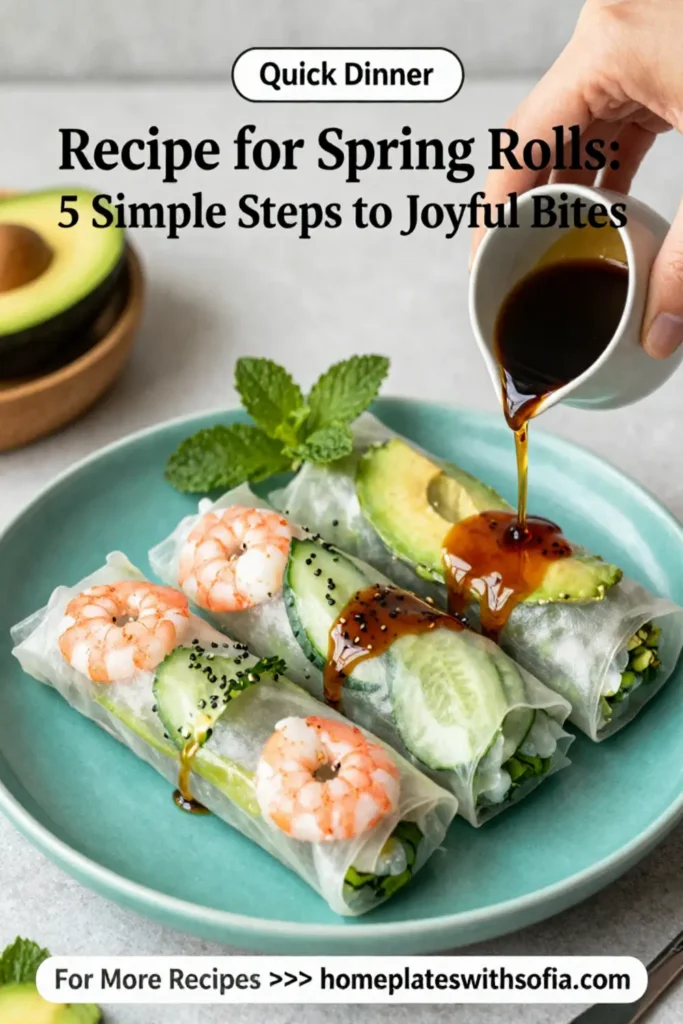
Spring rolls, originating from Asian cuisine, are a type of dumpling that consists of thin rice wrappers filled with various fresh ingredients. They can be filled with vegetables, meats, or a combination of both, and are often served alongside a delicious dipping sauce. The unique aspect of spring rolls is their versatility; you can customize the filling to suit your tastes or dietary preferences. The crunchy exterior combined with the fresh filling creates a beautiful balance of textures.
Why You’ll Love This
There are many reasons to adore this spring roll recipe. First, they are incredibly simple to make and require minimal cooking techniques. Second, they are packed with fresh, vibrant ingredients, making them a healthy choice for any meal. Third, this recipe is perfect for busy parents and kitchen beginners who want to create something impressive without spending hours in the kitchen. Lastly, spring rolls can serve as an excellent option for meal prep, allowing you to prepare a batch in advance and enjoy them throughout the week.
Ingredients You’ll Need
- Rice paper wrappers: These delicate, thin wrappers are the key component of your spring rolls. They become soft and pliable when soaked in warm water, making them easy to wrap around your fillings.
- Fresh vegetables: A combination of shredded carrots, cucumber, and bell peppers works beautifully. These ingredients add a refreshing crunch and vibrant colors to the rolls.
- Cooked protein: You can use shredded chicken, shrimp, or tofu, according to your preference. This savory component adds heartiness and makes your spring rolls filling.
- Fresh herbs: Mint and cilantro elevate the spring rolls with fresh, aromatic flavors. They make each bite feel invigorating and light.
- Dipping sauce: A simple peanut or hoisin sauce will complement your spring rolls perfectly, adding a sweet and savory flavor profile that enhances the overall dish.
How to Make
- Prepare your ingredients by washing and chopping your vegetables into thin strips. Make sure to cook the protein of your choice, such as shrimp or chicken, until fully cooked. This step is crucial to ensure the filling is safe to eat and draws out the flavors.
- Soak a rice paper wrapper in warm water until it becomes pliable, usually taking about 10-15 seconds. Be careful not to over-soak as it might tear. Once ready, lay it flat on a clean surface.
- Place a small amount of the filling near the lower edge of the wrapper. Begin with a layer of herbs, followed by the fresh vegetables and protein. Leave enough space at the edges for wrapping.
- Fold the lower edge over the filling tightly, then fold in the sides, and continue rolling until you have a neat, tight roll. The moist rice paper will help it seal itself. Practice makes perfect, so don’t worry if your first few attempts aren’t perfect!
- Repeat the process until all wrappers are filled and rolled. Serve immediately with your chosen dipping sauce or refrigerate them for later. Eating them fresh allows you to enjoy the crispiness and freshness of the spring rolls.
Variations & Substitutions
Vegetarian Spring Rolls: If you’re looking to make this dish vegetarian-friendly, you can easily substitute the protein with more vegetables or even avocados, which provide creaminess. Consider using ingredients like bean sprouts, mushrooms, or even quinoa for added texture and nutrition.
Thai-Inspired Spring Rolls: For a Thai twist, include ingredients such as shredded cabbage, grated coconut, and even slices of mango. These flavor profiles combine sweet and savory elements, adding complexity to your rolls. Pair with a spicy chili dipping sauce to enhance the flavor.
Gluten-Free Option: Ensure that you’re using gluten-free soy sauce and check that your rice papers are gluten-free, allowing those with diet restrictions to enjoy the spring rolls without worry.
Fruit Spring Rolls: You can try a sweet version by filling the rice wrappers with fresh fruits like strawberries, mango, and kiwi, and serve them with a drizzle of honey or chocolate sauce. This variation is perfect for dessert or as a refreshing snack on a hot day.
Common Mistakes to Avoid
One common issue people face is tearing the rice paper wrappers. Make sure to soak the wrappers only until they are pliable; over-soaking will render them too soft and prone to tearing. Also, be mindful of overfilling your spring rolls, which can lead to an inability to roll them properly. Try to use a moderate amount of filling for the best wrapping results. Another tip is to serve the rolls immediately after making them; storing them for too long can cause them to become soggy.
Storage, Freezing & Reheating Tips
To store your spring rolls, place them in an airtight container with parchment paper between layers to prevent them from sticking together. Keep them in the refrigerator for up to two days for optimal freshness. If you wish to freeze them, place the uncooked rolls in a single layer on a baking sheet until firm, then transfer them to a freezer bag. They can be frozen for up to a month, but for best results, it’s recommended to cook them before freezing. To reheat, simply bake them in a preheated oven for about 10 minutes or until crispy again.
Frequently Asked Questions
Can I make spring rolls ahead of time? Yes, you can prepare the fillings ahead of time and assemble the spring rolls just before serving to maintain their freshness and texture. If you’ve already made the rolls, it’s best to keep them in an airtight container in the refrigerator and consume them within 1-2 days for optimal taste.
What dipping sauces can I use? Popular dipping sauces for spring rolls include peanut sauce, hoisin sauce, and sweet chili sauce. These sauces not only enhance the flavor of the spring rolls but also provide an exciting contrast to the fresh ingredients.
Are spring rolls healthy? Absolutely! Spring rolls are filled with fresh vegetables, making them a light and nutritious option compared to fried snacks. You can control the ingredients and include healthy proteins and colorful veggies, making them a great choice for balanced meals.
What should I do if my rice papers keep cracking? If your rice papers are cracking, consider adjusting your soaking time and ensuring the water is warm enough. Also, be gentle while rolling them to avoid causing cracks.
Can I add cooked seafood to my spring rolls? Yes, cooked shrimp, crab, or any other seafood can be delicious additions to your spring rolls. Ensure that the seafood has been cooked thoroughly for safety and flavor.
Conclusion:
In summary, spring rolls are a fabulous culinary adventure waiting to happen in your kitchen. With these five simple steps and a few guidelines, you can create delicious, fresh spring rolls that will wow your friends and family. Enjoy experimenting with various fillings and dipping sauces, making this dish your own. Whether you’re a kitchen pro or just starting out, these joyful bites will soon become a staple in your cooking repertoire!