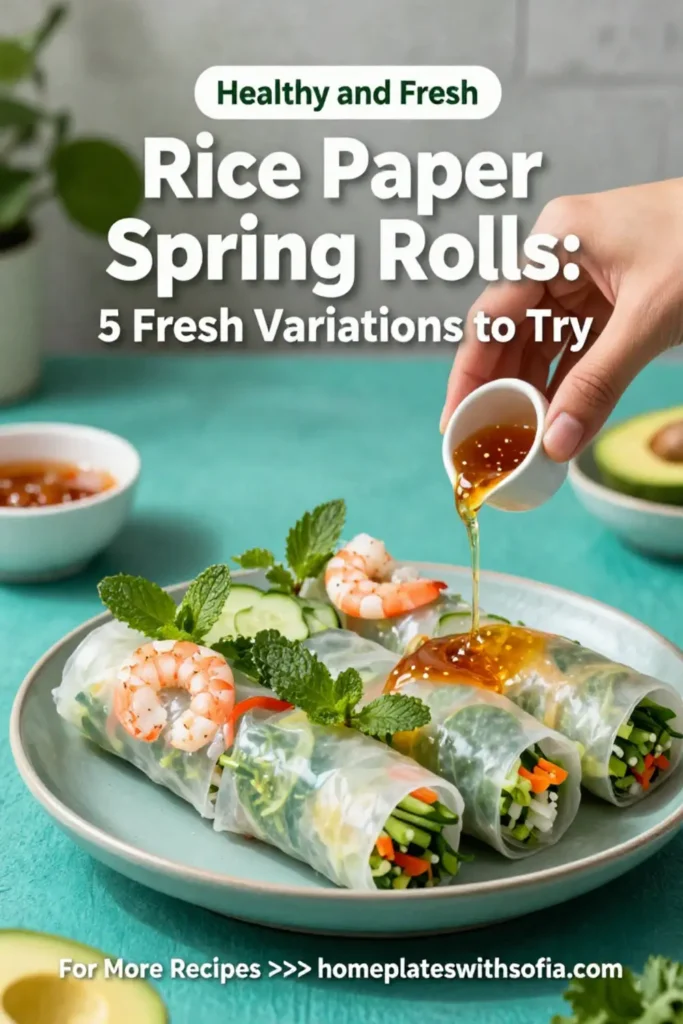
Prep time: 30 minutes
Cook time: 15 minutes
Total time: 45 minutes
Servings: 4
Rice paper spring rolls are an incredible way to enjoy a light and healthy meal, packed with fresh ingredients. Not only are these rolls colorful, but they also offer endless possibilities for variations, making them a favorite among food lovers looking for a quick and delicious option. This guide will not only teach you the basics of making rice paper spring rolls but will also introduce five fresh variations that will keep your taste buds tingling. Perfect for busy parents, kitchen beginners, or anyone looking to eat better without the fuss!
What Is Rice Paper Spring Rolls: 5 Fresh Variations to Try?
Rice paper spring rolls originate from Vietnam and are traditionally filled with a mix of fresh vegetables, herbs, and proteins. They are wrapped in translucent rice paper, which is gluten-free and naturally light, making them a fantastic option for any meal or snack. The beauty of rice paper spring rolls lies in their versatility. You can modify the fillings based on what you have on hand or to suit your dietary preferences, resulting in uniquely flavored rolls each time.
Why You’ll Love This
You will adore rice paper spring rolls for several reasons. First and foremost, they are simple to create and don’t require cooking, making them a wonderful choice for a quick meal. When you bite into these rolls, the crunch of fresh veggies and the chewiness of the rice paper create a delightful texture that is refreshing and satisfying. Furthermore, these rolls are customizable! Whether you prefer vegetarian, vegan, or meat-filled options, there’s something here for everyone. As a bonus, they are low in calories and high in nutritional value, making them a health-conscious choice for almost any diet.
Ingredients You’ll Need
To get started with your rice paper spring rolls, gather the following ingredients:
- Rice paper wrappers: These thin sheets are the base of your rolls, providing that unique chewy texture.
- Vermicelli noodles: Soft rice noodles add substance and are easy to prepare.
- Vegetables: Use a mix such as shredded carrots, cucumber, bell peppers, and lettuce for crunch and freshness.
- Herbs: Fresh mint and cilantro elevate the flavor profile and add aromatic elements.
- Protein: Choose from shrimp, chicken, tofu, or a combination, depending on your dietary preference.
How to Make
Follow these simple steps to create delicious rice paper spring rolls:
- Begin by preparing the vermicelli noodles according to the package instructions. Typically, you will soak them in hot water for a few minutes until soft, then drain and set aside.
- Chop your vegetables and proteins into thin strips. Keep the pieces uniform in size for an aesthetically pleasing presentation, and ensure they are easy to bite into.
- To moisten the rice paper wrappers, fill a shallow dish with warm water. Quickly dip each wrapper into the water for about 5 seconds, ensuring it is soft but not overly wet. Lay the wrapper on a flat surface.
- Start by adding a small amount of vermicelli noodles in the center of the wrapper, then layer your chopped vegetables and proteins on top. Be careful not to overfill, as this might make rolling difficult.
- Fold the sides of the rice paper inwards and then roll from the bottom upwards to enclose the filling. Tuck the roll tight but not too tight, as it will continue to soften and expand.
- Repeat these steps until all ingredients are used. Serve your rice paper spring rolls fresh with a dipping sauce like peanut or hoisin sauce for added flavor.
Variations & Substitutions
1. Shrimp & Avocado: This variation adds succulent shrimp and creamy avocado for a rich texture. Begin by cooking the shrimp until pink and let them cool before adding to the rice paper. The avocado provides healthy fats and blends well with the fresh crunch of vegetables.
2. Spicy Tofu & Mango: Perfect for a plant-based option! Marinate diced tofu in a spicy sauce. Sauté or grill until golden brown, then cool. Pair with sweet mango slices for a bright and zesty roll, balanced by additional cucumbers and herbs.
3. Mediterranean-Inspired: Fill rice wrappers with Mediterranean staples like roasted red peppers, feta cheese, olives, and fresh basil. This version allows you to experience the vibrant flavors of the Mediterranean while enjoying the fresh component of spring rolls.
4. Crunchy Veggie Delight: Load your rolls with an array of crunchy veggies such as radishes, carrots, and bell peppers tossed in a light sesame dressing. This variation provides a crisp texture and is incredibly refreshing.
5. Quinoa & Black Bean: A great vegetarian option featuring cooked quinoa and black beans alongside corn, cilantro, and lime juice. This combination not only packs in protein and fiber but also an exciting flavor burst in every bite.
Common Mistakes to Avoid
When making rice paper spring rolls, avoiding common pitfalls is essential for a successful dish. One typical mistake is soaking the rice paper for too long, causing it to become too gummy and hard to handle. Instead, dip it just enough to soften but not overly saturate it. Another common issue is overfilling the roll, making it difficult to wrap securely. Aim for a modest quantity of ingredients that will comfortably fit within the wrapper. Lastly, forgetting to include fresh herbs may lead to a less flavorful roll—herbs bring brightness and depth to the dish.
Storage, Freezing & Reheating Tips
To ensure the freshness of your rice paper spring rolls, it’s essential to store them correctly. If you have leftover rolls, place them in an airtight container, layering parchment paper between each roll to avoid sticking. It is best to consume them within 1-2 days for optimal freshness. Spring rolls don’t freeze well due to the rice paper’s structure; however, the fillings can be prepared and stored separately for later assembly. When reheating, skip the microwave as it may make the rice paper chewy and unappetizing. Instead, if you want warmed fillings, sauté them in a pan just until heated through.
Frequently Asked Questions
Can I make rice paper spring rolls in advance? Yes, you can assemble them in advance; however, it’s best to enjoy them fresh. If you prepare them ahead of time, store them with parchment paper between rolls in an airtight container and consume them within 24 hours.
What dipping sauces go well with rice paper spring rolls? Popular dipping sauces include peanut sauce, hoisin sauce, sweet chili sauce, and a spicy sriracha mayo. Each sauce adds a distinct flavor profile that enhances the overall experience.
Are rice paper wrappers gluten-free? Yes, rice paper wrappers are typically made from rice flour and water, making them gluten-free. Always double-check the packaging to ensure no other ingredients have been added that may contain gluten.
How do I keep my rice paper spring rolls from sticking together? To prevent sticking, use parchment paper to separate individual rolls if stacking them in a container. Additionally, avoid over-saturating them while soaking; ensure they are just pliable enough to roll without being too wet.
Can I use frozen vegetables in my filling? Fresh vegetables are ideal for texture and flavor. If you use frozen vegetables, ensure they are thoroughly thawed and drained before using them; otherwise, excess moisture could make the rolls soggy.
Conclusion: Rice paper spring rolls are an exciting culinary adventure that can fit into any meal plan, offering countless options for personalization. With these variations and tips, you’re well on your way to mastering the art of creating versatile, vibrant, and delicious rice paper spring rolls. Enjoy the process, have fun experimenting, and delight your family and friends with fresh flavors that are both healthy and delectable!