Prep time: 20 minutes
Cook time: 30 minutes
Total time: 50 minutes
Servings: 12
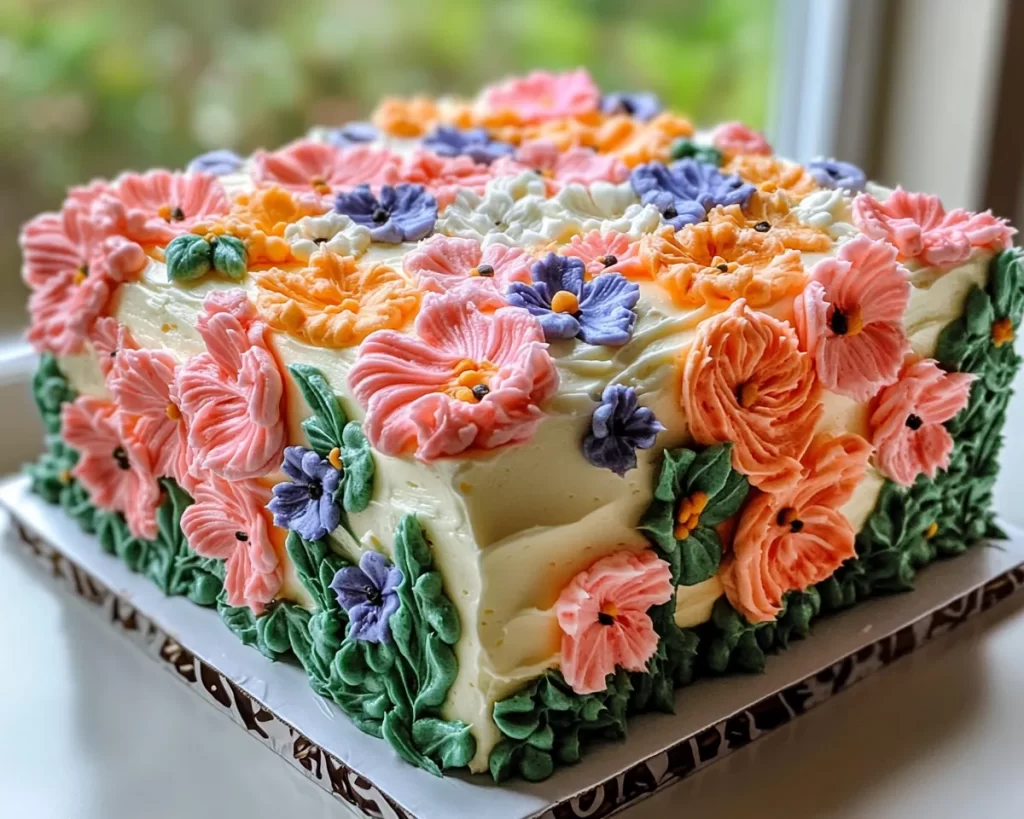
When you think of springtime, what comes to mind? Vibrant blooms, fresh air, and delicious pastries that celebrate the season’s beauty? Inspired by Mother Nature’s palette, the Spring Cake Designs: Floral Sheet Cake Design is both a feast for the eyes and the taste buds. With its delicate floral decorations and moist, flavorful cake, this recipe is perfect for birthday parties, spring celebrations, or any occasion when you want to impress family and friends.
This recipe not only tastes wonderful but also allows you to unleash your creativity as you decorate your cake. While baking it is a straightforward process, the real fun begins when it’s time to add flowers and colors. By the end of this guide, you’ll be equipped to create a stunning Floral Sheet Cake that’s sure to be the centerpiece of any gathering. Let’s dive in!
What Is Spring Cake Designs: Floral Sheet Cake Design (Easy)?
The Spring Cake Designs: Floral Sheet Cake is a delightful dessert that celebrates the vibrant colors and flavors associated with spring. This cake typically employs a vanilla or lemon sponge, providing a light and airy texture that contrasts beautifully with the richness of the accompanying frosting. The flavor profile can be enhanced with additional elements like citrus zest or floral extracts, making it an exquisite choice for springtime gatherings.
Originating from traditional sheet cakes, which are often baked in rectangular pans, this particular design takes a modern twist by incorporating floral decorations. The cake serves as a canvas for your creativity, allowing you to either use fresh flowers or created ones from fondant or icing. The result is not just a dessert but a piece of art that invites admiration before it’s even tasted.
Texturally, the cake is moist yet sturdy, making it perfect for a variety of toppings. The flavors are refreshing, often invoking memories of sunny days and blooming gardens. This recipe provides an accessible way for even beginner bakers to make a beautiful cake, showcasing their skills and offering a delightful treat.
Why You’ll Love This
One of the primary reasons you’ll love this Floral Sheet Cake is its versatility. The cake itself is relatively simple to prepare and can easily accommodate various flavor preferences. Whether your guests prefer a classic vanilla, a zesty lemon, or even a rich chocolate, this cake can be tailored to fit those needs. The handmade decorations give it an elevated appearance, making it suitable for both casual and formal events.
Additionally, this cake is a cost-effective option. Baking at home allows you to save money while creating a stunning dessert that could easily cost much more at a bakery. With ingredients that are mostly pantry staples, you can whip up this cake without breaking the bank.
One common misconception about baking a decorated cake is that it requires advanced skills. This recipe debunks that myth by providing step-by-step instructions that anyone can follow. Even if you’re a beginner in the kitchen, you’ll find that not only can you make this cake, but you can also feel a sense of accomplishment when it’s completed. Reinvent the narrative around your baking abilities and impress your loved ones with this cheerful treat.
Ingredients You’ll Need
- 2 cups all-purpose flour – The base of your cake; it provides structure.
- 1 cup unsalted butter, softened – Adds richness and moisture.
- 2 cups granulated sugar – Sweetens the cake; can be substituted with brown sugar for a richer flavor.
- 4 large eggs – Binds the ingredients together and adds moisture.
- 1 cup milk – Keeps the cake moist; alternatives like almond milk work well too.
- 2 teaspoons baking powder – Makes the cake rise and become fluffy.
- 1 teaspoon vanilla extract – Adds a classic flavor; feel free to experiment with almond or citrus extracts.
- 1/4 teaspoon salt – Balances the sweetness of the cake.
- 4 cups powdered sugar – For the frosting; can be adjusted based on desired sweetness.
- 2 tablespoons heavy cream – Adds creaminess to the frosting.
- Fresh flowers or edible decorations – These make your cake aesthetically pleasing.
Each ingredient has its key role in the cake’s overall flavor and texture. The flour is essential for structure, while the butter provides richness. Remember, when using any substitutes, like almond milk instead of regular milk, it can slightly alter the taste but won’t compromise the result.
How to Make
- Preheat your oven to 350°F (175°C) and grease and flour a rectangular baking pan. This step is crucial as it prevents the cake from sticking.
- In a large mixing bowl, beat the softened butter and sugar together until the mixture is light and fluffy. This typically takes about 4–5 minutes. Creaming the butter and sugar properly helps incorporate air, making the cake light.
- Add the eggs, one at a time, to the butter-sugar mixture, ensuring that each is fully integrated before adding the next. This step prevents the mixture from curdling and ensures a smooth batter.
- In a separate bowl, combine the flour, baking powder, and salt, whisking them together to ensure no lumps remain. This step helps distribute the baking powder evenly.
- Gradually incorporate the dry ingredients into the wet mixture, alternating with the milk. Begin and end with the flour mixture. Mix until just combined, avoiding overmixing, which can lead to a dense cake.
- Pour the batter into the prepared baking pan and level it with a spatula. Tap the pan gently on the counter to release any air bubbles trapped in the batter.
- Bake for 30 minutes or until a toothpick inserted in the center comes out clean. Be cautious not to overbake, as this can dry out your cake, diminishing its moist texture.
- Once baked, allow the cake to cool in the pan for about 10 minutes. Then transfer it to a wire rack to cool completely, which will take approximately 30 minutes.
- While the cake is cooling, prepare the frosting. In a bowl, combine the powdered sugar, heavy cream, and a splash of vanilla extract. Beat until the frosting is fluffy and spreadable.
- Once the cake is completely cooled, spread the frosting evenly over the top. Use an offset spatula for a smooth finish. Now is the time to get creative with your floral decorations, arranging the flowers artfully to create a stunning centerpiece.
Taking time to ensure each of these steps is properly executed will ensure that your cake turns out beautifully. The texture should be light and fluffy, with a back-and-forth dance of sweetness and floral notes.
Variations & Substitutions
Lemon Floral Sheet Cake
If you prefer a zestier cake, replace half of the milk with fresh lemon juice and add a tablespoon of lemon zest. This variation will transform your cake, giving it a bright, refreshing flavor that perfectly embodies spring. Additionally, a lemon buttercream frosting pairs beautifully with this flavor, offering a cohesive culinary experience.
Chocolate Floral Sheet Cake
For chocolate lovers, substitute half of the flour with unsweetened cocoa powder and add a bit more sugar to balance out the bitterness. This version offers a rich, chocolaty taste while still being soft and moist. Top with chocolate ganache instead of standard frosting for a decadent finish.
Gluten-Free Floral Sheet Cake
To create a gluten-free version, use a good quality gluten-free all-purpose flour blend. Make sure it includes xanthan gum, which can help replicate the texture of traditional flour. This cake can be just as airy and delicious as the original, allowing those with gluten sensitivities to indulge as well.
Vegan Floral Sheet Cake
For a vegan alternative, substitute eggs with unsweetened applesauce or flaxseed meal (1 tablespoon of flaxseed meal mixed with 2.5 tablespoons of water = 1 egg). Replace the butter with coconut oil and use plant-based milk. Don’t forget to check that your powdered sugar is vegan; most brands are, but it’s good practice to double-check.
Each variation can help you customize the recipe based on your dietary needs or flavor preferences, ensuring that everyone can enjoy a slice.
Common Mistakes to Avoid
One of the most common mistakes when baking a sheet cake is overmixing the batter. This can result in a dense cake that doesn’t rise properly. Always mix until just combined, especially after adding the flour.
Another frequent issue arises during the baking process. Be sure to preheat your oven and use an oven thermometer to check the temperature. An unreliable oven can lead to cakes that are either dry or undercooked.
Pay careful attention to cooling. Allowing the cake to cool in the pan too long can lead to a soggy bottom. Conversely, removing a warm cake too quickly from the pan can result in it breaking apart. A good rule of thumb is to let it cool for around 10–15 minutes in the pan before transferring to a cooling rack.
Storage, Freezing & Reheating Tips
To store your cake, place it in an airtight container at room temperature for up to three days. If your home is particularly warm, consider refrigerating it to maintain freshness.
For longer storage, you can freeze the cake either wrapped in plastic wrap or aluminum foil. Ideally, you’ll want to freeze it before frosting to preserve the flavor and texture. When done correctly, you can keep it frozen for up to three months.
When you’re ready to enjoy, let the cake thaw in the refrigerator for several hours or overnight before serving. You may then frost it with fresh icing to brighten up its appearance.
While reheating isn’t necessary as the cake is delightful at room temperature, if you prefer it warm, a quick 10–15 seconds in the microwave should suffice. Just be cautious not to overheat it, as this can lead to dryness.
Frequently Asked Questions
Can I use different flavors of frosting?
Absolutely! While buttercream is traditional, feel free to experiment with cream cheese frosting, whipped cream, or even fruit-flavored icings like strawberry or raspberry to complement the cake’s flavor.
Is it necessary to use fresh flowers for decoration?
Not at all! You can use fondant flowers, edible glitter, or even sprinkles for decoration. Just make sure to choose non-toxic flowers if you go the fresh route.
Can I make this cake ahead of time?
Definitely! You can bake and frost the cake a day or two in advance. Just ensure it’s stored properly to maintain freshness. Decoratively, it might be best to add any fresh flowers right before serving.
What can I do if my cake sinks in the middle?
If your cake sinks, it may be due to overmixing or an incorrect oven temperature. Be sure to follow baking times closely, and invest in an oven thermometer to ensure accuracy.
Can I make mini floral cakes instead of a sheet cake?
Yes! You can use the same batter to create mini cake rounds in muffin tins or small cake pans. Just adjust the baking time accordingly, checking them a few minutes earlier than you would for the sheet cake.
Conclusion:
In summary, the Spring Cake Designs: Floral Sheet Cake Design is not just a dessert but an exciting culinary adventure. With its stunning presentation and delightful flavors, it’s especially enjoyable for spring celebrations or any gathering. The recipe is designed to be approachable for all skill levels, ensuring that anyone can successfully bake and decorate their cake.
I encourage you to try this recipe, tailor it to fit your preferences, and share it with loved ones. You’ll find that baking can be a joyful experience, filled with creativity and deliciousness. So gather your ingredients, turn up the oven, and get ready to create a delightful masterpiece that will impress everyone around you! Happy baking!