Prep time: 30 minutes
Cook time: 25 minutes
Total time: 55 minutes
Servings: 12
Indulging in a slice of cake can bring back a myriad of delightful memories—celebrations, family gatherings, or simply a cozy afternoon treat. The Pastel Buttercream Rosettes Cake not only satisfies your cravings for something lovely and sweet but also delivers a visual feast that appeals to your artistic side. This cake combines a soft, tender crumb with the lusciousness of pastel buttercream, making it perfect for springtime events and gatherings. In this article, you’ll discover how to create this beautiful cake from scratch, and learn tips on achieving those breathtaking rosettes.
In addition to the basic recipe, we’ll explore variations and practical cooking tips that cater to beginner bakers and experienced home cooks alike. Let’s embark on this delightful baking journey together.
What Is Spring Cake Designs: Pastel Buttercream Rosettes Cake?
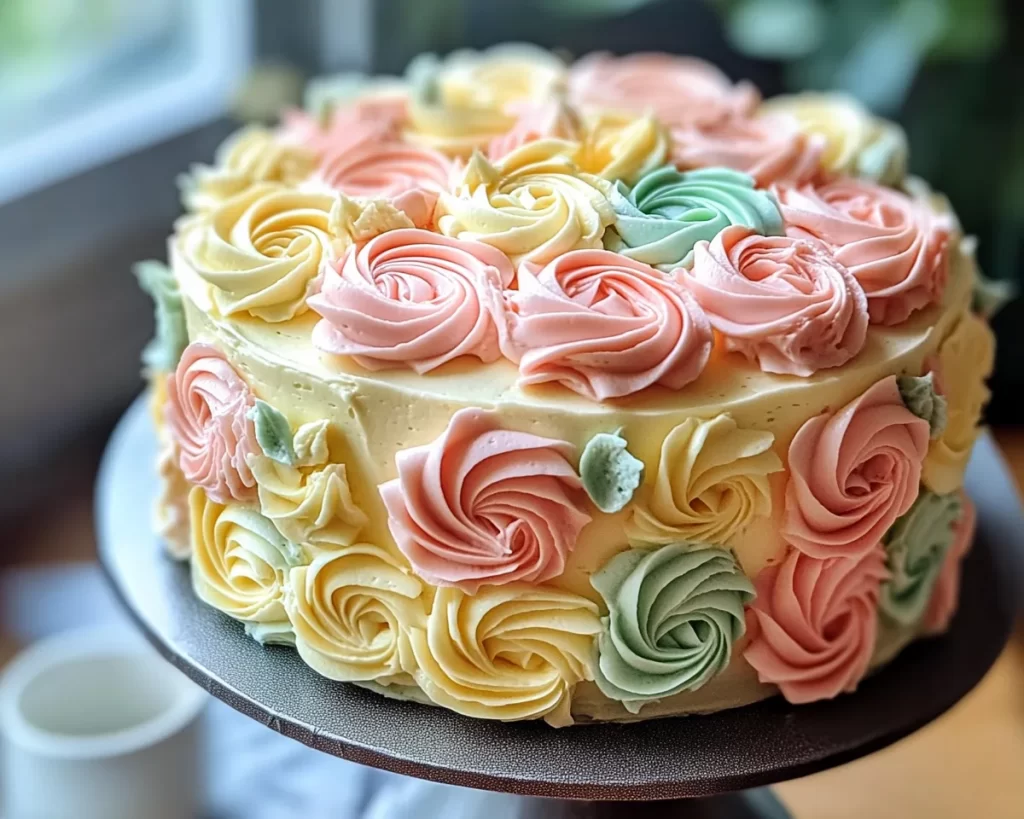
The Pastel Buttercream Rosettes Cake is a charming dessert that captures the essence of spring—light, vibrant, and utterly enchanting. This cake typically features multiple layers of moist cake, which can be made with vanilla, chocolate, or even citrus flavors. It is adorned with a soft buttercream frosting that is tinted in gentle pastel shades, reminiscent of blooming flowers. Each rosette is not only visually appealing but also brings a light, creamy texture that complements the cake beautifully.
Historically, buttercream has been a favored frosting for cakes due to its rich flavor and versatility. The technique of creating rosettes has its roots in classic cake decorating and has made a resurgence in recent years due to its ease and dramatic visual impact. When you slice into this cake, you are met with a soft crumb that pairs perfectly with the smooth frosting, creating an experience that is as delightful to taste as it is to behold. The use of pastel colors also makes it a go-to choice for various celebrations like birthdays, baby showers, and spring feasts.
Why You’ll Love This
There are numerous reasons to fall in love with the Pastel Buttercream Rosettes Cake. First and foremost, the taste is exquisite—the buttery layers harmonize wonderfully with the sweetness of the pastel frosting, creating a balanced bite that is hard to resist. Additionally, the cake is surprisingly easy to make, even for beginners in the kitchen. The method of frosting and decorating it with rosettes is beginner-friendly, allowing anyone to showcase their own artistic flair.
Cost-effectiveness is another strong point; you don’t need extravagant ingredients to create something beautiful and delicious. The cake can be made with pantry staples, and the vibrant colors can be achieved with natural food dyes, making it an accessible choice for anyone looking to elevate their baking game without breaking the bank.
A common misconception is that beautifully decorated cakes are complicated to make. This recipe serves to debunk that myth. With clear, simple instructions and an enjoyable decorating method, anyone can successfully create this lovely cake. For those who might be cautious about baking, this cake provides all the excitement without overwhelming complexity.
Ingredients You’ll Need
- 2 1/2 cups all-purpose flour – This will provide the structure for your cake. Be sure to sift it for a lighter texture.
- 2 1/2 tsp baking powder – Essential for helping your cake rise. Ensure you use a fresh batch for optimal fluffiness.
- 1/2 tsp salt – Enhances the sweetness and balances the flavors.
- 1 cup unsalted butter, room temperature – Adds richness and moisture. Ensure it’s at room temperature for easy blending.
- 2 cups granulated sugar – Sweetens the cake and provides a nice texture.
- 4 large eggs – Binds the ingredients together and adds moisture. Use room-temperature eggs for better emulsification.
- 1 tsp vanilla extract – Adds a warm, inviting aroma and flavor profile. Consider using high-quality vanilla for the best taste.
- 1 cup whole milk – Contributes to the tenderness of the crumb. Whole milk is preferred, but you can use a dairy alternative if desired.
- 4 cups powdered sugar – Essential for making the buttercream frosting. Sift it to prevent lumps.
- 1 cup unsalted butter, room temperature – The base of your buttercream, providing that luscious texture.
- 1/4 cup heavy cream – Adds smoothness to the buttercream, making it easier to pipe.
- Food coloring (pastel shades) – Essential for achieving the beautiful rosette effect.
These ingredients are abundant in most kitchens, making this cake an excellent choice for last-minute events or spontaneous baking sessions. Substitutes can be quite straightforward, such as using coconut oil instead of butter for a dairy-free option, or almond milk for those who prefer a dairy-free lifestyle. The versatility of this recipe allows for easy adjustments, catering to a variety of dietary needs.
How to Make
Follow these step-by-step instructions to achieve a stunning Pastel Buttercream Rosettes Cake:
- Preheat your oven: Begin by preheating your oven to 350°F (175°C). This is crucial for ensuring an even bake. While that’s heating, prepare your cake pans. Grease and flour two 9-inch round cake pans to prevent sticking.
- Mix the dry ingredients: In a medium bowl, whisk together the all-purpose flour, baking powder, and salt. This ensures even distribution of the leavening agent throughout the flour. Set it aside while you move on to the wet mixture.
- Cream the butter and sugar: In a large mixing bowl, use a hand mixer or stand mixer to cream the room-temperature butter and granulated sugar until light and fluffy. This usually takes about 4-5 minutes. The goal is to incorporate air into the mixture, which will help your cake rise and have a lovely texture.
- Add the eggs: One at a time, add the eggs to the butter mixture, ensuring each is fully combined before adding the next. After the eggs are in, mix in the vanilla extract. This will enhance the flavor profile of your cake.
- Combine wet and dry ingredients: Gradually mix the dry ingredients into the wet mixture, alternating with the whole milk. Begin and end with the dry ingredients (flour mixture), mixing just until combined. Avoid over-mixing, as this could lead to a dense cake.
- Pour and bake: Divide the batter evenly between the two prepared cake pans. Smooth the tops with a spatula. Bake in the preheated oven for 20-25 minutes, or until a toothpick inserted into the center comes out clean. The aroma that fills your kitchen during this time is absolutely heavenly!
- Cool down: Allow the cakes to cool in the pans for about 10 minutes, then carefully remove them from the pans and transfer them to a wire rack to cool completely. Cooling is essential for effective frosting.
- Prepare the buttercream: In a large mixing bowl, beat the room-temperature butter until creamy. Gradually add the sifted powdered sugar, mixing continuously. Drizzle in the heavy cream and mix until you reach a smooth, spreadable consistency. Add a pinch of salt if desired for flavor balance.
- Tint your frosting: Divide the buttercream into bowls and add your chosen pastel food coloring. Mix carefully until you achieve the desired shades. Remember, it’s easier to add more coloring than to try and lighten a color that is too intense.
- Assemble and frost: Place one layer of cake on your serving platter. Generously spread a layer of buttercream on top. Add the second layer of cake and apply a thin crumb coat over the entire cake for a smooth base. Refrigerate the cake for about 30 minutes to set this layer.
- Pipe the rosettes: Once the crumb coat is set, use a piping bag fitted with a star tip to create rosettes around the cake. Begin in one corner, squeezing gently and lifting to form a rosette shape, and continue creating rosettes until the entire cake is adorned. It doesn’t have to be perfect; have fun with it!
- Final touches: You can add additional decorations like edible glitter, fresh fruit, or sprinkles to enhance the visual appeal of your cake. Take a moment to admire your work before slicing into this beauty!
Baking can be an adventure, and the Pastel Buttercream Rosettes Cake will show you just how rewarding it can be. Each step is crucial to achieving a delectable result, so immerse yourself fully, and don’t rush the process.
Variations & Substitutions
Chocolate Buttercream Rosettes: If you’re a chocolate lover, consider substituting the vanilla extract with chocolate extract in the buttercream frosting. Alternately, mix in unsweetened cocoa powder (about 1/2 cup) into the buttercream. This will yield a rich, velvety chocolate buttercream that pairs beautifully with a vanilla or chocolate cake base. Perfect for those gathered around who prefer more decadent flavors!
Citrus Infusion: Want to add a touch of brightness? Incorporate the zest of one lemon or orange into your cake batter for a tangy flavor boost. You can also enhance your buttercream with a few drops of lemon or orange extract. This refreshing twist works wonderfully for springtime celebrations, giving the cake an invigorating aroma and taste.
Gluten-Free Option: For a gluten-free alternative, swap the all-purpose flour with a gluten-free baking blend. Ensure that the blend you choose already contains a leavening agent to maintain the cake’s fluffiness. Be mindful that the texture might vary slightly, but the flavors will still shine through splendidly.
Vegan Alternative: To transform this recipe into a vegan-friendly dessert, replace the eggs with flaxseed meal (1 tablespoon of flaxseed meal mixed with 2.5 tablespoons of water per egg), use almond or soy milk for the milk, and opt for vegan butter in the frosting. You can still achieve beautiful pastel colors, ensuring that everyone can enjoy a slice of this delightful cake.
Common Mistakes to Avoid
One common mistake is over-mixing the batter. This can result in a dense cake, rather than a light and airy one. To avoid this, mix just until the ingredients are combined. Another crucial point is not letting your ingredients, especially the butter and eggs, come to room temperature. This is vital for creating a uniform batter that will rise properly while baking.
Pay attention to your oven temperature as well; using an oven thermometer can ensure accuracy. A too-hot oven can lead to burnt edges and a gooey center. Additionally, neglecting to cool your cakes before frosting can lead to a melty, messy situation. Always allow your cakes to cool completely on a wire rack for best results.
Storage, Freezing & Reheating Tips
To store your Pastel Buttercream Rosettes Cake, cover it well with plastic wrap or place it in an airtight container. It can remain at room temperature for up to three days if you worry about it drying out, but refrigerating it is ideal if the weather is particularly warm. Refrigerated, it will last up to a week.
If you plan to make the cake in advance, you can freeze the unfrosted layers. Wrap each layer in plastic wrap followed by aluminum foil to maintain freshness. They can be stored in the freezer for up to three months. When ready to serve, thaw in the refrigerator overnight and bring to room temperature before frosting.
When reheating individual slices, a quick zap in the microwave for about 10-15 seconds will restore some of its original moistness; just be cautious not to overheat, which can lead to a rubbery texture.
Frequently Asked Questions
How can I make my rosettes look more uniform? To achieve uniformity in your rosettes, practice makes perfect! Start by using a consistent pressure when squeezing the piping bag and maintain a steady pace. Using a star tip that has 6-8 points will also ensure a more polished look. You can even practice on parchment paper before frosting the actual cake.
Can I use different flavors for the cake layers? Absolutely! This cake is highly versatile, and you can easily swap out the vanilla for other flavors. For example, chocolate, lemon, or almond extract can be used to infuse unique flavors into your cake layers. Just remember to balance the flavors of your buttercream accordingly.
Is this cake suitable for outdoor events? If you’re serving this cake outdoors, it’s best to keep it out of direct sunlight. Buttercream can melt in high temperatures, so if it’s warm out, consider using a stabilized whipped cream frosting instead for outdoor settings.
How can I achieve the perfect cake texture? To ensure your cake is fluffy and tender, always measure your ingredients accurately. Spoon the flour into your measuring cup and level it off with a knife rather than scooping directly from the bag, which could lead to excess flour. Also, properly creaming the butter and sugar is key.
Can I make the frosting ahead of time? Yes, you can prepare the buttercream frosting in advance! Store it in an airtight container in the refrigerator for up to one week. Before reusing, allow it to come to room temperature and repost it to ensure the right consistency for piping.
Conclusion:
The Pastel Buttercream Rosettes Cake is not just a feast for the eyes; it’s a delightful experience that offers layers of flavor and charm with every bite. Its simplicity and adaptability make it a fantastic choice for any occasion. Whether you are celebrating a birthday, throwing a garden party, or just indulging in a little baking therapy, this cake is sure to impress. Don’t be afraid to customize it to fit your taste or to add your own personal touch. Share it with family and friends, and let the joyful flavors spark countless smiles. Embrace your creativity and dive into this baking adventure—you won’t regret it!