Prep time: 20 minutes
Cook time: 15 minutes
Total time: 35 minutes
Servings: 4
Spring is a delightful season filled with fresh and vibrant produce. This time of year brings an array of flavorful ingredients that inspire exciting culinary creations. In this article, you’ll discover five **colorful and nutritious salad ideas** that will make the most of the spring harvest. These salads are not only easy to prepare but also guarantee to please both the eyes and the palate.
What Is Spring Produce in Season: 5 Flavorful Salad Ideas?
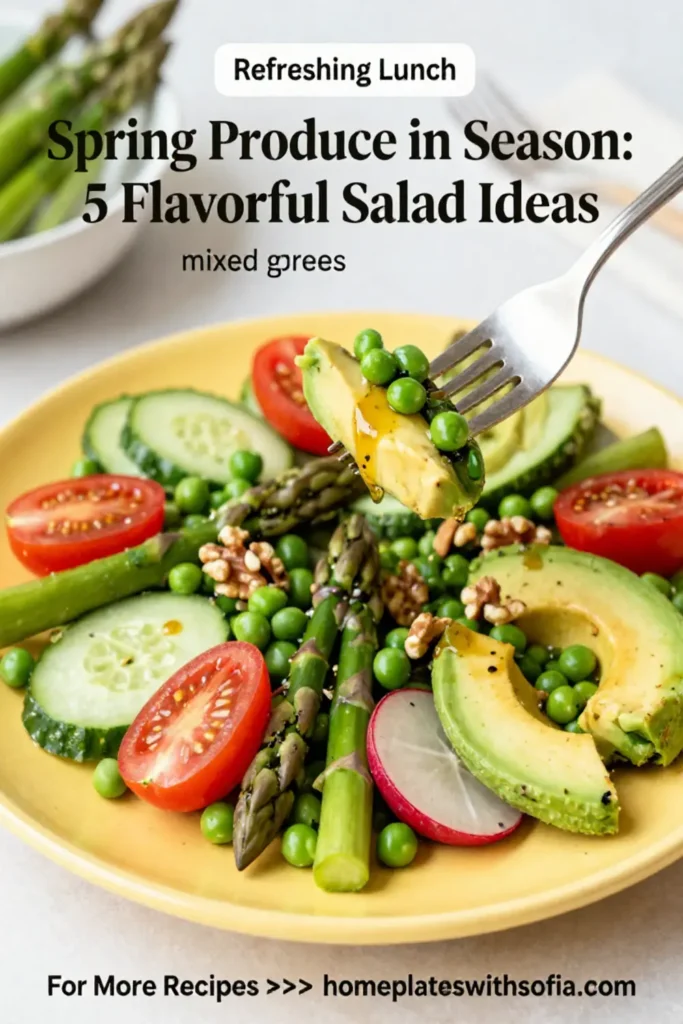
Spring produce includes vegetables and fruits that bloom around this time of year, perfect for salads. Think radishes, asparagus, peas, and various salad greens. Each of these ingredients is a joy to work with, adding natural sweetness and crunch to your dishes. Our five salad ideas will showcase these ingredients, providing **variety and versatility** for your meals.
Why You’ll Love This
These salad recipes are perfect for **busy parents** and **kitchen beginners** alike. They’re quick to prepare, budget-friendly, and packed with **healthy nutrients**. Using fresh ingredients taken straight from farmers’ markets or your backyard garden makes for an enjoyable cooking experience and promotes a **healthy lifestyle**. Additionally, these salads are versatile enough to be served as sides for a special occasion or as a light main dish.
Ingredients You’ll Need
- Mixed greens (4 cups): Your choice of spinach, arugula, or lettuce will add a refreshing base.
- Radishes (1 cup): Thinly sliced, they add a beautiful color and peppery flavor.
- Asparagus (1 bunch): Lightly steamed or grilled to enhance its natural sweetness.
- Peas (1 cup): Fresh or frozen, peas offer a delightful crunch.
- Cherry tomatoes (1 cup): Halved, these provide vibrancy and juiciness to each bite.
- Feta cheese (½ cup): Crumbled, it adds a rich, tangy flavor that balances the vegetables.
- Olive oil (¼ cup): Extra virgin for drizzling, enhancing flavor and texture.
- Balsamic vinegar (2 tablespoons): Adds a touch of sweetness and acidity.
- Salt and pepper: To taste, season your salad for maximum flavor.
How to Make
- Prepare the vegetables: Start by washing all your fresh produce thoroughly under cold water. Use a salad spinner to remove excess moisture, ensuring a crisp salad.
- Trim and slice the asparagus: Cut the woody ends off the asparagus and slice it into thirds. Lightly steam or grill it until tender yet firm, about 3–4 minutes.
- Combine the greens: In a large mixing bowl, add the mixed greens as the base. Gently toss them to create an even layer for the toppings.
- Add the toppings: Layer on your radishes, peas, cherry tomatoes, and grilled asparagus on top of the greens. Each ingredient adds color, creating a visually appealing salad.
- Dress the salad: In a small bowl, whisk together olive oil, balsamic vinegar, salt, and pepper. Drizzle this over your salad and gently toss to coat everything evenly.
- Finish with feta: Finally, sprinkle the crumbled feta cheese over the salad for a **creamy and tangy finish**. Serve immediately for the best texture.
Variations & Substitutions
Grilled Chicken Salad
For those who want a protein boost, add grilled chicken breast to your salad. Season your chicken with salt and pepper, grill until fully cooked, and slice into strips. The savory notes of the chicken beautifully complement the fresh spring vegetables while making the salad more filling.
Vegan Version
Skip the feta cheese and replace it with a handful of diced avocado for creaminess. Additionally, use a tahini dressing instead of balsamic for a unique twist that is also vegan-friendly.
Fruit and Nut Salad
Incorporate seasonal fruits such as strawberries or mandarin oranges along with a handful of nuts, like walnuts or slivered almonds, for added texture and flavor. This added sweetness makes for a delightful contrast with the other ingredients.
Crispy Tofu Salad
For a vegetarian protein option, try marinated and baked tofu. After pressing the tofu, cut it into cubes, marinate it in soy sauce, and bake until crispy. This elevates the salad while keeping it plant-based.
Quinoa Salad
Add cooked quinoa for extra protein and fiber. Toss the salad with the quinoa for a satisfying meal perfect for use as a side dish or a light main course.
Common Mistakes to Avoid
One common mistake is using **wilted or stale greens**; always opt for fresh, vibrant vegetables. Make sure to store your greens correctly to maintain their freshness. Another mistake is overwhelming your salad with too many ingredients. Stick to a few key elements to allow each flavor to shine. Moreover, avoid dressing your salad too early; this makes the greens soggy. Instead, wait until just before serving to ensure a crisp experience.
Storage, Freezing & Reheating Tips
Salads are best enjoyed fresh; however, leftovers can be stored in an airtight container for up to two days in the refrigerator. To prevent wilting, keep the dressing on the side until serving. Avoid freezing salads, as the texture of the greens will suffer upon thawing. For reheating any proteins included in the salad, do so gently in the microwave or stovetop, but keep the dressing and fresh ingredients separate until you’re ready to serve.
Frequently Asked Questions
How do you choose fresh produce for your salads?
When selecting ingredients, look for vibrant colors and firmness. For leafy greens, avoid any that show signs of wilting or yellowing. Firmness is key for cucumbers and tomatoes, while herbs should smell fresh and aromatic. Always buy seasonal produce for the best flavor and nutritional value.
Can I make the salad ahead of time?
You can prepare some components like chopping vegetables or cooking proteins in advance, but it’s best to wait until just before serving to toss everything together. This helps to maintain texture and flavor.
What dressings work well with spring salads?
Light dressings such as vinaigrettes made from citrus juices or balsamic vinegar complement the fresh flavors of spring vegetables. You can also explore creamy dressings made from yogurt or avocado for added richness while focusing on health.
How can I ensure my salad has a variety of flavors?
Combine sweet, tart, and savory elements. Incorporate crunchy ingredients like nuts or seeds for texture, and grouping ingredients based on colors will create an eye-catching presentation. Don’t forget to balance strong flavors, such as cheese, with milder vegetables.
What are the nutritional benefits of spring produce?
Spring produce is often rich in vitamins, minerals, and antioxidants. Foods like asparagus are great sources of vitamins A, C, and E, while peas provide protein and fiber. Including a variety of fruits and vegetables ensures a wide range of nutrients that support a healthy lifestyle.
Conclusion: These five flavorful salad ideas are not only refreshing but also a joyous celebration of spring produce. They are easy to master and flexible enough to suit your taste preferences. From busy weeknight dinners to delightful spring picnics, these salads are sure to impress. Enjoy experimenting with seasonal ingredients, keeping taste, texture, and nutrition in mind!