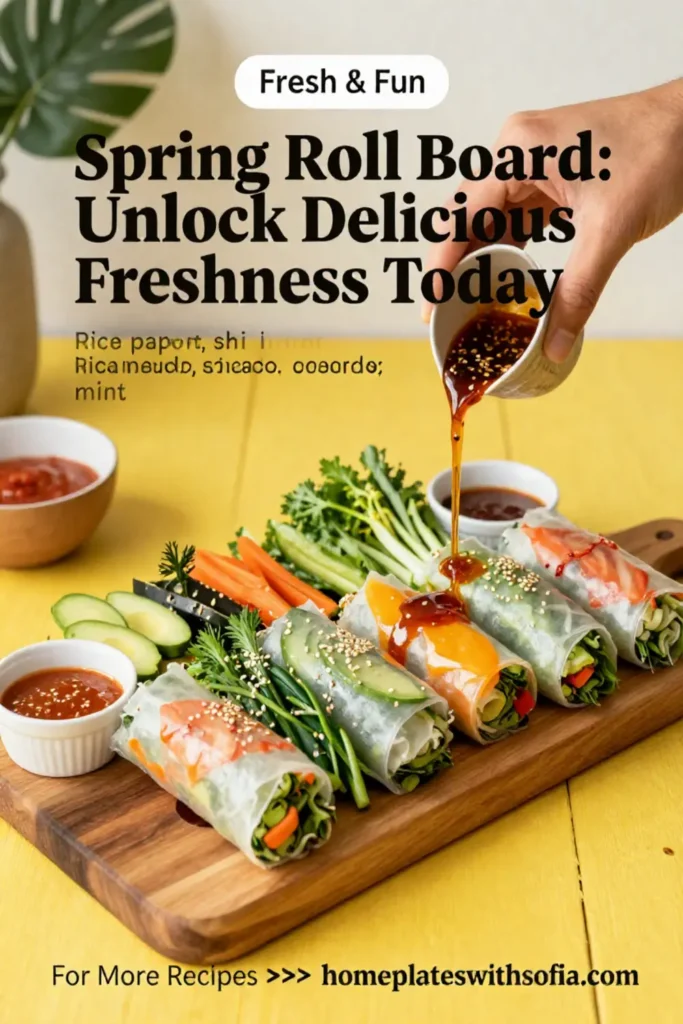
Prep time: 20 minutes
Cook time: 10 minutes
Total time: 30 minutes
Servings: 4-6
Spring Roll Board: Unlock Delicious Freshness Today is an exciting way to bring a burst of flavor and freshness to your dining experience. This dish is perfect for casual gatherings, family dinners, or even meal prep, as it allows everyone to customize their rolls with their favorite ingredients. With a variety of textures and colors, it transforms a simple meal into a vibrant spread that is sure to impress.
What Is Spring Roll Board: Unlock Delicious Freshness Today?
A Spring Roll Board is a creative and interactive meal option that allows diners to roll their own spring rolls using a variety of ingredients laid out on a board. This dish typically consists of fresh vegetables, proteins, and dipping sauces, all of which can be tailored to individual preferences. It’s inspired by traditional spring rolls, which are usually a combination of fresh vegetables wrapped in rice paper or lettuce leaves, often accompanied by flavorful dipping sauces. The beauty of the Spring Roll Board lies in its versatility, catering to vegetarians, meat-lovers, and even those with dietary restrictions, making it a perfect option for any gathering.
Why You’ll Love This
This Spring Roll Board is not only visually stunning but also incredibly easy to prepare. It offers endless possibilities for customization, appealing to both children and adults. Whether you are a kitchen novice or a seasoned chef, you will find joy in assembling these delicious rolls. It promotes healthy eating by incorporating fresh vegetables and lean proteins, making your meal both nutritious and satisfying. Moreover, the interactive nature of the Spring Roll Board allows for conversation and engagement at the dinner table, transforming mealtime into a fun and shared experience.
Ingredients You’ll Need
- Rice paper wrappers: These are the foundation of the spring rolls and are available in most grocery stores. They provide a chewy texture that beautifully complements the fresh ingredients.
- Fresh vegetables: Use a variety of colorful veggies like carrots, bell peppers, cucumbers, and lettuce. These add crunch and a range of nutrients.
- Herbs: Fresh herbs such as mint and cilantro add aromatic flavors that elevate the rolls.
- Protein options: Include cooked shrimp, chicken, tofu, or crab for added protein. This makes the dish heartier and more filling.
- Dipping sauces: Prepare sauces like hoisin, peanut, or soy sauce for dipping, which enhances the flavor of the rolls.
- Pickled vegetables: Consider quick-pickled carrots or radishes for a tangy bite that contrasts beautifully with the fresh ingredients.

How to Make
- Begin by prepping all your vegetables. Wash and slice them into thin strips. This will ensure that they fit nicely inside the rice paper wrappers and are easy to roll. Aim for a colorful assortment to make the presentation appealing.
- If you are using proteins like shrimp or chicken, ensure they are fully cooked and cut into thin slices or strips. If using tofu, press it to remove excess moisture, then slice it into strips. This will help achieve a firm texture.
- For the rice paper wrappers, fill a shallow bowl with warm water. Dip each wrapper into the water for a few seconds until it becomes pliable but not too soft. Lay it flat on a clean surface.
- Start layering your ingredients in the center of the wrapper. Begin with a few pieces of lettuce, followed by your chosen vegetables, herbs, and protein. Be careful not to overfill, as it will make rolling difficult.
- Fold the sides of the wrapper over the filling and then carefully roll from the bottom up, tucking the filling in tightly as you go. Repeat this process until you’ve rolled all your ingredients.
- Once rolled, serve your spring rolls on a large platter and arrange the dipping sauces in small bowls for easy access. Enjoy the interactive experience with your guests!
Variations & Substitutions
Vegetarian Spring Roll Board: For a vegetarian-friendly version, focus on hearty vegetables and add more plant-based protein like tempeh or chickpeas. Substitute the shrimp or chicken with marinated tofu for flavor. You can also include avocado for creaminess. Enhance the flavor profile by including sesame seeds or a drizzle of tahini.
Spicy Spring Rolls: Spice things up by adding sliced jalapeños or a spicy sauce like sriracha. Incorporate spicy pickled vegetables for an added kick. You can also make a spicy peanut dip to complement the rolls, blending peanut butter with soy sauce, lime juice, and hot sauce.
Fresh Fruit Rolls: Combine sweet and savory by adding fruits such as mango, strawberries, or pineapple to your roll ingredients. Pair them with a sweet dipping sauce made from honey and lime juice for a refreshing twist. This is great for dessert and makes for a unique and delicious end to your meal.
Sushi-Inspired Rolls: Think outside the box! Incorporate sushi staples like avocado, crab, and cucumber for a fusion approach. Use soy sauce as your dipping option, and prepare these rolls as a delightful light meal or appetizer.
Common Mistakes to Avoid
One common mistake is using too much filling, which can cause the wrapper to tear. It’s essential to fill the rice paper wrapper modestly to prevent overflow. Another mistake is not soaking the rice paper long enough, resulting in a tough wrapper that cracks. Ensure the wrapper is adequately softened but not overly mushy, as this makes it easier to handle and roll. Lastly, avoid letting your rolls sit out too long before serving, as the wrappers can dry out, affecting texture. Prepare your ingredients in advance, and assemble them just before you plan to serve.
Storage, Freezing & Reheating Tips
Store leftover spring rolls in an airtight container in the refrigerator, placing parchment paper between each roll to prevent sticking. They will last up to three days but are best enjoyed fresh. If you need to freeze your spring rolls, do so before cooking. Wrap them tightly in plastic wrap and then place them in a freezer-safe bag. To reheat, bake in the oven or air fryer until crispy and heated throughout. For refrigerated rolls, consume them within a couple of days to maintain freshness.
Frequently Asked Questions
Can I make spring rolls ahead of time?
It’s best to prepare the spring roll fillings a few hours ahead, but the actual assembly is best done right before serving to prevent the wrappers from drying out. You can store the fillings separately in the refrigerator to keep everything fresh.
What type of dipping sauce is best for spring rolls?
The most popular dipping sauces are peanut sauce, hoisin sauce, and sweet chili sauce. Each sauce adds a unique flavor profile to the rolls. If you want to mix it up, consider making your own sauce by blending peanut butter, soy sauce, and a splash of lime juice for freshness.
Are rice paper wrappers gluten-free?
Yes, most rice paper wrappers are naturally gluten-free as they are made from rice flour and water. However, it’s crucial to check the packaging to ensure there are no added ingredients that might contain gluten.
What can I substitute for rice paper wrappers?
If you can’t find rice paper wrappers, you can use large leaves of lettuce as a low-carb alternative. They offer a similar refreshing taste and will hold the ingredients together well, creating a delightful wrap.
How can I make these spring rolls kid-friendly?
To cater to kids, consider using more colorful veggies and proteins they love, such as chicken or shrimp. Allow them to assemble their rolls and choose from a few dipping sauces, making it a fun and interactive meal. You can also introduce sweeter elements like fruits for a creative touch.
Conclusion: The Spring Roll Board is not only a feast for the eyes but also an engaging way to bring family and friends together. With its fresh ingredients and endless customization options, it’s perfect for busy parents, kitchen beginners, or anyone looking for a healthy meal option. Dive into this culinary adventure and enjoy the delightful mix of flavors, textures, and the satisfaction of creating your own delicious spring rolls!