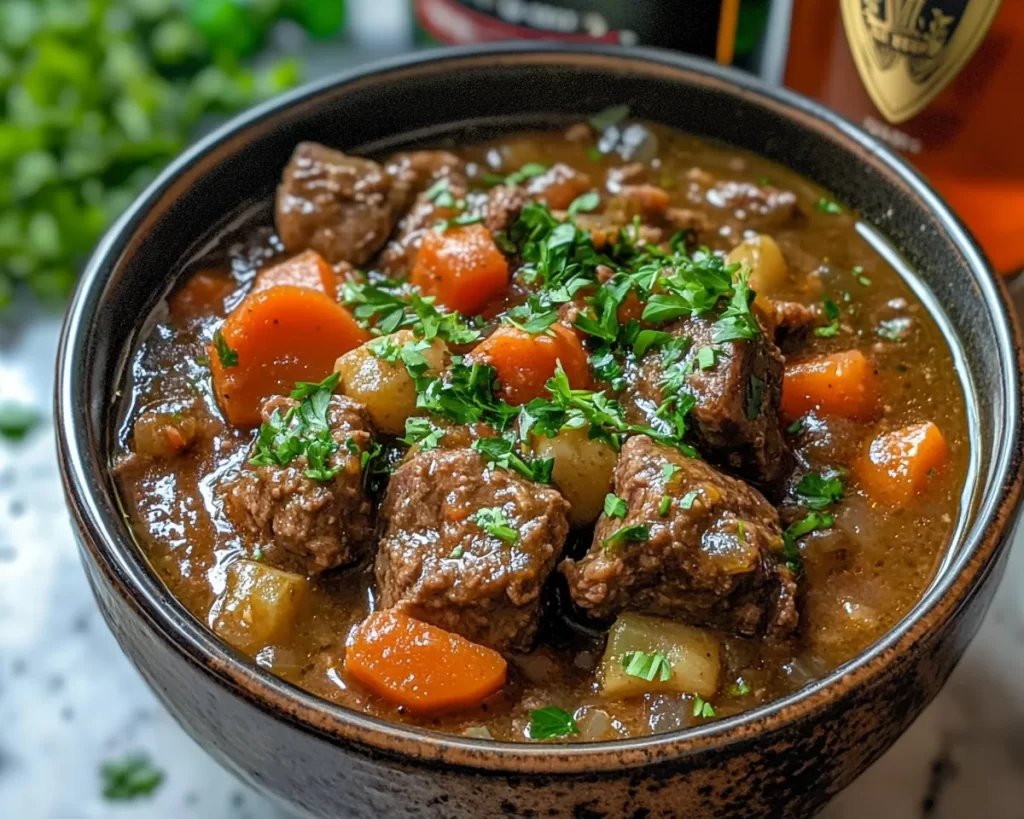
Prep time: 20 minutes
Cook time: 2 hours
Total time: 2 hours 20 minutes
Servings: 6
Every year as St. Patrick’s Day approaches, I am filled with excitement not just for the festivities, but for the delicious comfort food that accompanies it. One dish that always takes center stage on our dinner table is my family’s beloved St. Patrick’s Day Guinness Beef Stew. This recipe isn’t just about celebrating; it encapsulates my family’s rich history and brings back beautiful memories of gathering at the dinner table after a long day. The way the thick, savory stew simmers away, filling the home with its enticing aroma, is an experience you simply cannot miss.
What makes this Guinness beef stew especially noteworthy is the marriage of tender beef with the deep, malty flavors of Guinness beer, creating a dish that is both hearty and luxuriously rich. With every spoonful, the robust taste of beef, combined with the brightness of vegetables and the slight bitterness from the stout, dances on your palate in a way that only truly great stew can. This recipe is also incredibly forgiving, making it perfect even for those new to cooking.
In this article, you’ll discover the technique behind achieving the ideal stew, tips to elevate the flavors, and various ingredients that can be adjusted to suit your family’s preferences. The combination of savory and sweet, along with a few cooking techniques, will ensure your stew is a family favorite for many years to come.
What Is St Patrick’s Day Guinness Beef Stew?
St. Patrick’s Day Guinness Beef Stew is a traditional Irish dish that not only nourishes but also warms the soul. Its origins can be traced back to Ireland, where hearty meals were essential during the harsh winters. This dish typically features chunks of tender beef, which are marinated in a mix of Guinness stout, onions, and a variety of vegetables, lovingly simmered until they meld into a beautifully thick texture.
The flavors in this stew are complex yet comforting. The deep notes of the stout come through, bringing a slight sweetness and a hint of bitterness that perfectly balances beautifully seasoned beef. One of the special features of Guinness in this recipe is how it acts as a tenderizer for the meat, ensuring that it becomes utterly melt-in-your-mouth delicious. The vegetables absorb the rich flavors as they cook down, contributing to a delightful medley of taste and texture.
Moreover, this stew can be customized based on what you have on hand, making it a versatile dish that can be enjoyed throughout the seasons, not just during St. Patrick’s Day celebrations. With its satisfying heartiness, this dish has become a staple not only in Ireland but also in households around the world seeking a nourishing and flavorful meal.
Why You’ll Love This
There are multiple reasons why you will fall in love with this St. Patrick’s Day Guinness Beef Stew. To start, the combination of flavors is simply *irresistible*. The malty depth from the Guinness integrates flawlessly with the succulent beef, creating a symphony of taste that satisfies both your hunger and your craving for comfort food.
In terms of ease, this recipe requires minimal hands-on time, allowing you to set it aside and let it simmer to perfection without constant supervision. This makes it ideal for busy parents or anyone juggling multiple tasks. The cost-effectiveness of slow-cooked stews means you can feed a family without breaking the bank. By using budget-friendly cuts of beef, paired with seasonal vegetables, you’re putting together a meal that not only tastes great but is also gentle on your wallet.
Health-wise, this stew incorporates *wholesome vegetables*, providing fiber and essential nutrients, making it a balanced dish that can contribute to your daily nutritional intake. Some may worry that a hearty stew like this could be too indulgent, but when made with care and love, it can be a wholesome feast.
Moreover, this recipe is easily adaptable. It can cater to various dietary restrictions with simple tweaks, ensuring that everyone can gather around the table and enjoy a hearty meal together. From choosing gluten-free beer to swapping out certain vegetables, the possibilities are endless.
Ingredients You’ll Need
- Beef Chuck: This cut is ideal due to its rich flavor and ability to become tender when slow-cooked. You may substitute it with brisket if desired.
- Guinness Stout: This iconic Irish beer brings depth and a slightly bitter note, but feel free to use any stout you like for a different flavor profile.
- Onions: They form the flavor base. You can use yellow, sweet, or even red onions based on your preference.
- Carrots: Their natural sweetness helps balance the dish. Consider using parsnips for a unique twist.
- Celery: This adds crunch and additional layers of flavor. You could substitute it with leeks if desired.
- Potatoes: They help make the stew heartier. Russets or Yukon Golds work wonderfully. Opt for sweet potatoes for a healthier alternative.
- Garlic: Adding depth of flavor, garlic is a must for that aromatic kick. Feel free to use roasted garlic for a milder taste.
- Thyme: This herb adds a fresh, earthy note. Dried thyme can be used if fresh is not available.
- Bay Leaves: These enhance the stew’s flavor but should be removed before serving.
- Beef Broth: Adds to the stew’s richness. You can replace it with vegetable broth for a lighter option.
- Olive Oil: For browning the beef, which is essential for developing flavor.
- Salt and Pepper: To taste, the two pillars of seasoning that cannot be overlooked.
Each ingredient plays a crucial role in balancing the hearty flavor of this stew. Properly selecting and preparing your ingredients can enhance the final outcome immensely. Remember, fresh, good-quality ingredients will lead to the *best* results.
How to Make
- Prepare Your Ingredients: Start by chopping the beef chuck into bite-sized cubes, ideally about 1 inch each. This ensures even cooking. Also, dice your onions, carrots, celery, and potatoes. Keeping the sizes consistent helps with uniform cooking and presentation. Don’t forget to mince the garlic, as it will add depth to your stew.
- Brown the Beef: In a large pot or Dutch oven, heat about 2 tablespoons of olive oil over medium-high heat. Once hot, add the beef in batches to prevent overcrowding. Sear the beef for about 2-3 minutes on each side until it’s perfectly browned. Browning the meat not only adds color but enhances the overall flavor of your stew dramatically.
- Add the Aromatics: Once the beef is browned, add the onions, carrots, and celery to the pot. Stir them into the pot, cooking for about 5 minutes until softened. The goal here is to build a base of flavor; don’t rush this crucial step. You want to release the sugars from the vegetables, contributing to the stew’s richness.
- Add Garlic and Seasonings: Stir in the minced garlic, fresh thyme, and bay leaves, allowing them to cook together for another minute. This helps to release the fragrant oils from the garlic and herbs, deepening the stew’s flavor profile. Remember to season with a pinch of salt and pepper—this is vital to enhancing all the flavors.
- Deglaze the Pot: Pour in the Guinness and scrape any browned bits from the bottom of the pot with a wooden spoon. Those bits are packed with flavor! Let the beer simmer for about 2 minutes to reduce slightly before proceeding.
- Add the Broth and Vegetables: Once the Guinness has reduced, pour in the beef broth along with the diced potatoes. Stir everything together and bring the mixture to a gentle boil before reducing the heat to low. This slow-simmering process is what makes the flavors meld beautifully.
- Simmer to Perfection: Cover the pot and let everything simmer for about 1.5 hours. Stir occasionally, and if needed, add a little more broth or water if it looks too thick. You’ll know it’s ready when the beef is tender, and the flavors have melded together beautifully.
- Final Seasoning and Serving: Before serving, taste the stew and adjust the seasoning as needed with salt and pepper. Remove the bay leaves and serve the stew hot with crusty bread or over a bed of mashed potatoes for an *extra* indulgent experience.
The beauty of this Guinness beef stew is not only in its flavor but also in the richness of the experience it creates. Picture your loved ones gathered around the table, sharing stories and laughter as bowls are filled with warm stew.
Variations & Substitutions
Vegetarian/Vegan Variation: If you’re looking to make a vegetarian or vegan version of this stew, substitute the beef with hearty vegetables like mushrooms or tempeh. Not only does it add a satisfying texture, but it also absorbs the flavors of the broth beautifully. You can use vegetable broth instead of beef broth and ensure you select a vegan stout, as some beers may be filtered using animal products. Adding more root vegetables like sweet potatoes and parsnips will bring additional sweetness and heartiness to the dish.
Gluten-Free Variation: To cater to those with gluten sensitivities, replace the standard Guinness with a gluten-free stout. There are numerous brands available that offer rich flavors without gluten. Always check labels to ensure they meet gluten-free standards. You can also thicken the stew with cornstarch mixed with water instead of a flour-based roux, ensuring a smooth texture without gluten.
Herb-Forward Variation: For a fresher taste, consider adding a mix of herbs toward the end of cooking, such as fresh parsley, dill, or even rosemary. These herbs provide vibrant flavors that contrast beautifully with the rich, deep notes of the dish. Be cautious not to add them too early, as they might lose their potency during the long cooking process.
Spicy Variation: If you enjoy a little heat, incorporating a teaspoon of crushed red pepper flakes or a chopped jalapeño can give your stew an exciting kick. Adjust based on your spice tolerance and prefer balance; those who aren’t fans of heat should skip this suggestion. The warmth complements the *heartiness* of the beef, adding dimension to the overall experience.
Common Mistakes to Avoid
One of the most common mistakes home cooks make when preparing stew is not browning the meat properly. This step is crucial because the caramelization adds depth and flavor to the final dish. If you overcrowd the pan or skip this step, you risk ending up with a tasteless meal.
Another common error is adding all ingredients at once without considering cooking times. Vegetables that take longer to cook should be added first, while quick-cooking elements should be added later. Follow the order of operations carefully to ensure everything is cooked evenly.
Some people tend to under-season their dish. Be generous with salt and spices but do so gradually and taste as you go. Insufficient seasoning can lead to a bland stew, which defeats the purpose of such a flavorful recipe.
Lastly, avoid excessive boiling of the stew. A gentle simmer allows the flavors to meld without toughening the meat. Cooking too quickly can lead to chewy beef, making your dish far less enjoyable.
Storage, Freezing & Reheating Tips
When it comes to storing your leftover Guinness beef stew, allow it to cool completely before transferring it into airtight containers. This will prevent condensation buildup, which can lead to sogginess. Properly stored, your stew can last in the refrigerator for up to three days. For longer storage, consider freezing. Place the cooled stew in freezer-friendly bags or containers, ensuring you leave a little room for expansion. It can last in the freezer for up to three months.
When reheating, it’s best to thaw your frozen stew in the refrigerator overnight before heating it on the stovetop. This ensures it heats evenly. If the stew seems too thick after reheating, feel free to add a splash of broth or water to restore its desirable texture. Remember to reheat gently over low heat, stirring occasionally to prevent sticking.
For optimal food safety, always make sure to reheat your stew to at least 165°F (74°C) before consuming. Never leave leftovers out for longer than two hours to minimize the risk of foodborne illness.
Frequently Asked Questions
Can I use chicken instead of beef in this stew?
Absolutely! While traditional recipes call for beef, you can certainly use chicken for a lighter version. However, chicken tends to cook faster than beef, so adjust your cooking times accordingly. You may need less simmering time to avoid dry chicken.
Can leftovers be frozen?
Yes! Leftover Guinness beef stew can be frozen. Just make sure it’s cooled completely before placing it in airtight containers. It can be frozen for up to three months, ensuring you have a comforting meal ready for those busy weeknights.
What can I serve with this stew?
This stew pairs beautifully with crusty bread, rolls, or over mashed potatoes. You can also serve it alongside a crisp green salad or with colcannon for an authentic Irish experience.
Is it necessary to add beer?
While beer adds depth to the flavor, if you prefer not to use it, you can substitute it with additional broth or stock. Consider using non-alcoholic beers or even a combination of apple cider vinegar and broth for a different flavor profile.
How can I make the stew spicier?
If you enjoy heat, consider adding crushed red pepper flakes or diced jalapeños. These spices can easily elevate the flavor while integrating seamlessly into the dish. Just remember to add them gradually and taste as you go to avoid overwhelming the stew.
Conclusion:
St. Patrick’s Day Guinness Beef Stew is not just a recipe; it’s an experience filled with warmth, tradition, and flavor. With its rich profile and nourishing qualities, this dish embodies comfort food at its finest. I encourage you to make it your own by experimenting with variations that suit your family’s taste buds. Gather around the table with your loved ones, savor each spoonful, and create your own rich memories. Don’t hesitate to share this recipe with friends or family; everyone deserves to enjoy this hearty delight. Happy cooking, and may your stew be ever satisfying!