Prep time: 10 minutes
Cook time: 20 minutes
Total time: 30 minutes
Servings: 4 servings
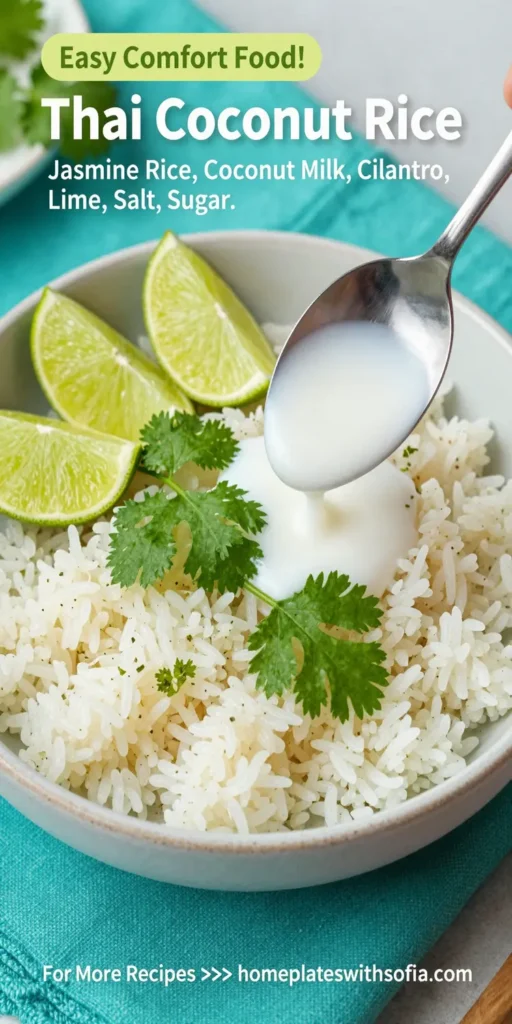
Thai Coconut Rice is a delightful side dish that beautifully complements a myriad of Thai dishes. With its creamy texture and subtle sweetness, this rice offers a lush flavor that is both comforting and exotic. The introduction of coconut milk elevates plain rice to another dimension, making it a favorite among those who enjoy the rich flavors of Thai cuisine.
What Is Thai Coconut Rice?
Thai Coconut Rice is a traditional dish made from jasmine rice cooked with coconut milk, water, and a pinch of salt. This simple combination transforms ordinary rice into a creamy, aromatic dish that acts as the perfect backdrop to an array of bold flavors. The coconut milk not only makes the rice tender but also infuses it with a slight sweetness that enhances the overall dining experience. Often garnished with toasted coconut or fresh herbs, it adds both visual appeal and texture.
Why You’ll Love This
There are countless reasons to adore Thai Coconut Rice. First and foremost, it’s incredibly versatile; this rice pairs seamlessly with grilled meats, curries, and even fresh salads. The creamy, slightly sweet flavor profile makes it appealing to both adults and kids, making it a go-to side for family dinners. Furthermore, it’s an easy recipe to master, perfect for busy weeknights or special occasions. Preparing Thai Coconut Rice can impress your guests with minimal effort; it brings that authentic taste of Thai cuisine right to your dining table.
Ingredients You’ll Need
- 2 cups jasmine rice: This variety of Thai rice has a naturally sweet aroma and sticky texture when cooked, making it ideal for coconut rice.
- 1 can (13.5 oz) coconut milk: Full-fat coconut milk adds creaminess and flavor. Light coconut milk can be used, but the texture will be less rich.
- 1 cup water: The water balances the richness of the coconut milk and assists in cooking the rice evenly.
- 1 teaspoon salt: Enhances the flavors and balances the sweetness of the coconut milk.
- 1 tablespoon sugar (optional): A touch of sugar can accentuate the sweetness but is optional depending on your preference.

How to Make
- Begin by rinsing the jasmine rice under cold water to remove excess starch, which prevents the rice from becoming overly sticky. Rinse until the water runs clear, then drain well.
- In a large saucepan, combine the rinsed rice, coconut milk, water, salt, and sugar if using. Stir to combine. The liquid should cover the rice completely.
- Bring the mixture to a boil over medium-high heat, stirring occasionally to prevent sticking. Once boiling, reduce the heat to low and cover the saucepan. Allow it to simmer for about 15-20 minutes.
- After 15 minutes, check the rice. It should absorb the liquid and be fluffy yet slightly sticky. If all the liquid is absorbed but the rice is still firm, add a small amount of water and cover again, cooking for 2-3 more minutes.
- Once the rice is tender, remove it from heat and let it sit, covered, for an additional 5 minutes. This allows the rice to finish cooking and absorb any remaining moisture.
- Fluff the rice with a fork just before serving, and for an added touch, consider garnishing with toasted coconut or chopped herbs.
Variations & Substitutions
Herbed Coconut Rice: For a fresh twist, add herbs such as lime leaves or cilantro to the cooking liquid. This will infuse the rice with an aromatic flavor that pairs beautifully with Thai curries. Use about 1/4 cup of finely chopped herbs for a noticeable yet balanced flavor.
Spicy Coconut Rice: If you enjoy a bit of heat, consider adding chopped fresh chilies or a pinch of red pepper flakes to the coconut milk before cooking. This will give your rice a subtle kick that complements spicy dishes well.
Coconut Rice with Vegetables: For a nutritious boost, stir in peas, carrots, or bell peppers at the same stage where you would add the coconut milk. The vegetables will cook with the rice, adding color and flavor.
Common Mistakes to Avoid
One of the most common mistakes is not rinsing the rice before cooking. Rinsing helps remove excess starch, which prevents the rice from becoming gummy. Take the time for this step; it makes a noticeable difference!
Another issue arises from not measuring the liquids correctly. Ensuring the right ratio of coconut milk and water is essential for getting the perfect texture. If your rice comes out too soggy or too dry, adjust your liquid amounts next time.
Lastly, lifting the lid too soon can disrupt the cooking process, causing steam to escape. Always let the rice rest after cooking; this extra time allows the flavors to meld and the rice to finish cooking.
Storage, Freezing & Reheating Tips
When it comes to storing leftover Thai Coconut Rice, allow it to cool completely before transferring it to an airtight container. It can stay fresh in the refrigerator for about 3 to 4 days. For longer storage, consider freezing! Portion the rice into freezer-safe bags, pressing out excess air, and store for up to 2 months.
When ready to enjoy your frozen rice, transfer it to the fridge to thaw overnight or reheat it directly from frozen in the microwave. Add a splash of water to help revive its creamy texture. Heat in 1-minute intervals, stirring in between, until warmed through.
When reheating, avoid overheating as it can dry the rice out. Adding a touch of coconut milk can help restore the creaminess and flavor that may have diminished during storage.
Frequently Asked Questions
Can I use brown rice instead of jasmine rice?
Yes, you can substitute brown rice, but be aware it will alter the cooking time and texture. Brown rice typically requires a longer cooking time and more liquid. Plan for about 45-50 minutes of cooking time and increase the liquid by approximately 1/2 cup.
What can I serve with Thai Coconut Rice?
Thai Coconut Rice pairs excellently with a variety of dishes. Consider serving it alongside green curry, grilled chicken, or shrimp stir-fry. It also works well with sautéed vegetables or a fresh salad.
Can I make this recipe vegan-friendly?
Absolutely! This recipe is already vegan as it uses coconut milk, which is dairy-free. Make sure to check that any additional ingredients you might add, like sauces or seasonings, are vegan as well.
Why is my coconut rice sticky?
If your coconut rice has become overly sticky, it may be due to a lack of rinsing before cooking. The excess starch can cause the rice to clump together. To avoid this, make sure to rinse the rice thoroughly before cooking.
Can I make coconut rice in a rice cooker?
Yes, using a rice cooker is a convenient option for preparing coconut rice. Simply combine the rinsed rice, coconut milk, water, and salt in the rice cooker and follow the manufacturer instructions. Most cookers will adjust the cooking time accordingly to ensure perfectly fluffy rice.
Conclusion: Thai Coconut Rice is not only a delicious addition to your meals, but it also offers countless variations to suit your taste. With its creamy texture and rich flavor profile, this dish can become a staple in your kitchen, impressing both your family and dinner guests. Whether you’re looking for a quick addition to your weeknight meals or something special for a dinner party, this Thai Coconut Rice recipe is sure to be a hit! Enjoy!