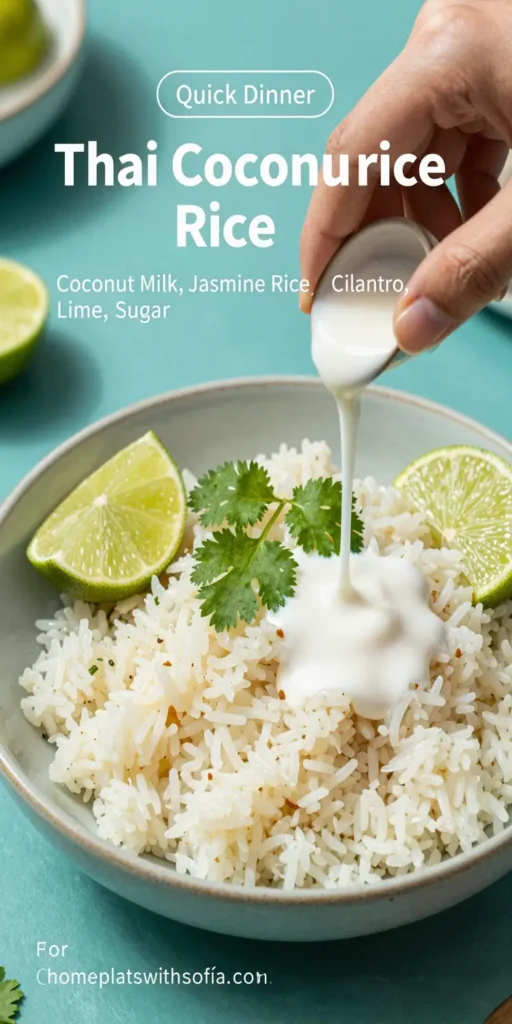
Prep time: 10 minutes
Cook time: 25 minutes
Total time: 35 minutes
Servings: 4
Thai Coconut Rice is a delightful dish that’s both fragrant and flavorful, making it the perfect side for Thai curries or even as a standalone meal. The creamy, rich texture of coconut milk combined with fluffy rice creates a comforting experience that transports you straight to Thailand. Not only is this dish simple to prepare, but it is also an excellent way to introduce unique flavors to your dining table. With every bite, you’ll enjoy the subtle sweetness of coconut, complemented by the slight saltiness, creating a harmonious balance that’s utterly satisfying.
What Is Thai Coconut Rice?
Thai Coconut Rice, known in Thai as “Khao Mamuang,” is a classic dish made by cooking rice with coconut milk. The result is a sticky yet fluffy texture, infused with the aromatic aroma of coconut. Traditionally served as a side dish accompanying Thai savory meals, this rice provides a gentle sweetness and creaminess that balances spicy or salty sauces. The use of coconut milk not only enhances the flavor but also offers a rich nutritional profile, making it a fulfilling choice for any meal.
Why You’ll Love This
You will love this recipe for several compelling reasons:
- **Nutritional Benefits**: Coconut milk provides healthy fats that contribute to satiety and enhances nutrient absorption.
- **Versatility**: Its creamy taste pairs well with various proteins, making it perfect for both meat lovers and vegetarians.
- **Simplicity**: With just a few ingredients, this dish is straightforward to prepare, suitable for busy weeknights or special occasions.
- **Flavor Profile**: The subtle sweetness of the coconut complements spicy dishes beautifully, providing a sense of balance on your plate.
Ingredients You’ll Need
To make Thai Coconut Rice, gather the following ingredients:
- 2 cups jasmine rice: This aromatic rice adds a floral note, ideally suited for absorbing the creamy coconut milk.
- 1 can (13.5 oz) coconut milk: Use full-fat for a rich taste; this ingredient is crucial for the creamy consistency of the rice.
- 1 cup water: This helps to cook the rice and balance the richness of the coconut milk.
- 2 tablespoons sugar: This adds a hint of sweetness that enhances the natural flavors of the dish.
- 1 teaspoon salt: Essential for bringing out the flavors in the rice.
- Optional garnish: toasted sesame seeds or fresh cilantro: Adds a lovely crunch and freshness, elevating the dish’s presentation and taste.

How to Make
Follow these numbered steps to create delicious Thai Coconut Rice:
- Begin by rinsing the jasmine rice under cold water. This removes excess starch, helping to achieve a fluffy texture. Rinse until the water runs clear, then drain well.
- In a medium saucepan, combine the rinsed rice, coconut milk, and water. Stir in the sugar and salt, ensuring everything is well mixed.
- Place the saucepan over medium heat and bring the mixture to a gentle boil. As soon as it begins to bubble, reduce the heat to low, cover, and cook for about 18-20 minutes. Keep an eye on it to avoid overcooking.
- After the cooking time, remove the pan from heat while keeping it covered. Let it steam for an additional 5 minutes to allow the flavors to meld and the rice to absorb any remaining moisture.
- Finally, fluff the rice gently with a fork, taking care to maintain its delicate texture. Serve fresh, and if desired, sprinkle with toasted sesame seeds or chopped cilantro for an extra touch.
Variations & Substitutions
Thai Coconut Rice is incredibly adaptable, and here are a few variations to consider:
Savory Coconut Rice: Add a pinch of turmeric while cooking for a warm color and earthy flavor. This version works exceptionally well with grilled meats. Incorporating sautéed garlic and ginger enhances the aroma and adds depth.
Vegetable-Infused Coconut Rice: For a nutritious twist, toss in some finely chopped vegetables such as bell peppers, peas, or carrots during the last few minutes of cooking. The vegetables will not only add color but also a satisfying crunch that complements the creamy rice.
Brown Rice or Quinoa Variation: If you prefer a healthier grain, you can substitute brown rice or quinoa for jasmine rice. Note that these grains may require longer cooking times and more liquid, so adjust accordingly.
Sweet Coconut Rice: For a dessert-like variant, decrease the salt and increase the sugar. You can also add a touch of vanilla extract. Serving it with fresh mangoes or sticky fruits creates a delightful indulgence.
Common Mistakes to Avoid
To ensure your Thai Coconut Rice turns out perfectly, avoid these common pitfalls:
Overcooking the rice: Cooking jasmine rice too long can make it mushy. Keep an eye on the time and follow the recommended cooking durations closely.
Not rinsing the rice: This step is critical for achieving the right texture. Failing to rinse can lead to clumps instead of fluffy grains. Always rinse until the water is clear.
Using low-quality coconut milk: The flavor of coconut milk is paramount. Choose a brand that is full-fat and creamier for the best results. Check the ingredients to avoid additives that compromise taste.
Skipping the resting time: Letting the rice sit after cooking helps grains firm up and gives them a perfect texture. Don’t rush this step, as it significantly improves the dish.
Storage, Freezing & Reheating Tips
To maximize the lifespan of your Thai Coconut Rice:
– **Storage**: Store any leftovers in an airtight container in the refrigerator for up to 4 days. Be sure to allow it to cool to room temperature before sealing to avoid condensation.
– **Freezing**: If you want to keep it longer, you can freeze the rice. Place it in a freezer-safe container, ensuring it’s tightly sealed, and store for up to 2 months. When ready to use, let it thaw in the fridge overnight.
– **Reheating**: For best results, reheat the rice in a saucepan over low heat. Add a splash of coconut milk or water to maintain moisture and prevent dryness. Keep stirring gently until heated through.
Frequently Asked Questions
Can I use regular rice instead of jasmine rice?
While jasmine rice offers a unique flavor and texture, you can substitute with other types like basmati or even white rice. The cooking time and liquid ratio may vary, so ensure to adjust accordingly.
What can I serve with Thai Coconut Rice?
Thai Coconut Rice pairs wonderfully with a variety of dishes. Consider serving it alongside Thai green curry, spicy pork stir-fry, or grilled chicken. It also complements vegetables beautifully, making it suitable for a vegetarian meal.
Can I make Thai Coconut Rice ahead of time?
Absolutely! You can prepare the rice a day ahead and store it in the fridge. Just follow the reheating instructions mentioned earlier to warm it thoroughly before serving.
Is coconut milk healthy?
Coconut milk is rich in healthy fats, particularly medium-chain triglycerides (MCTs), which can provide energy and may have various health benefits. However, it is also high in calories, so moderation is key.
How can I adjust the sweetness of the rice?
Feel free to modify the sugar according to your preference. Start with less, taste the rice, and gradually add more if you desire a sweeter profile. Remember, the goal is to achieve a balance with the savory elements of your dish.
Conclusion: Thai Coconut Rice is not just a dish; it’s an experience that brings the flavors of Thailand right to your plate. With its creamy texture and delightful notes, it serves as a perfect accompaniment to your favorite meals or as a stand-alone delight. Trying different variations can keep the experience exciting, making it a dish you’ll want to recreate time and again. Enjoy your culinary journey with this easy, heartwarming recipe!